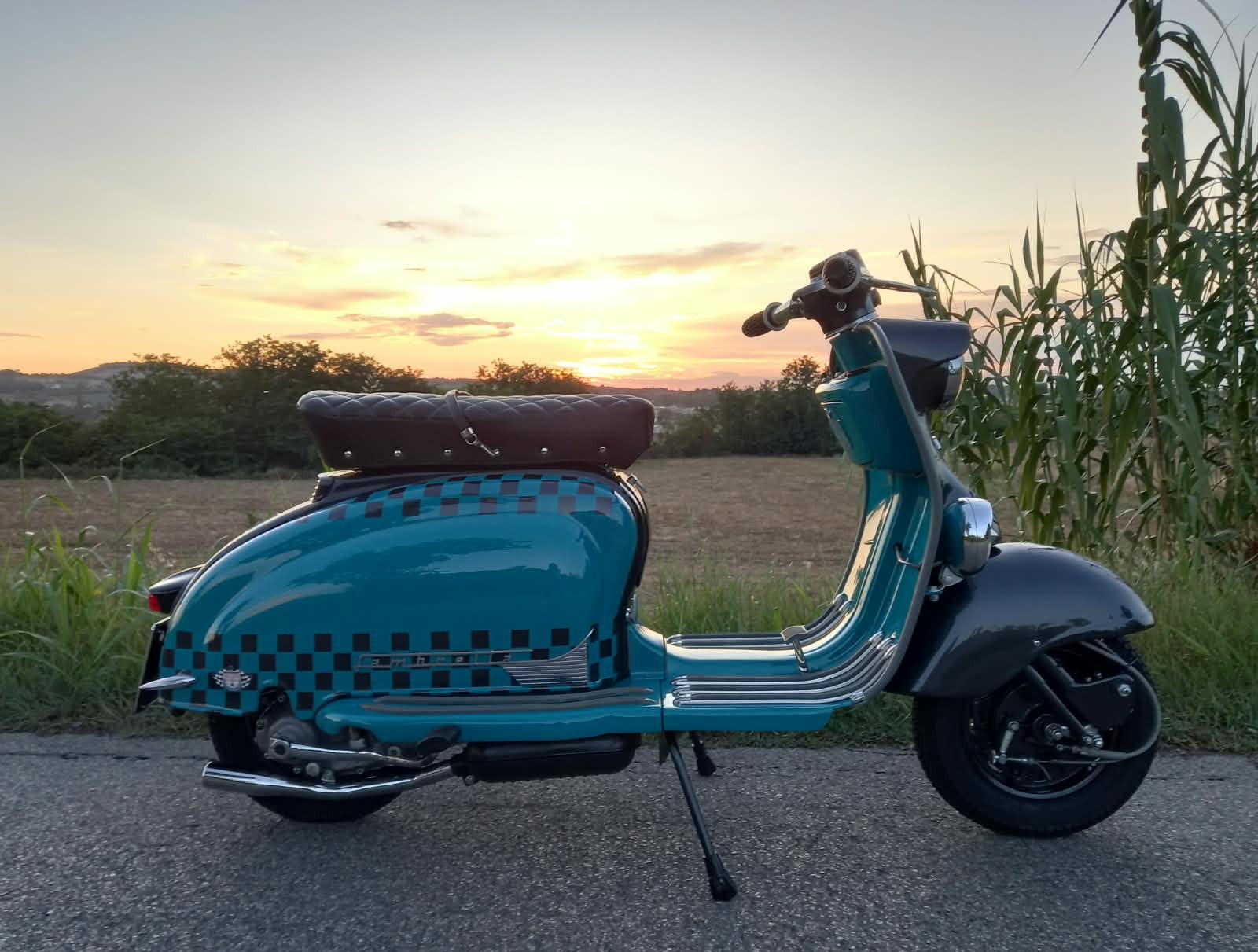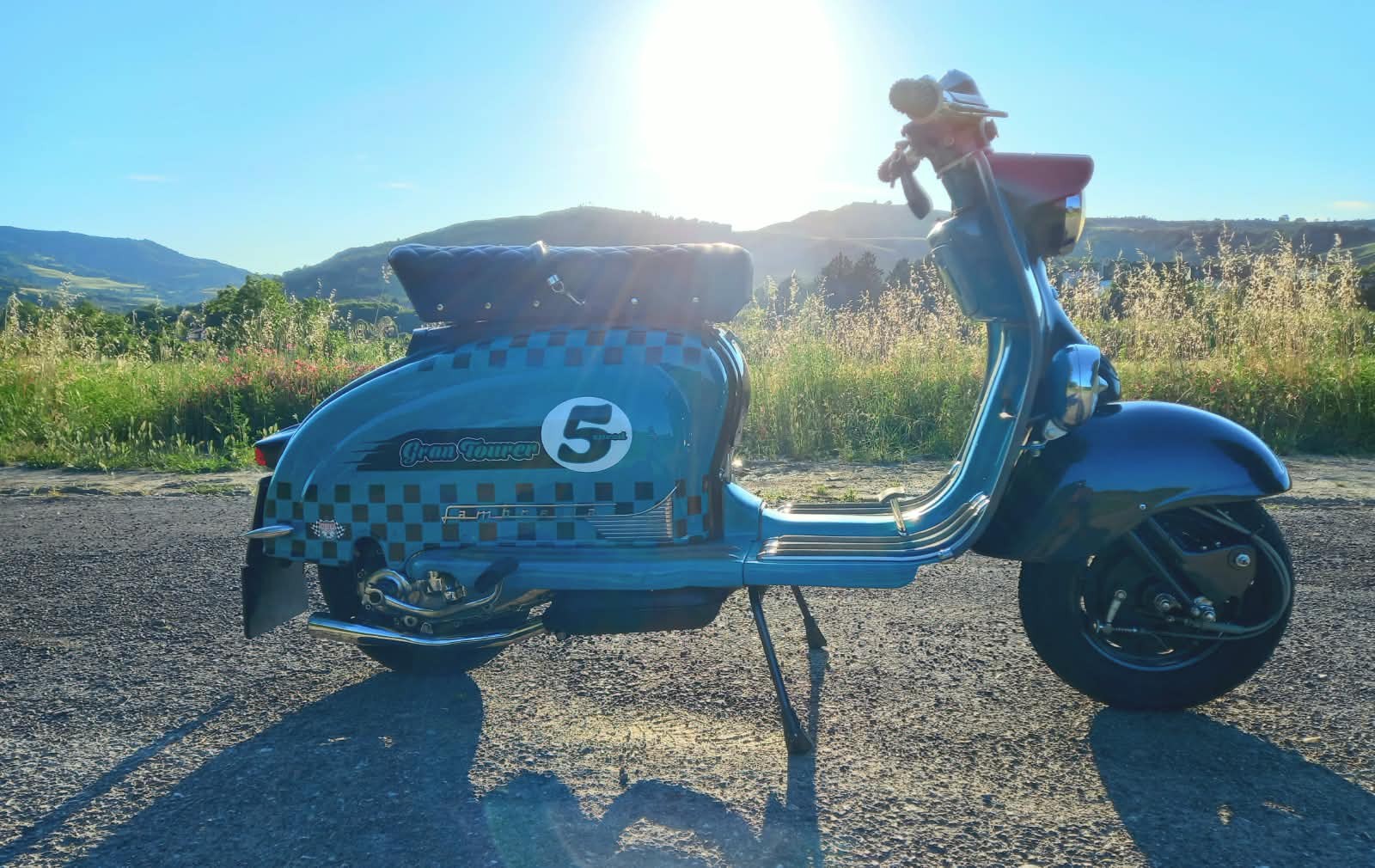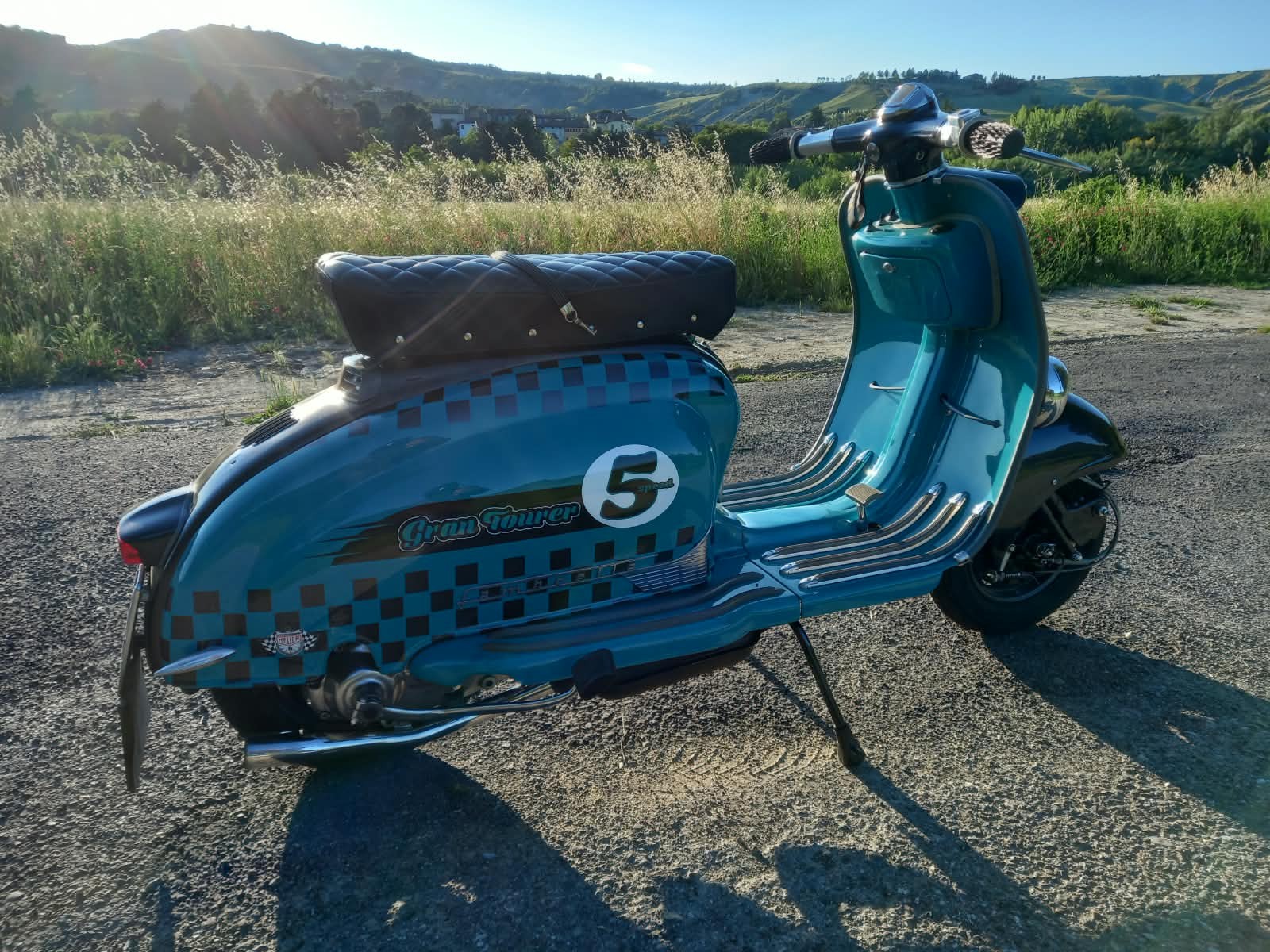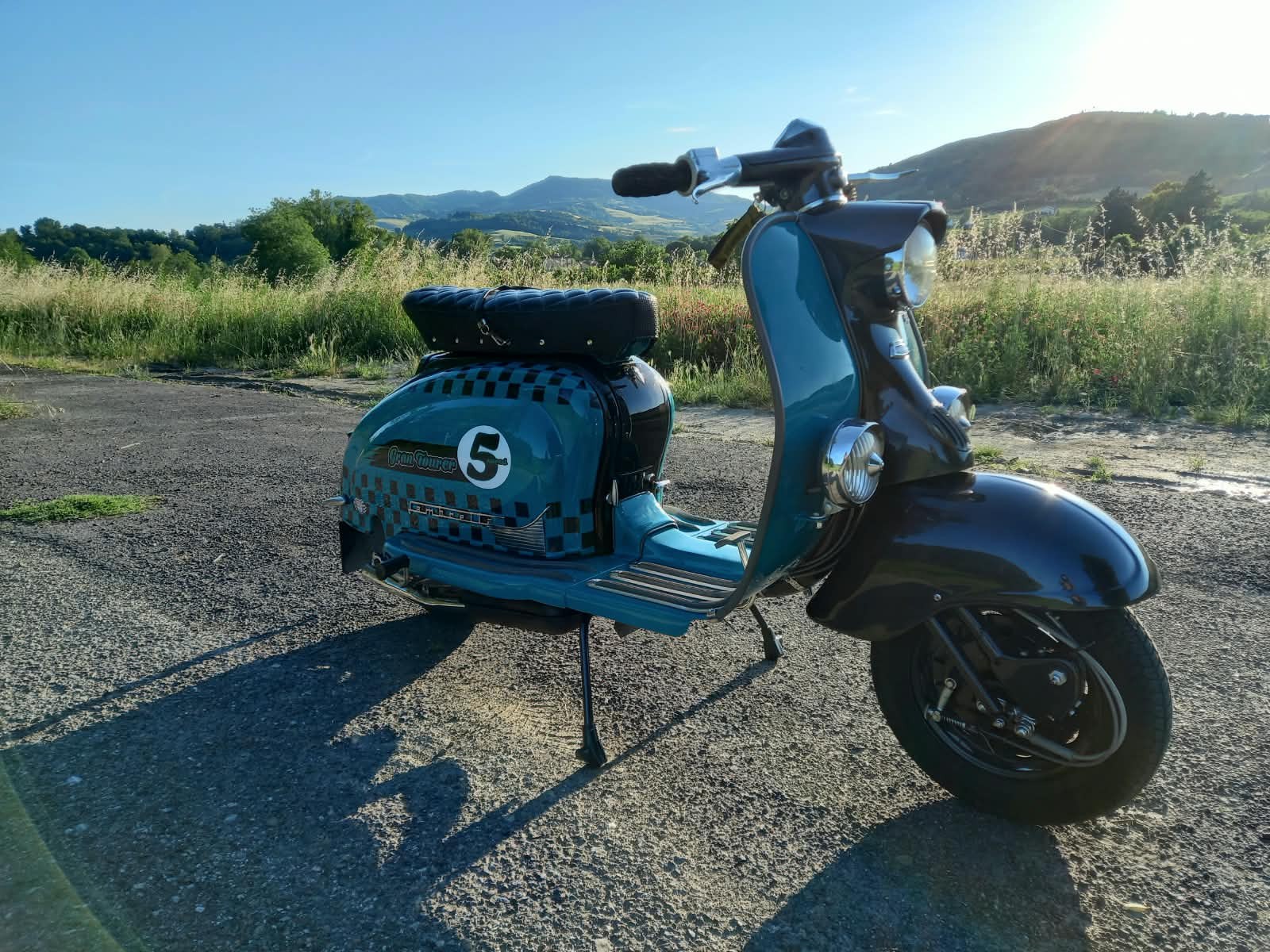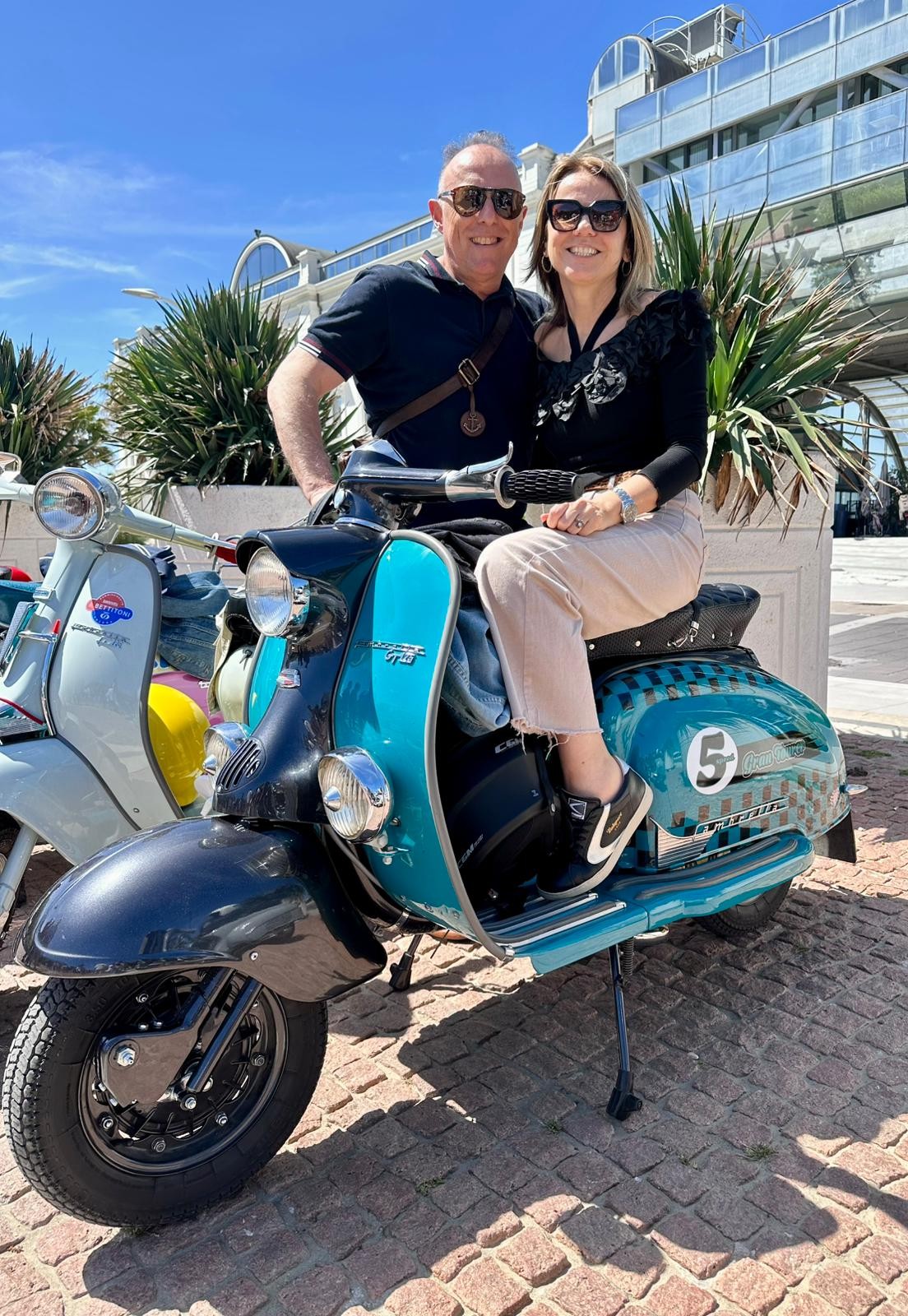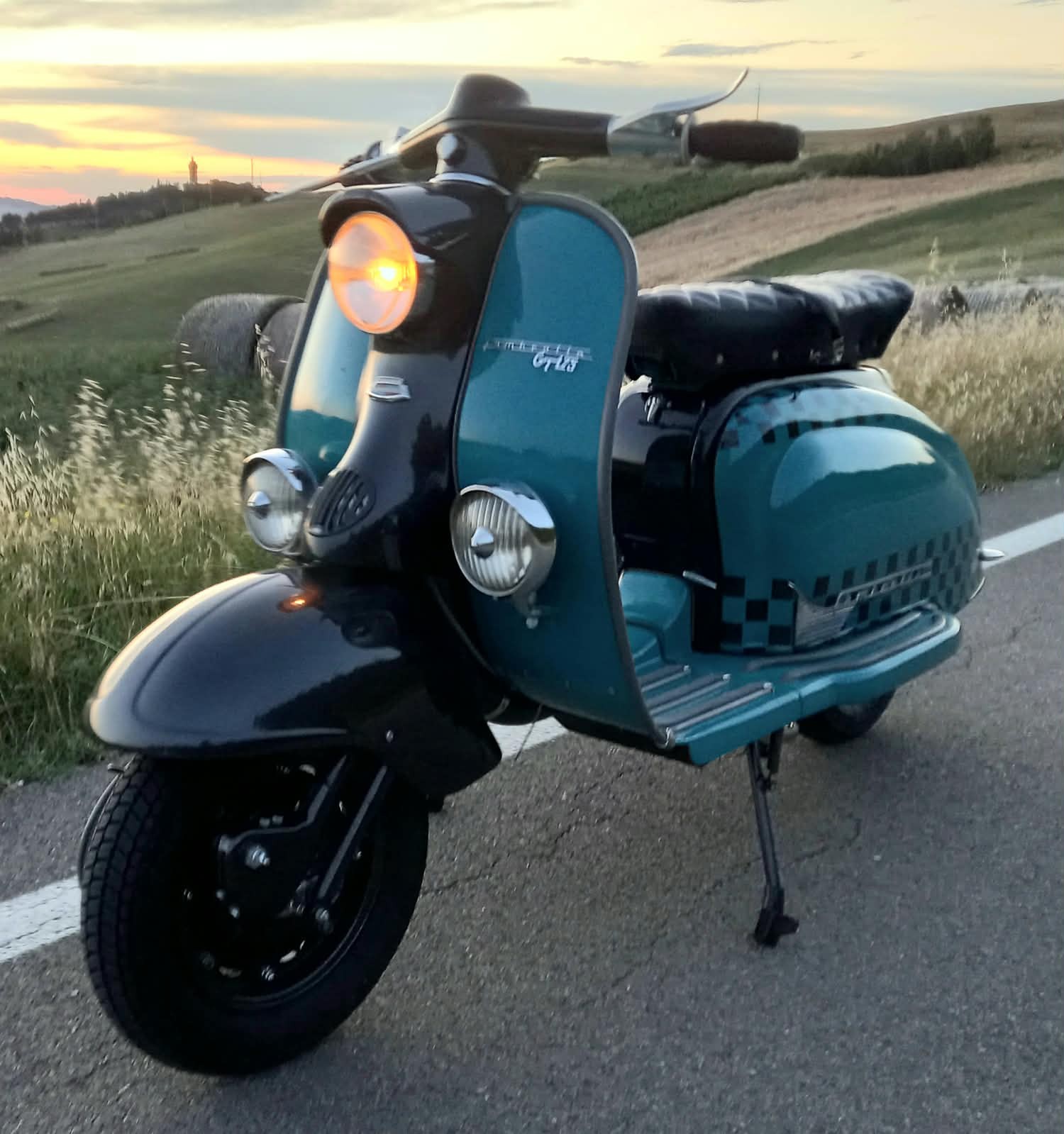
1958 Lambretta LI 125 Series 1 'racer'
Style is an excercise, you have to practise it or you won't make any progresses.
Italiano
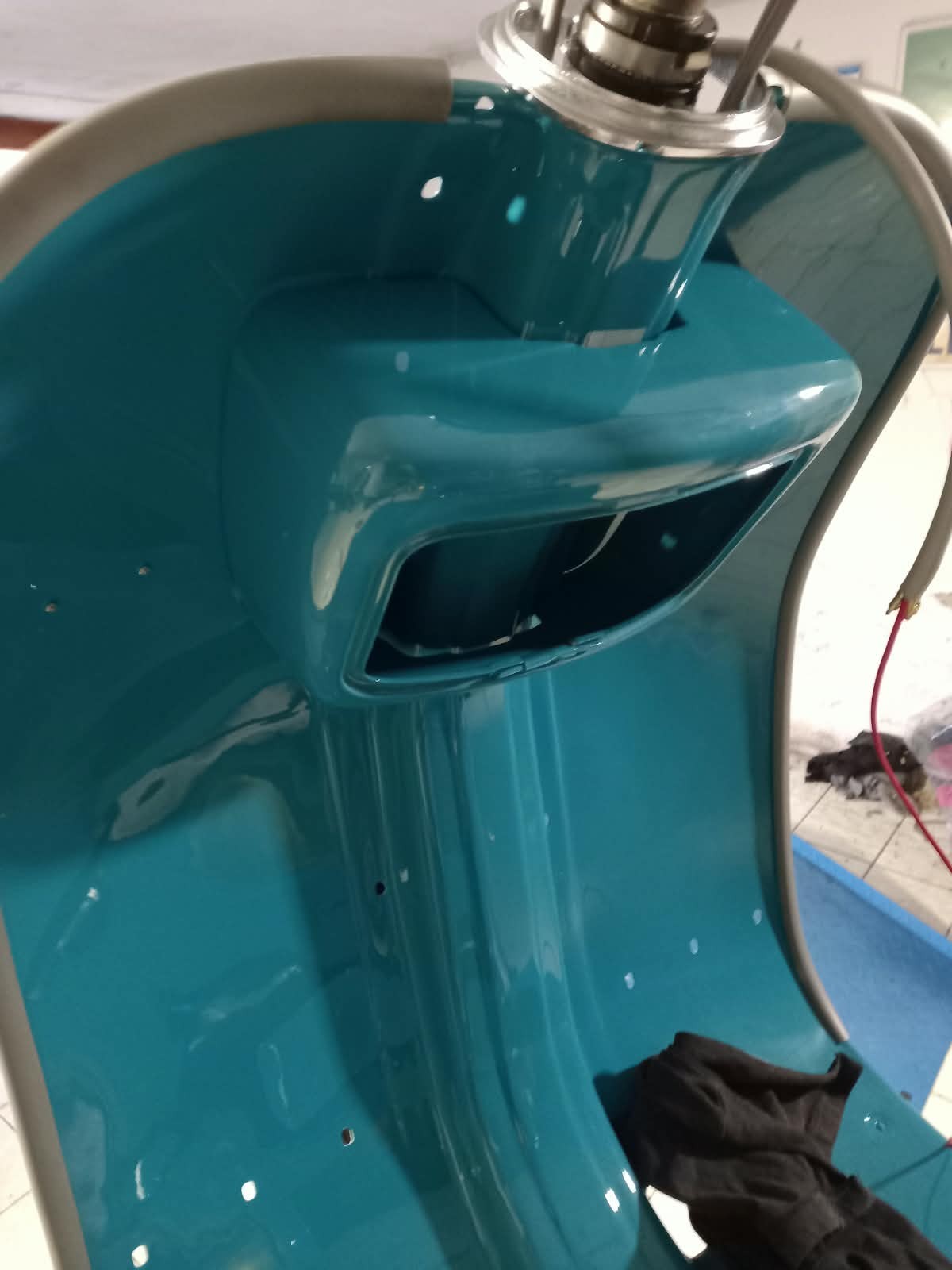
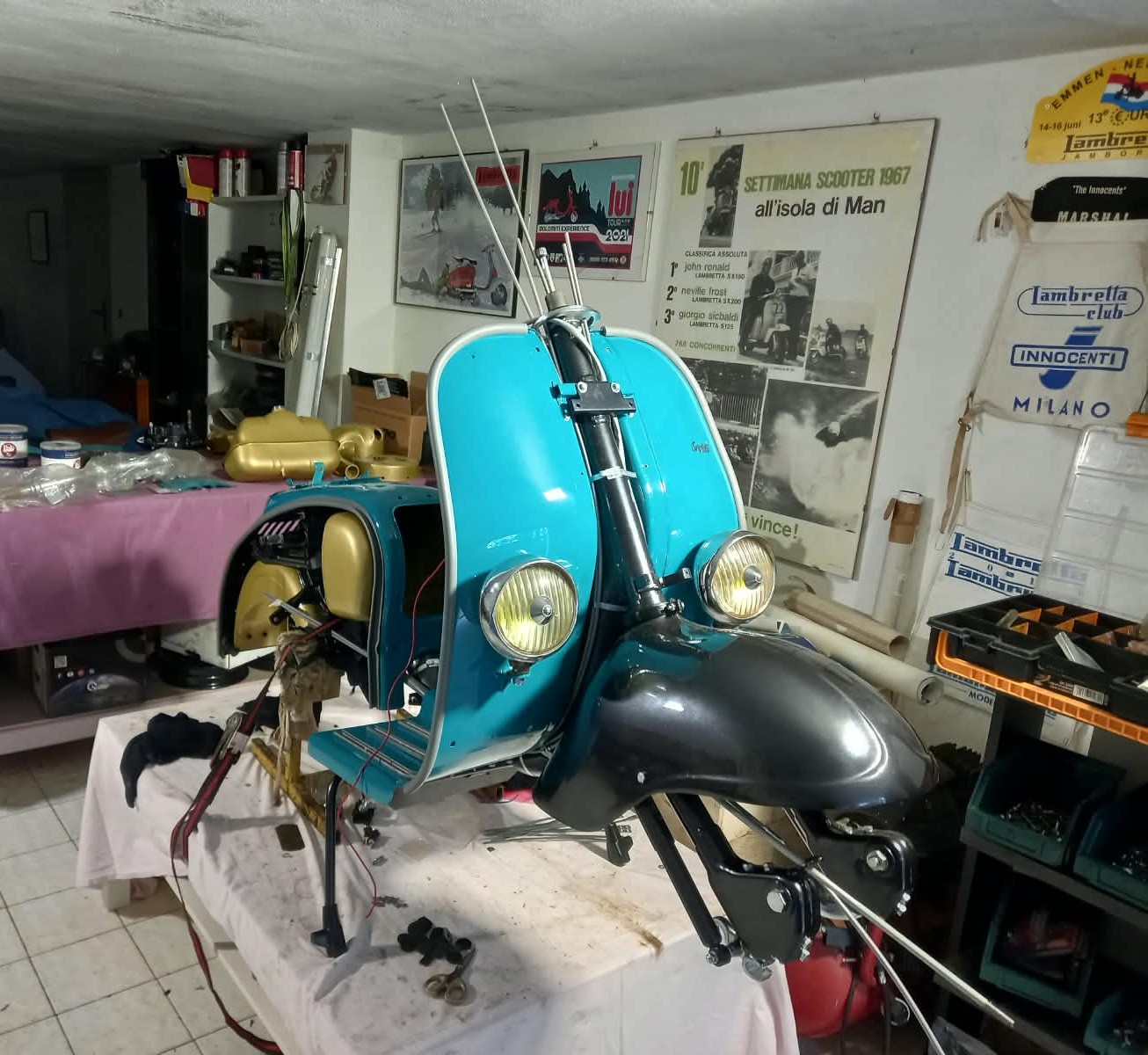
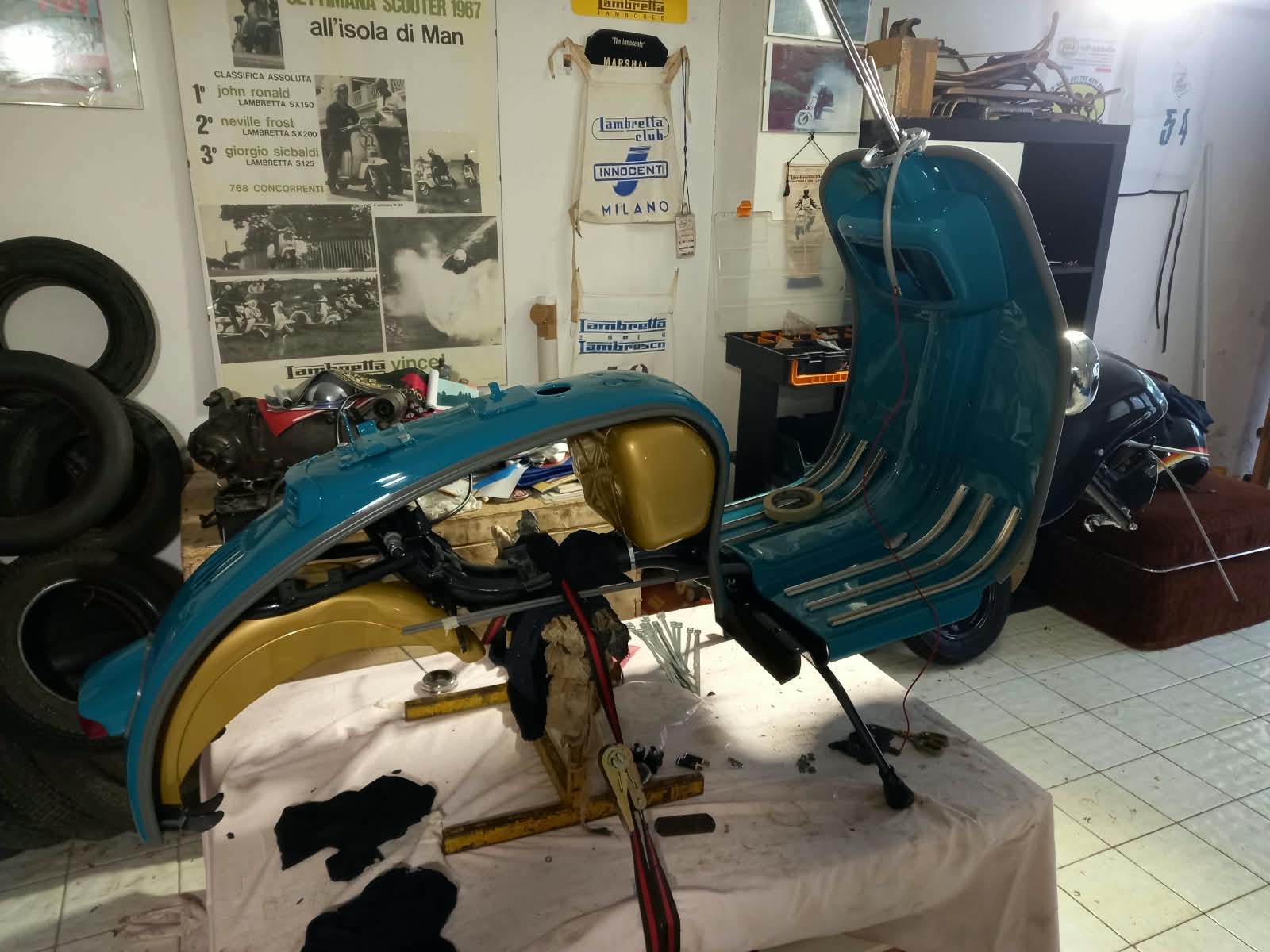
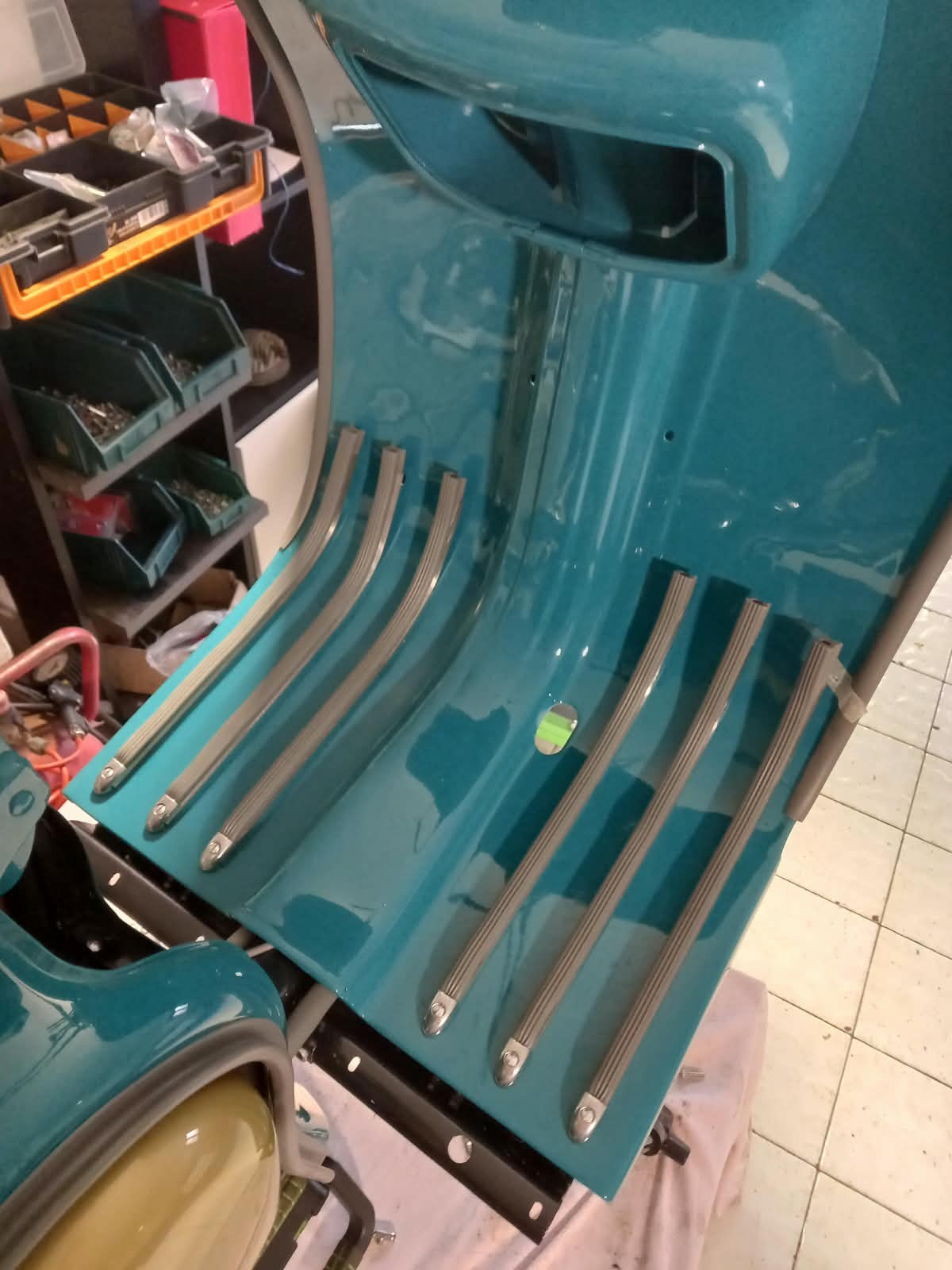
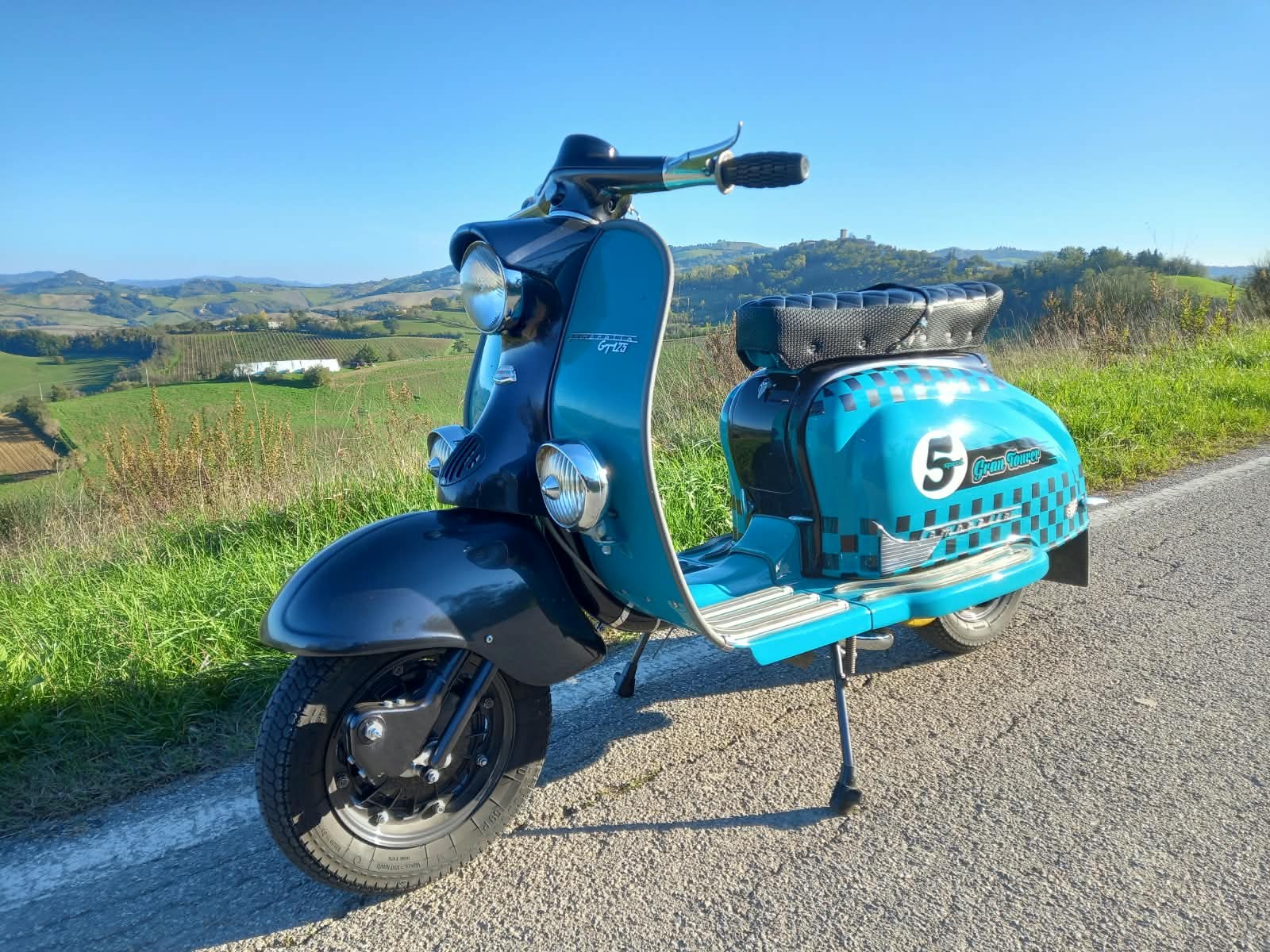
La mia Lambretta racer S1 è stata la realizzazione di un progetto che mi ha visto impegnato per diversi anni, dall’idea iniziale alla realizzazione definitiva.
Il tutto era iniziato con la volontà di mettere un motore bicilindrico su una Lambretta, cosa che non si è poi realizzata nel concreto perché non era disponibile sul mercato un motore come lo avrei voluto io e cioè molto ma molto simile a quello dei prototipi Innocenti. Carburatori da 20 per ogni lato, connessi ad un filtro aria e marmitta non ad espansione. Ci avevo anche pensato a costruire il tutto su quanto era disponibile sul mercato, ma ciò avrebbe comportato impegno e costi eccessivi.
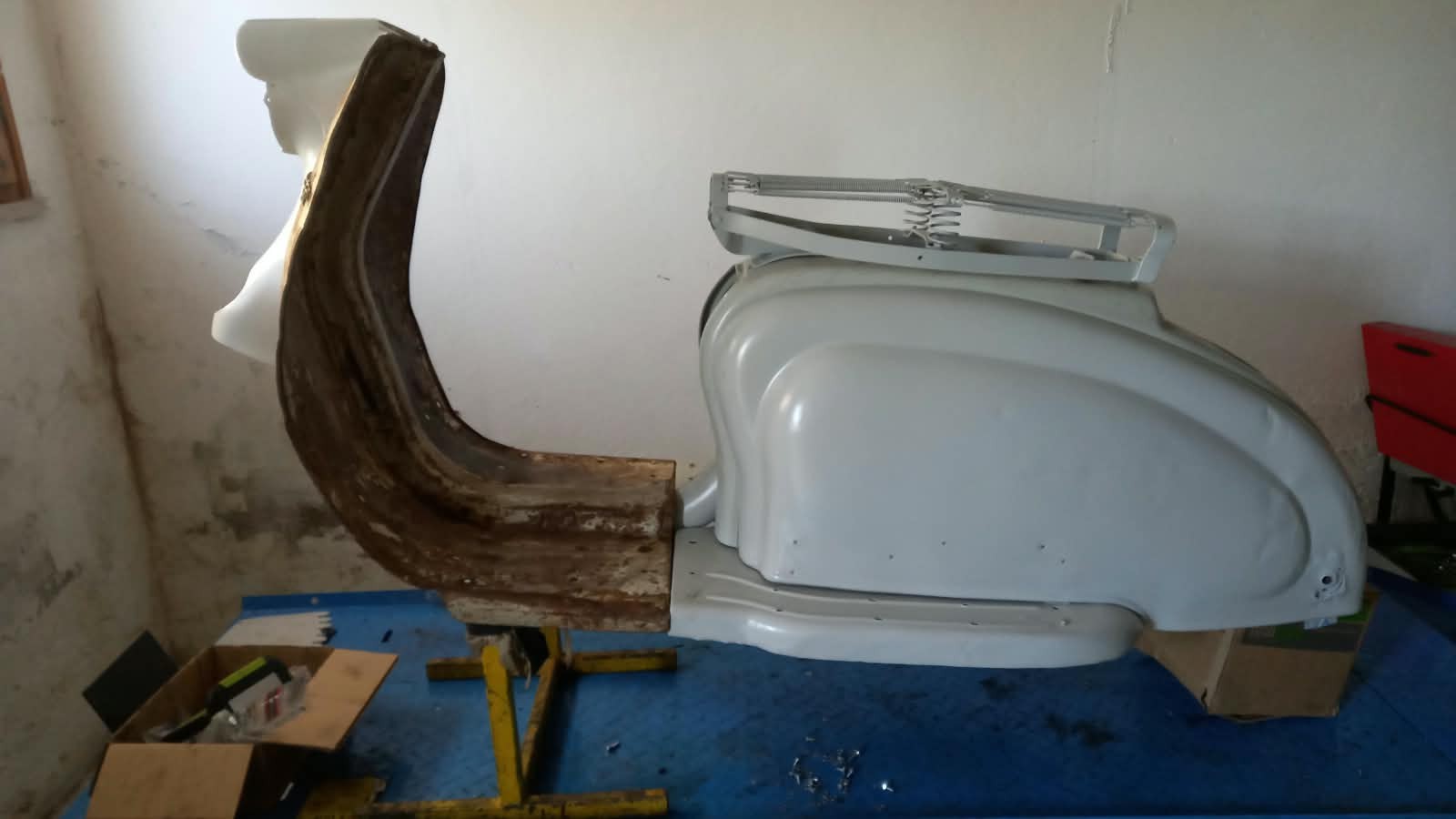
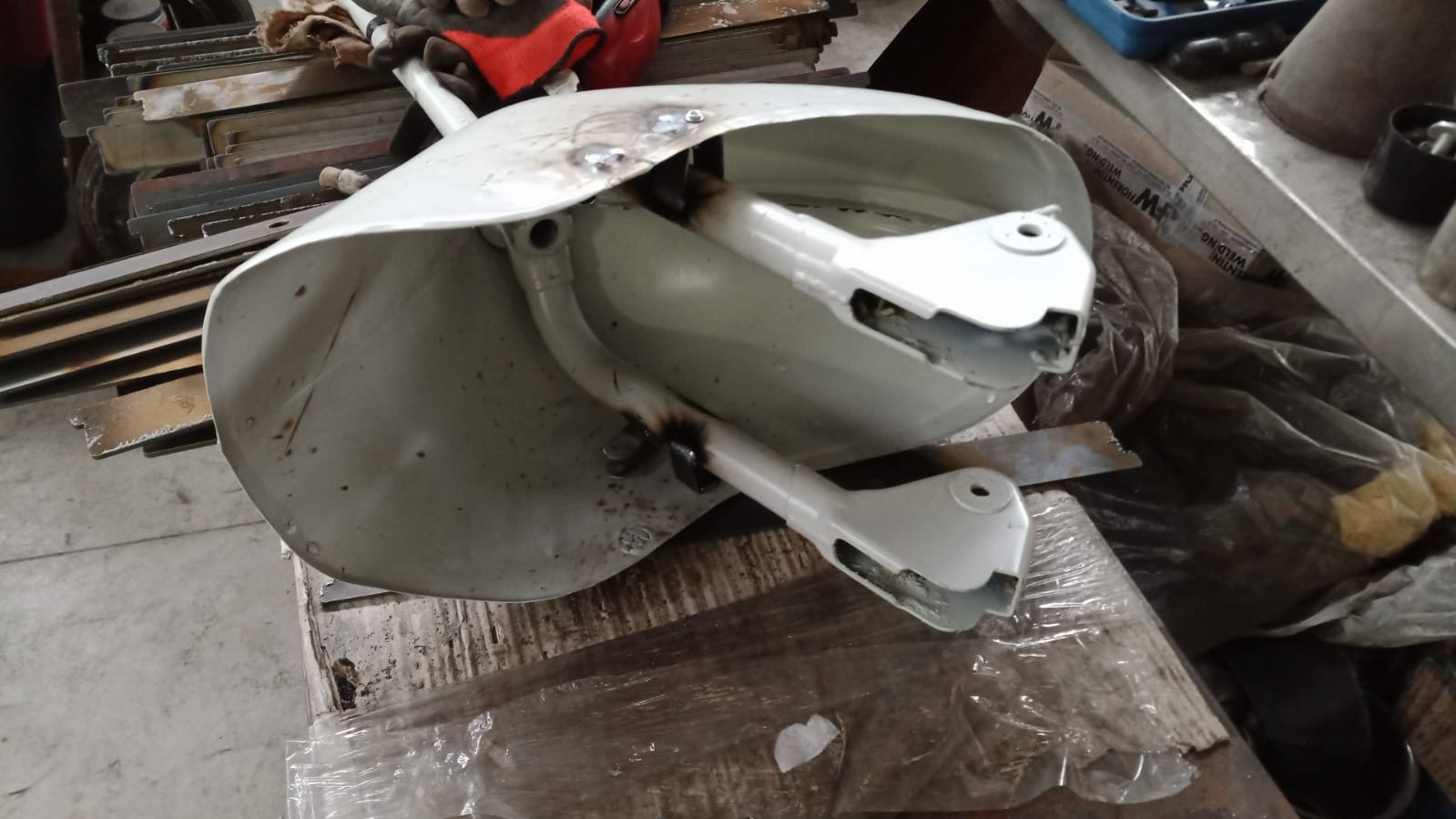
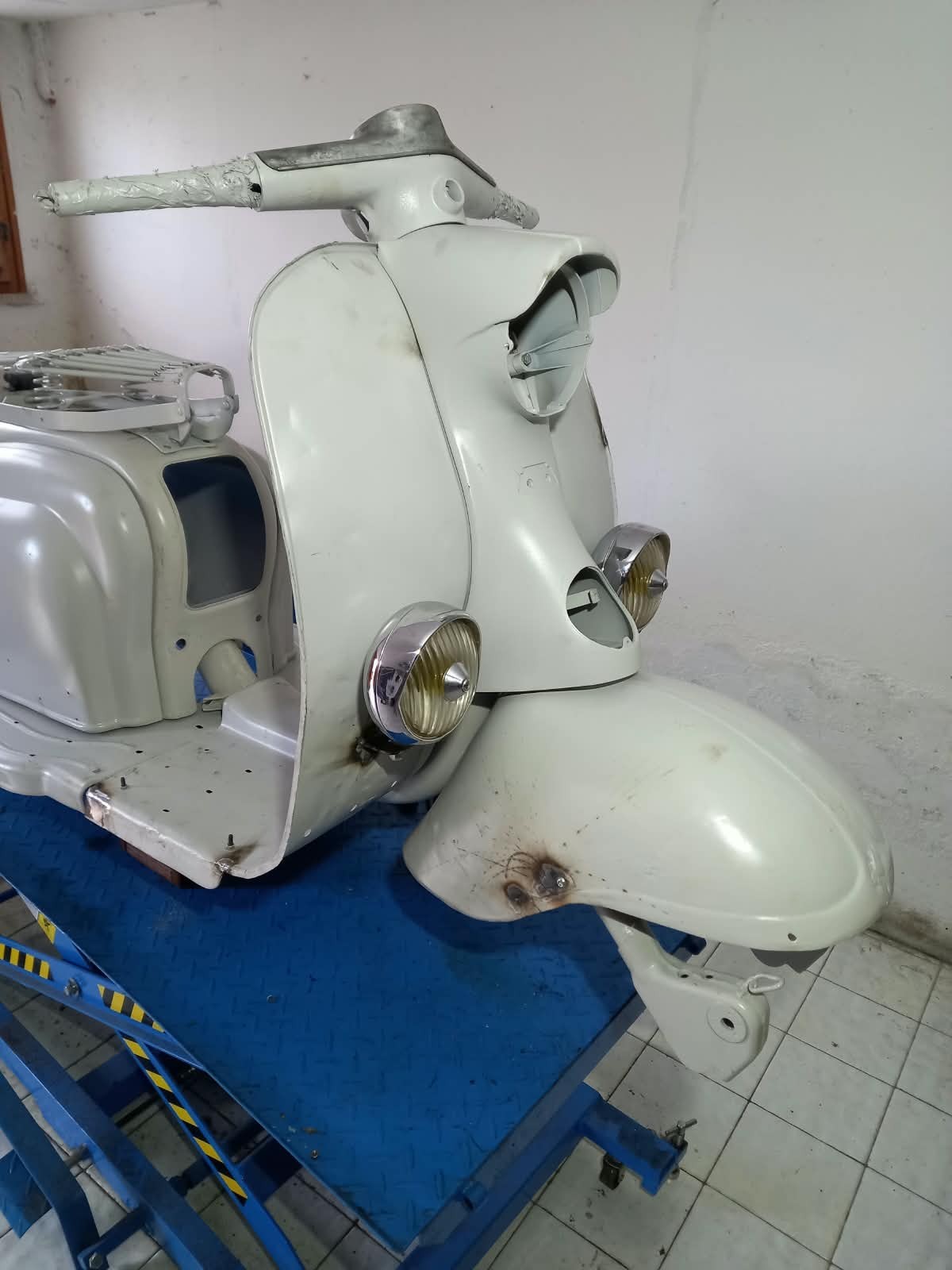
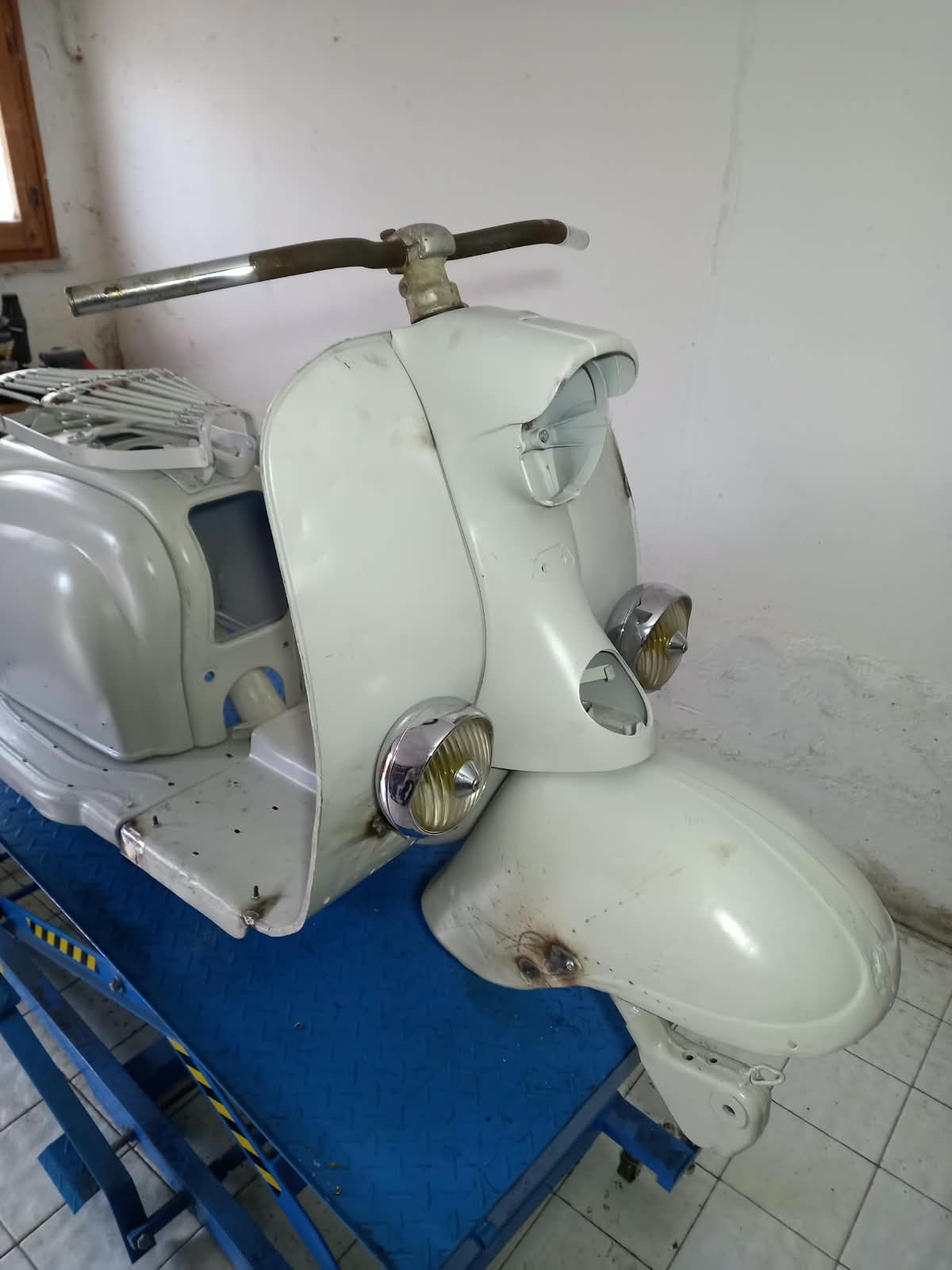
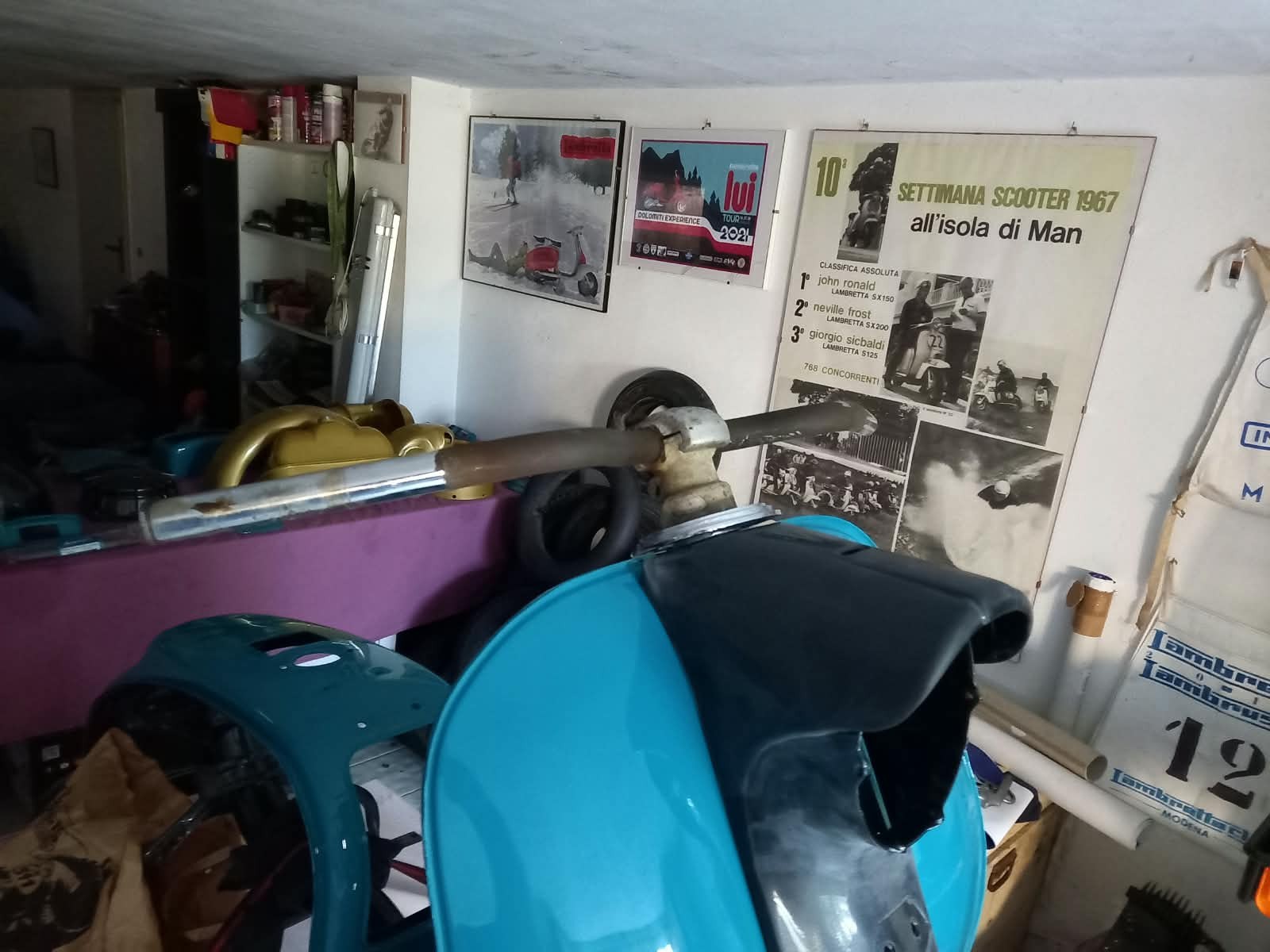
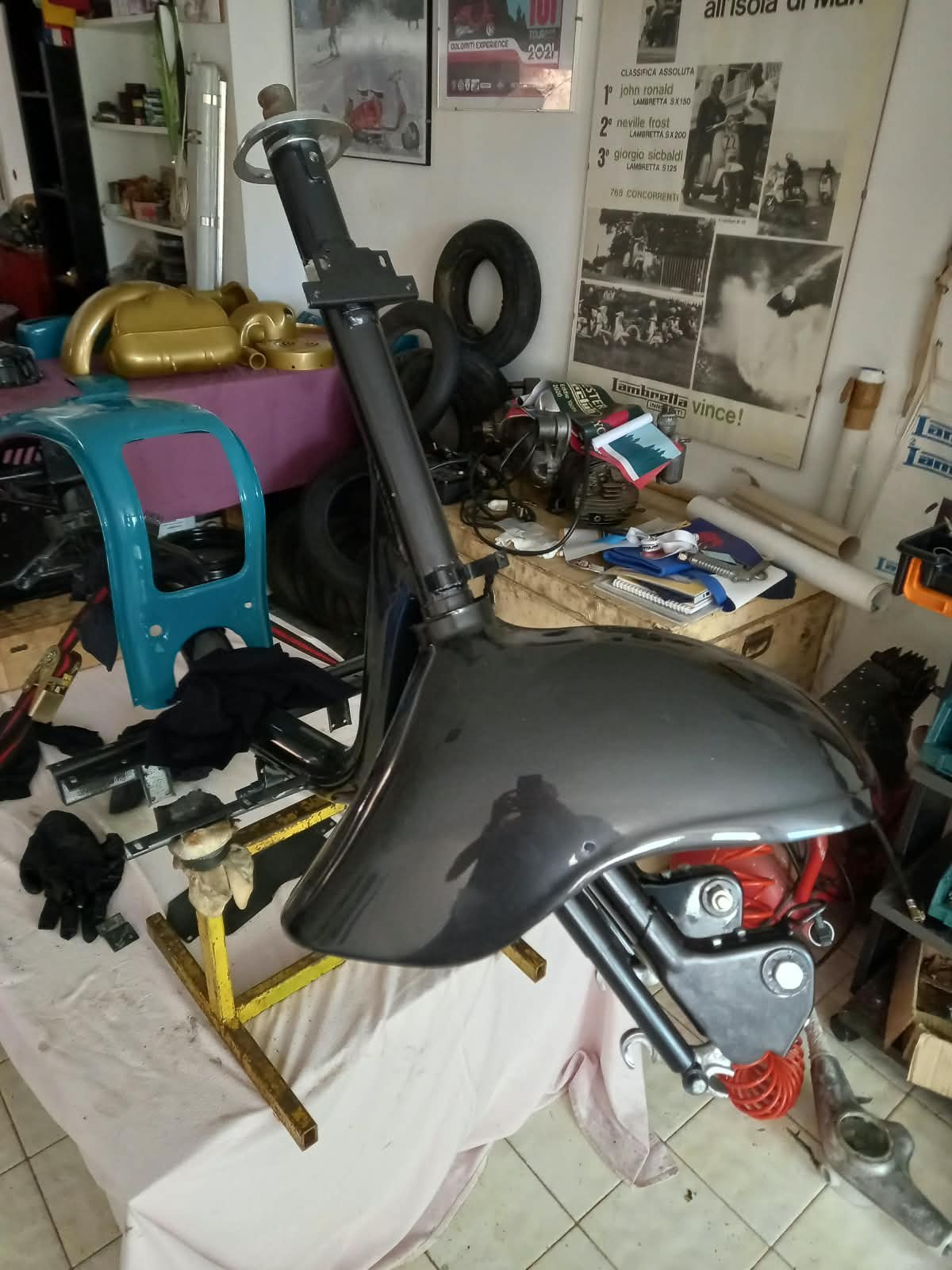
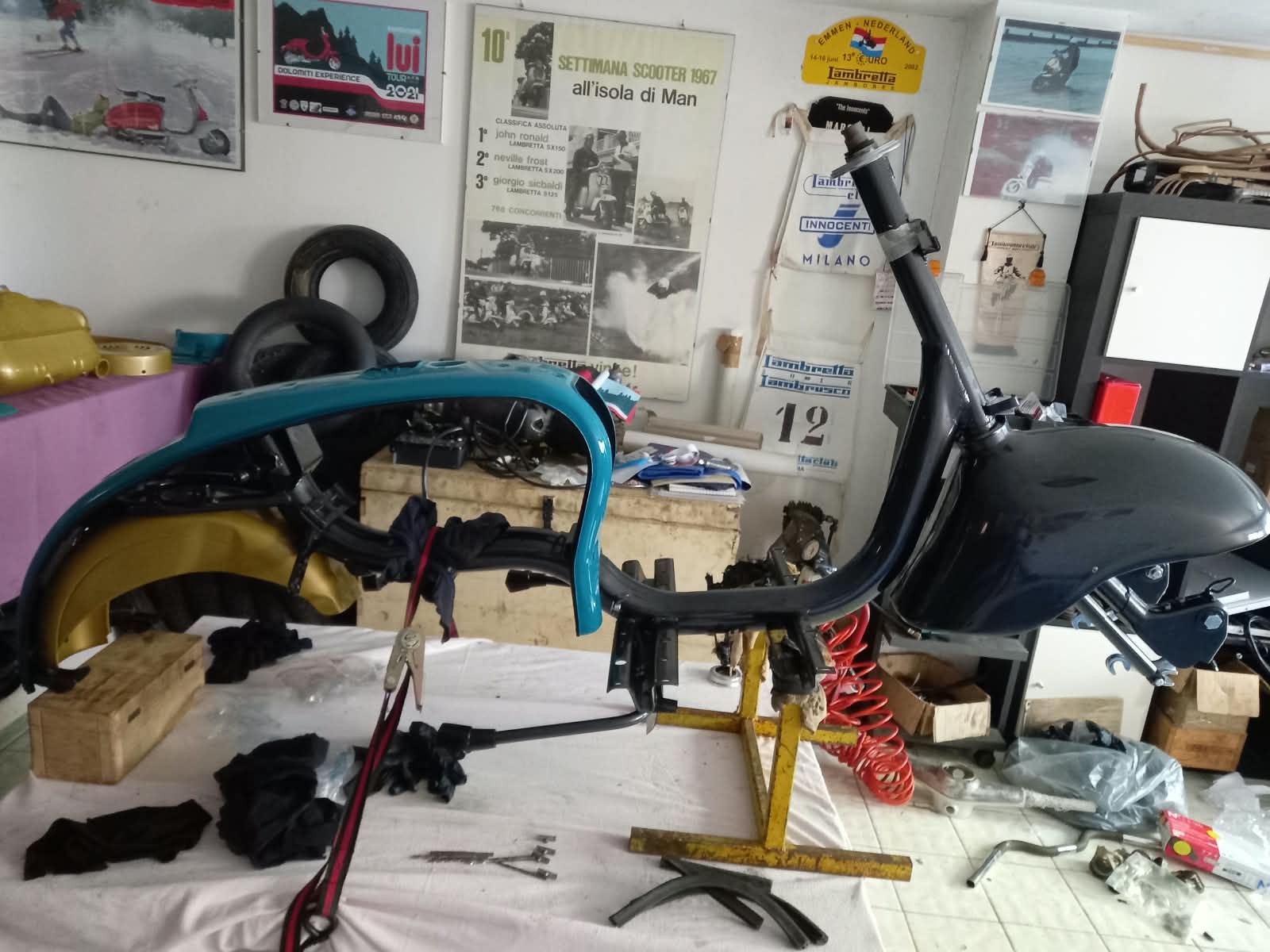
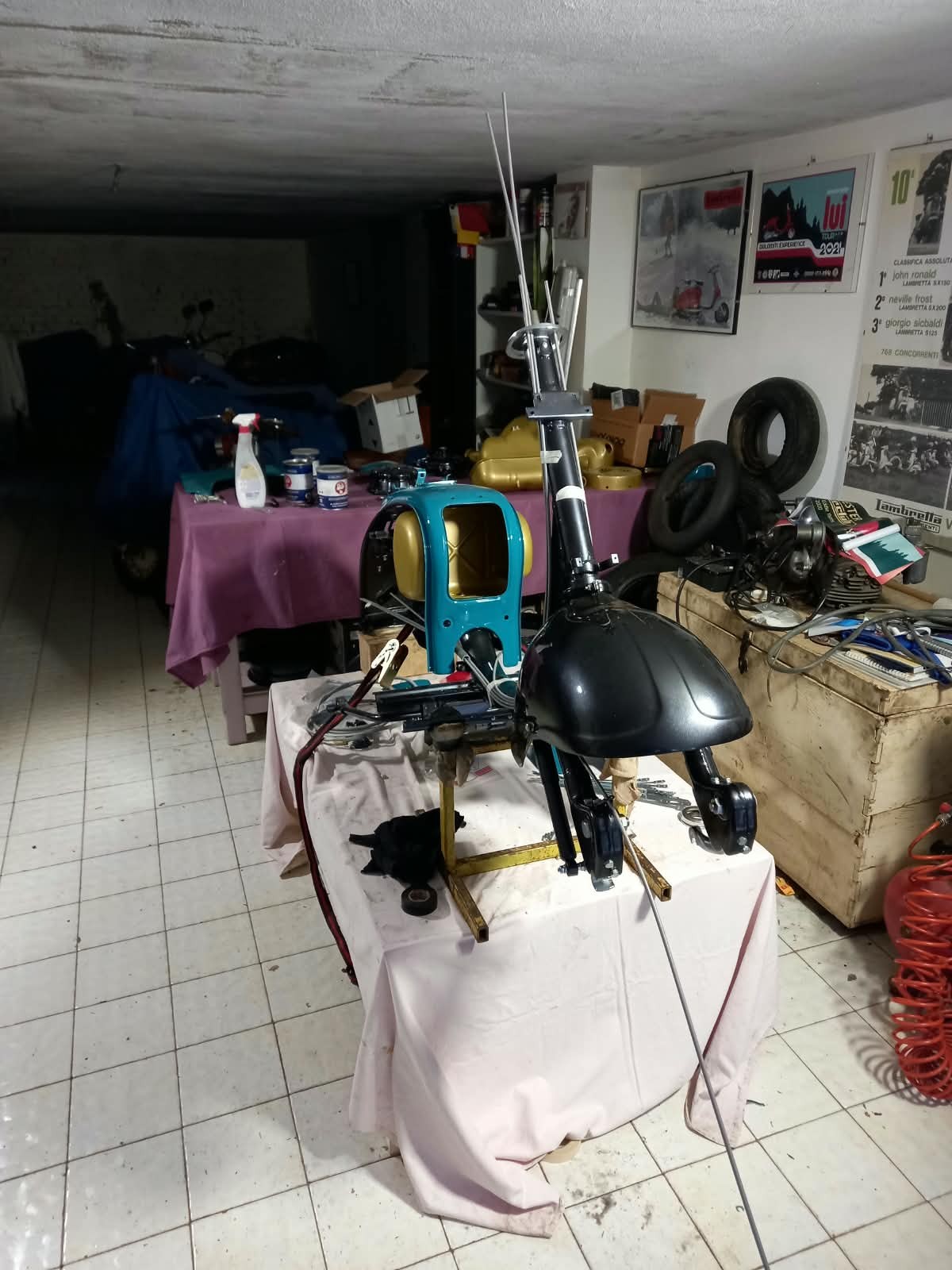
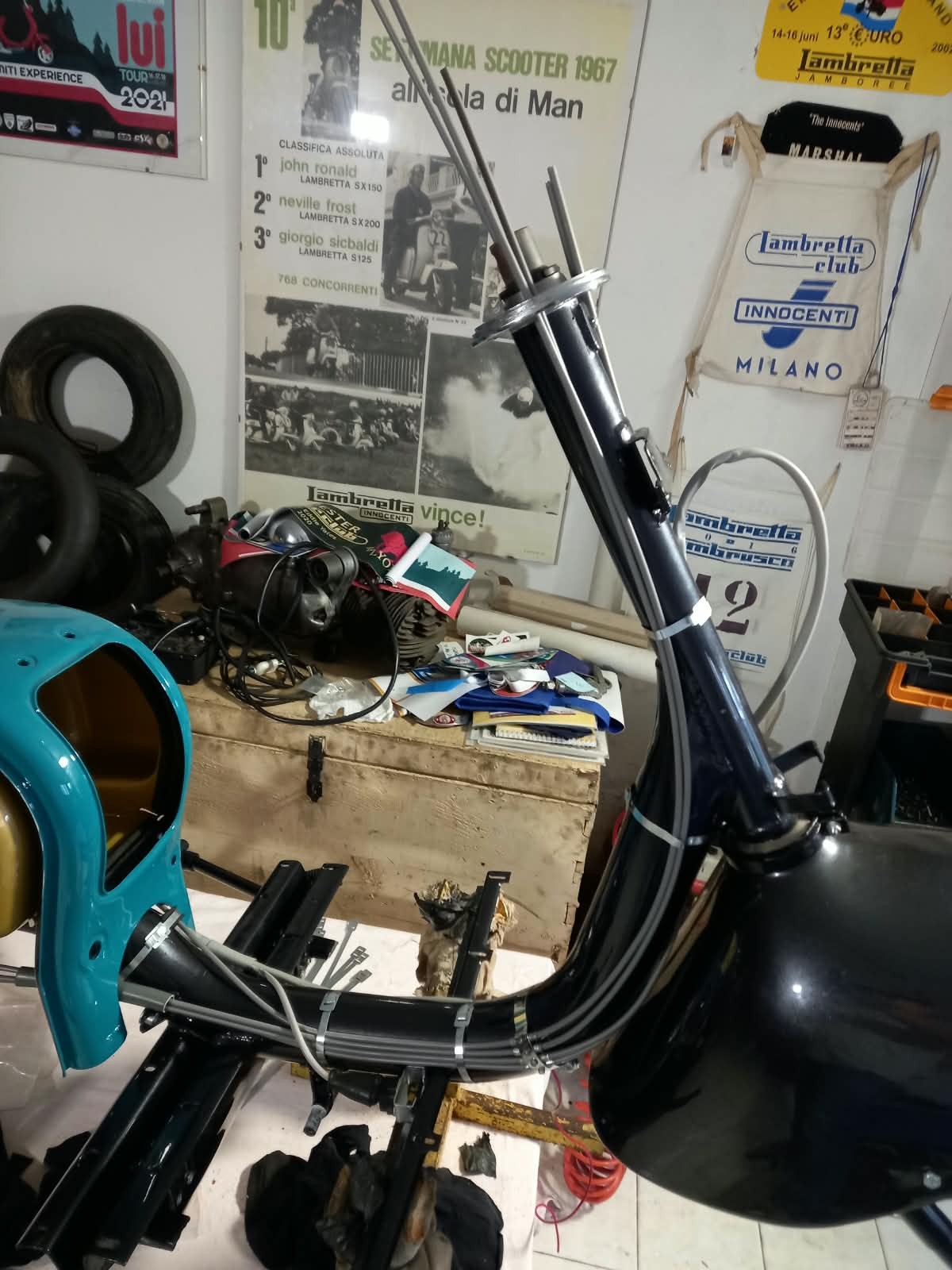
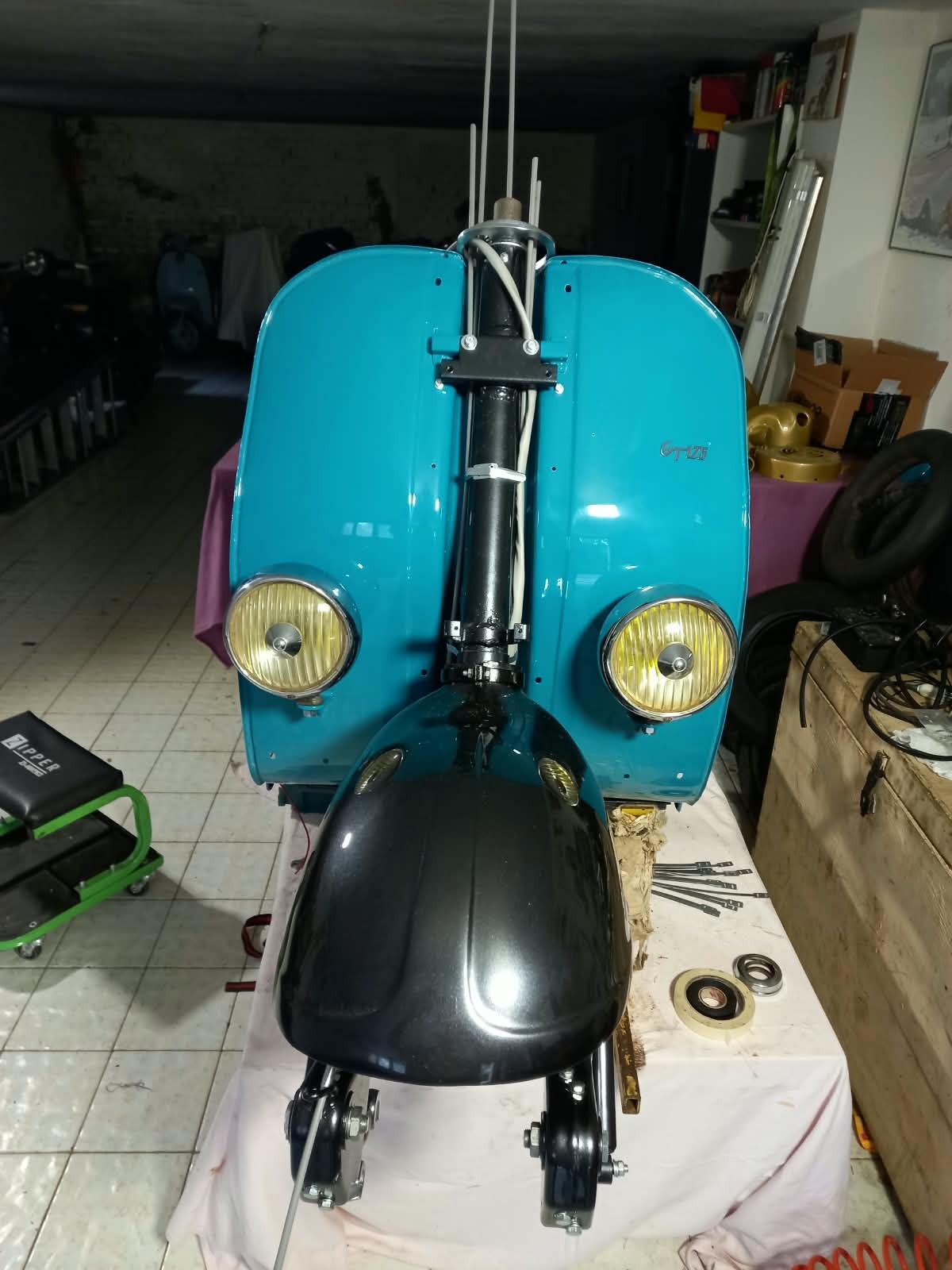
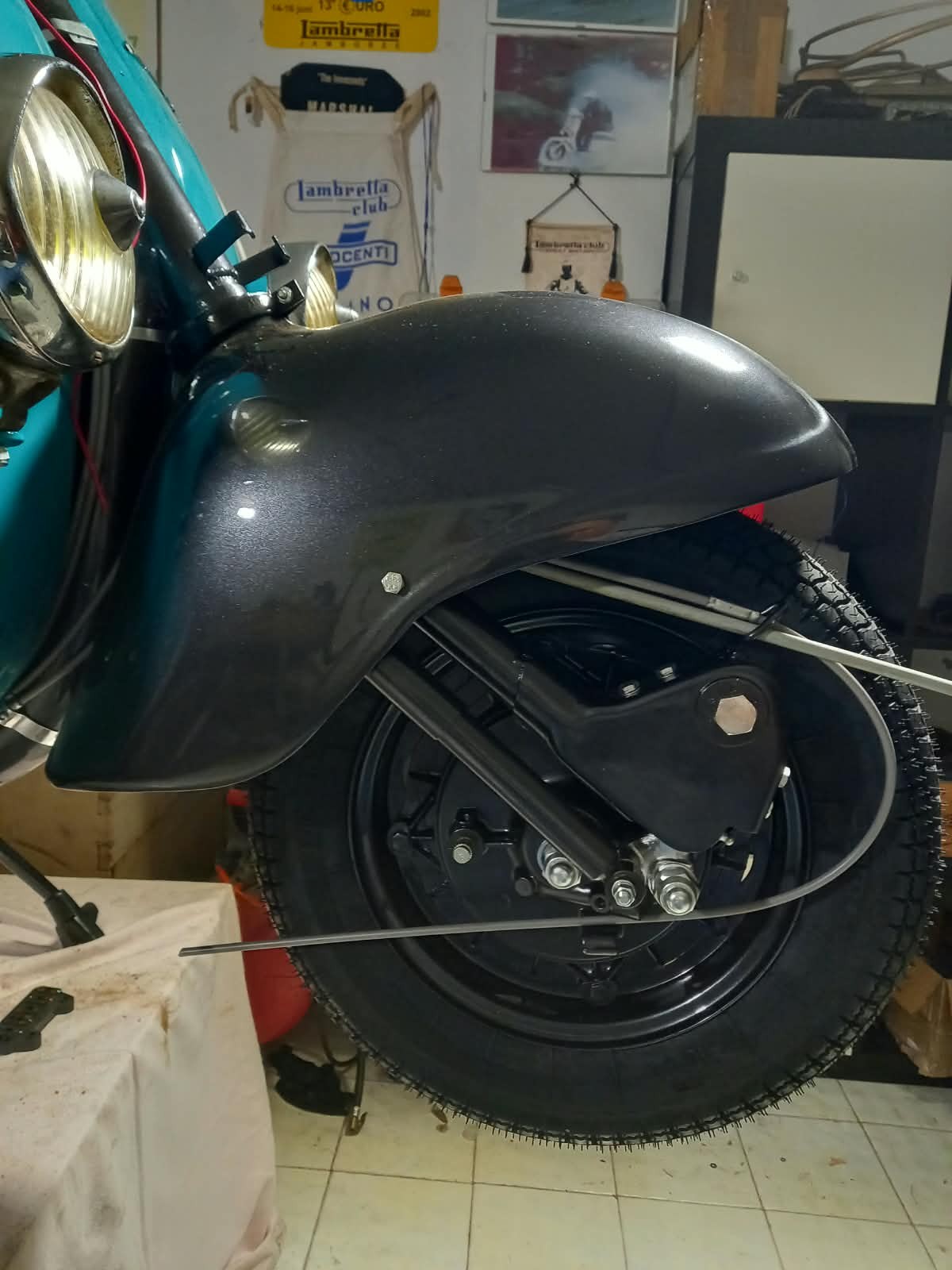
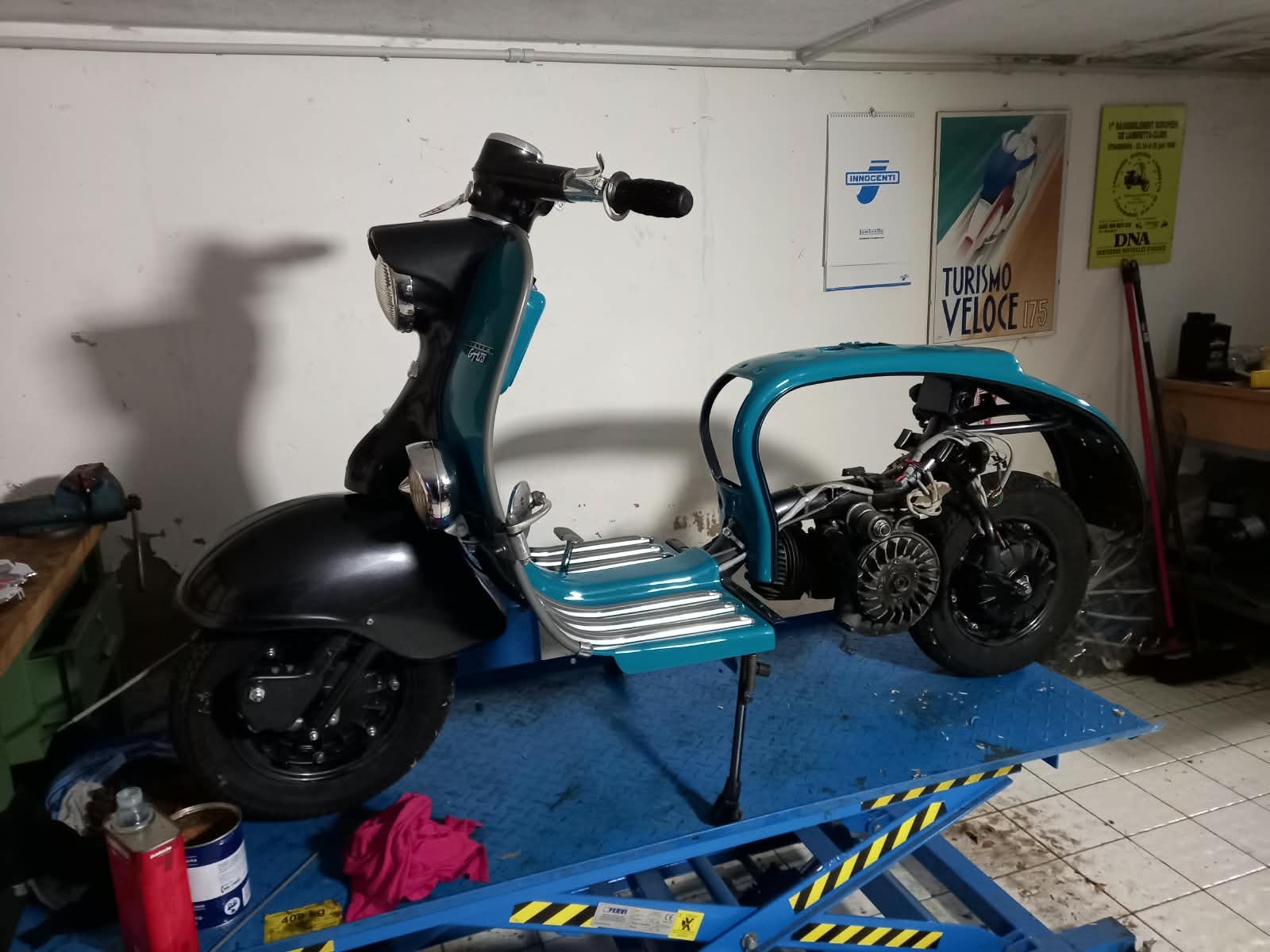
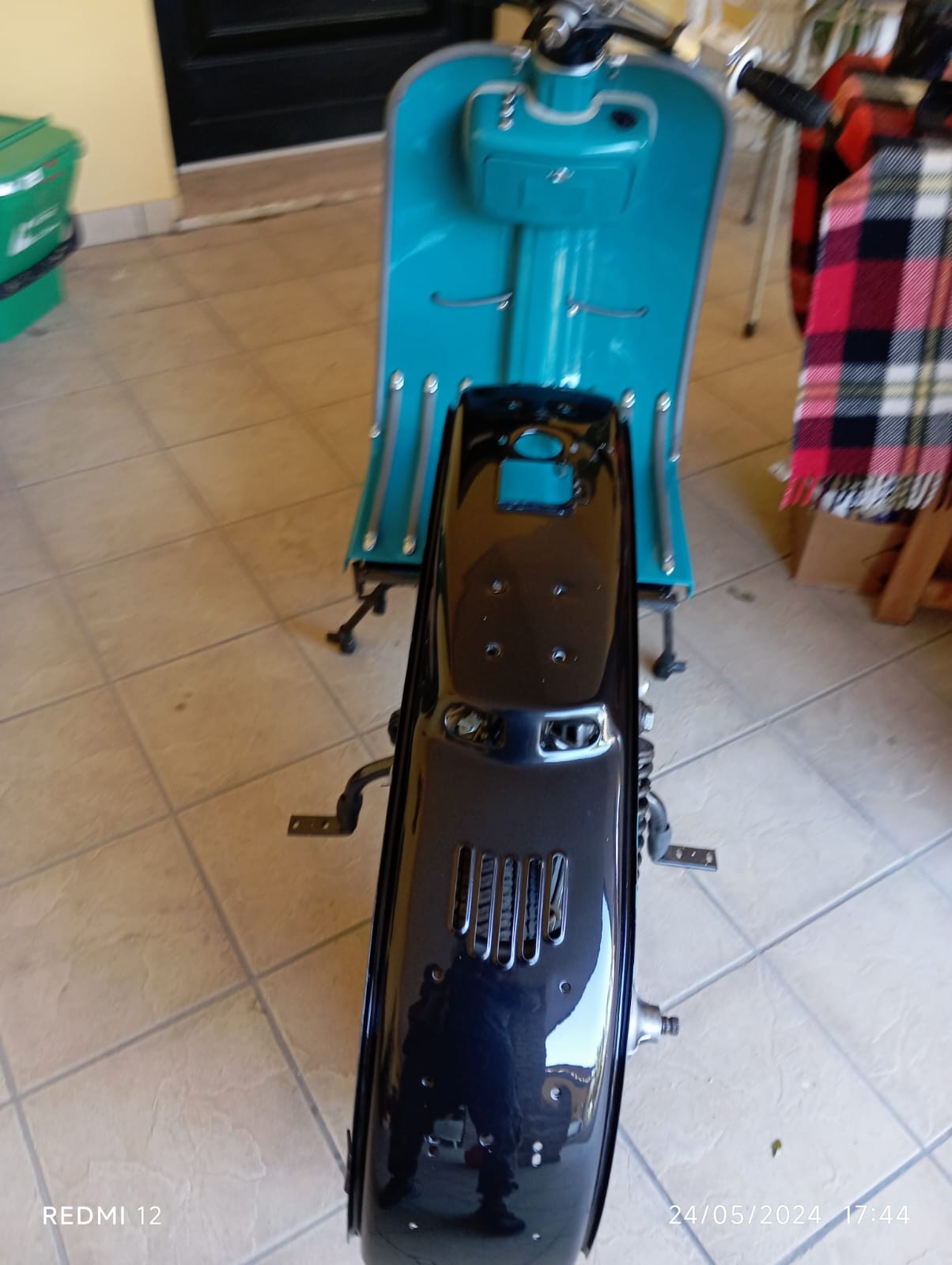
Il progetto reale è partito quando ho avuto disponibili un telaio, forcella e motore con documenti in regola provenienti dallo stesso mezzo; da lì ho iniziato a cercare le parti mancanti della carrozzeria. Il parafango anteriore proveniente da una Eibar spagnola è stato fornito dall’amico Jaime; mi sembrava una cosa molto originale, ma nel corso degli anni si è rivelata un’idea venuta in mente a tanti altri.
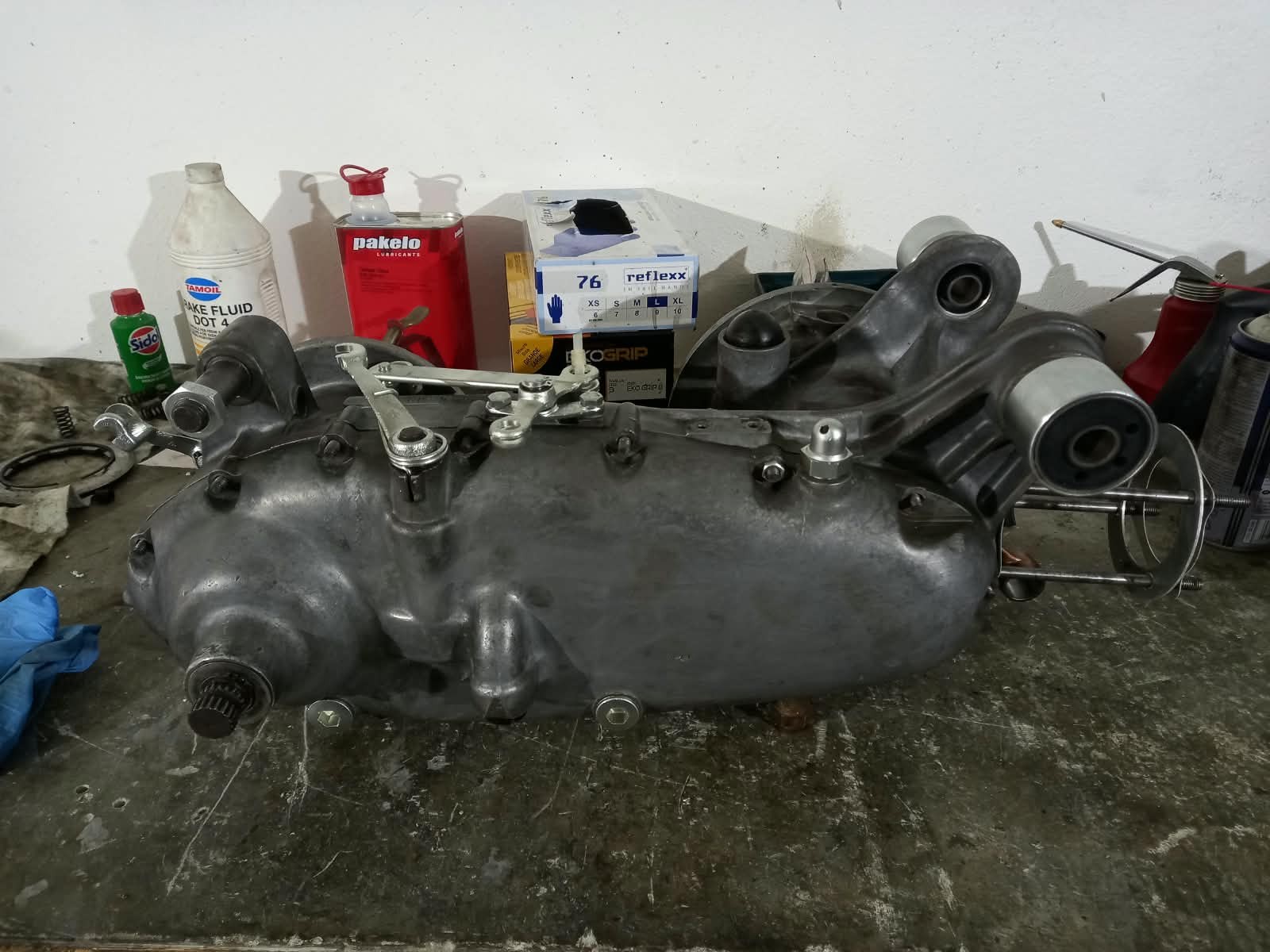
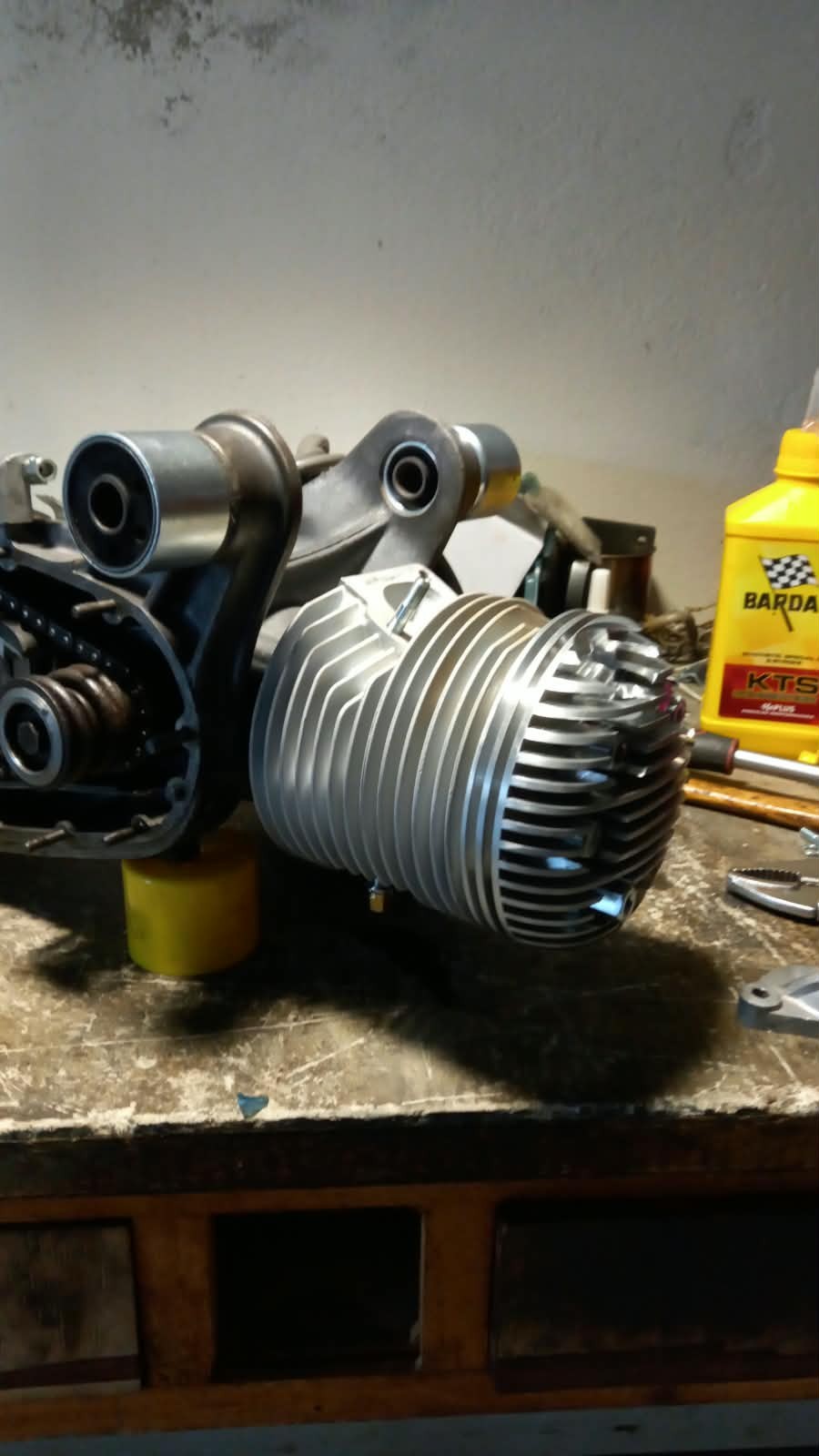
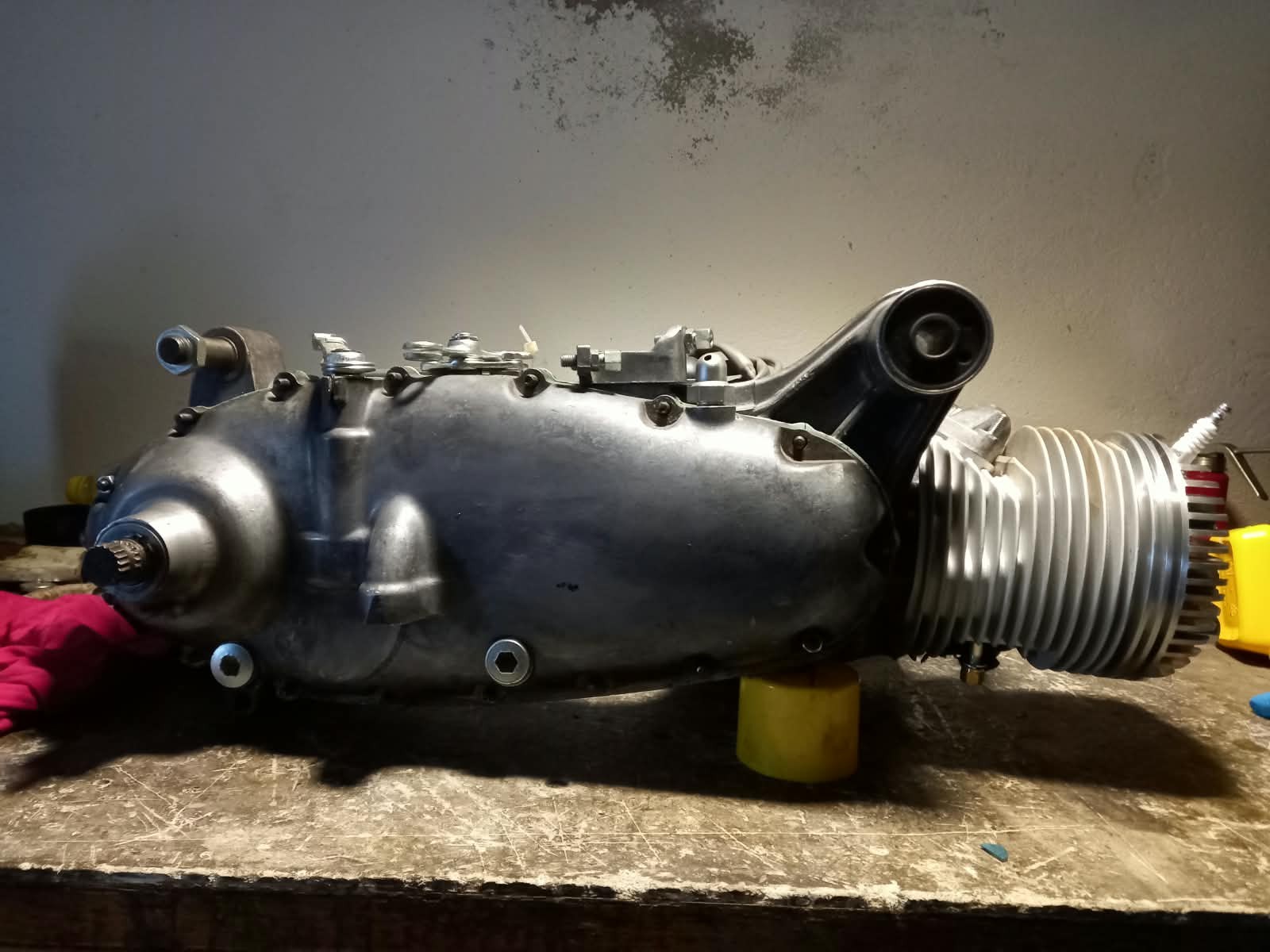
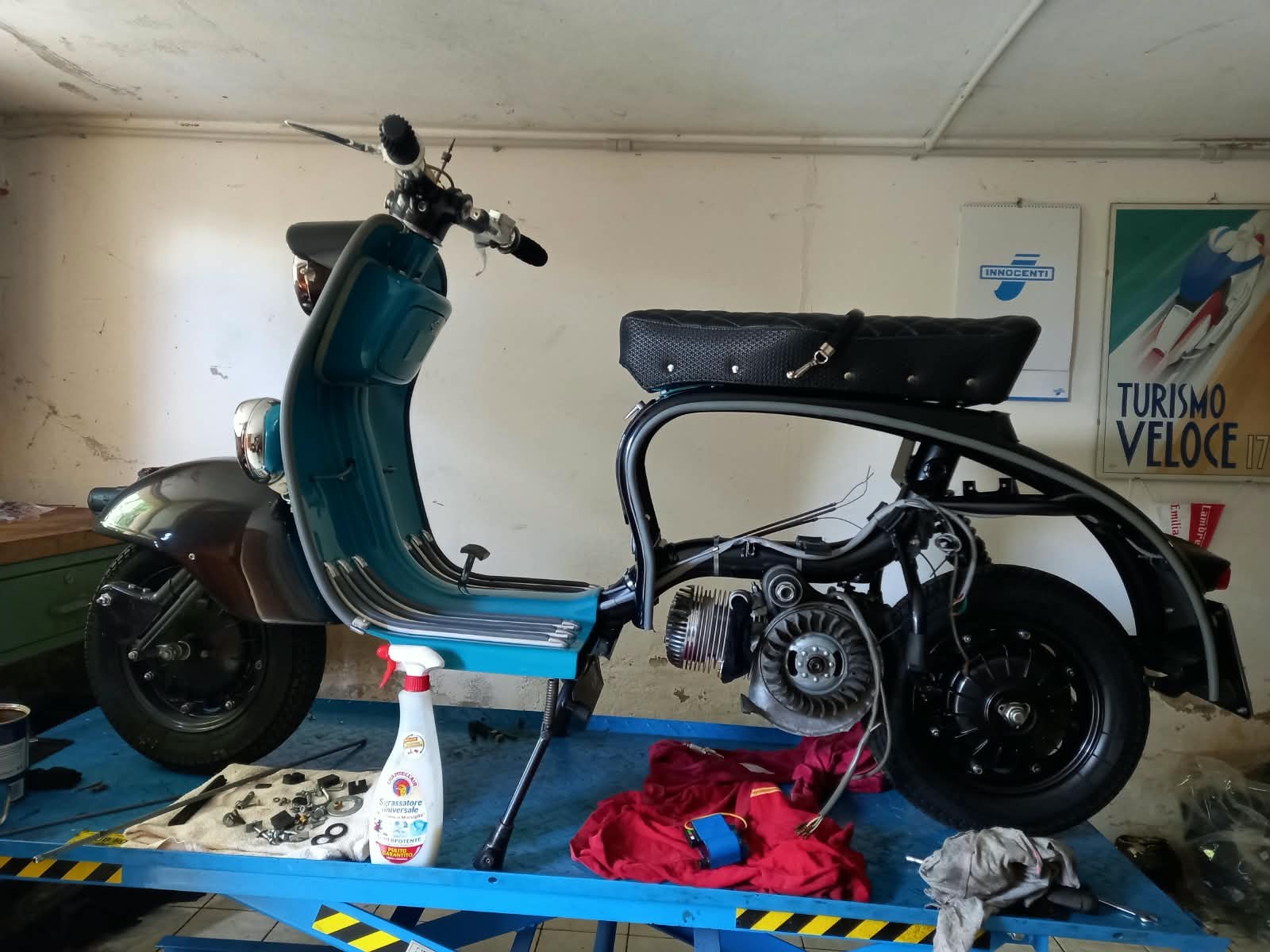
Per il motore ho quindi optato per uno dei gruppi termici più venduti, un Kit RT195 del quale ho sempre avuto feedback positivi, in connessione con un albero motore BGM; il carburatore è un normalissimo SH2/22 e l’accensione elettronica si compone di un vecchio statore AF prodotto dalla Ducati negli 80 in connessione con un volano Ducati electronic originale, secondo me l’accoppiata più affidabile immaginabile per ottenere un impianto elettrico a 12v. Quanto al cambio ho montato un Cyclone a 5 marce, soprattutto perché fin dagli anni 80 avevo visto la possibilità di avere 5 marce sulla Lambretta come una grandissima figata.
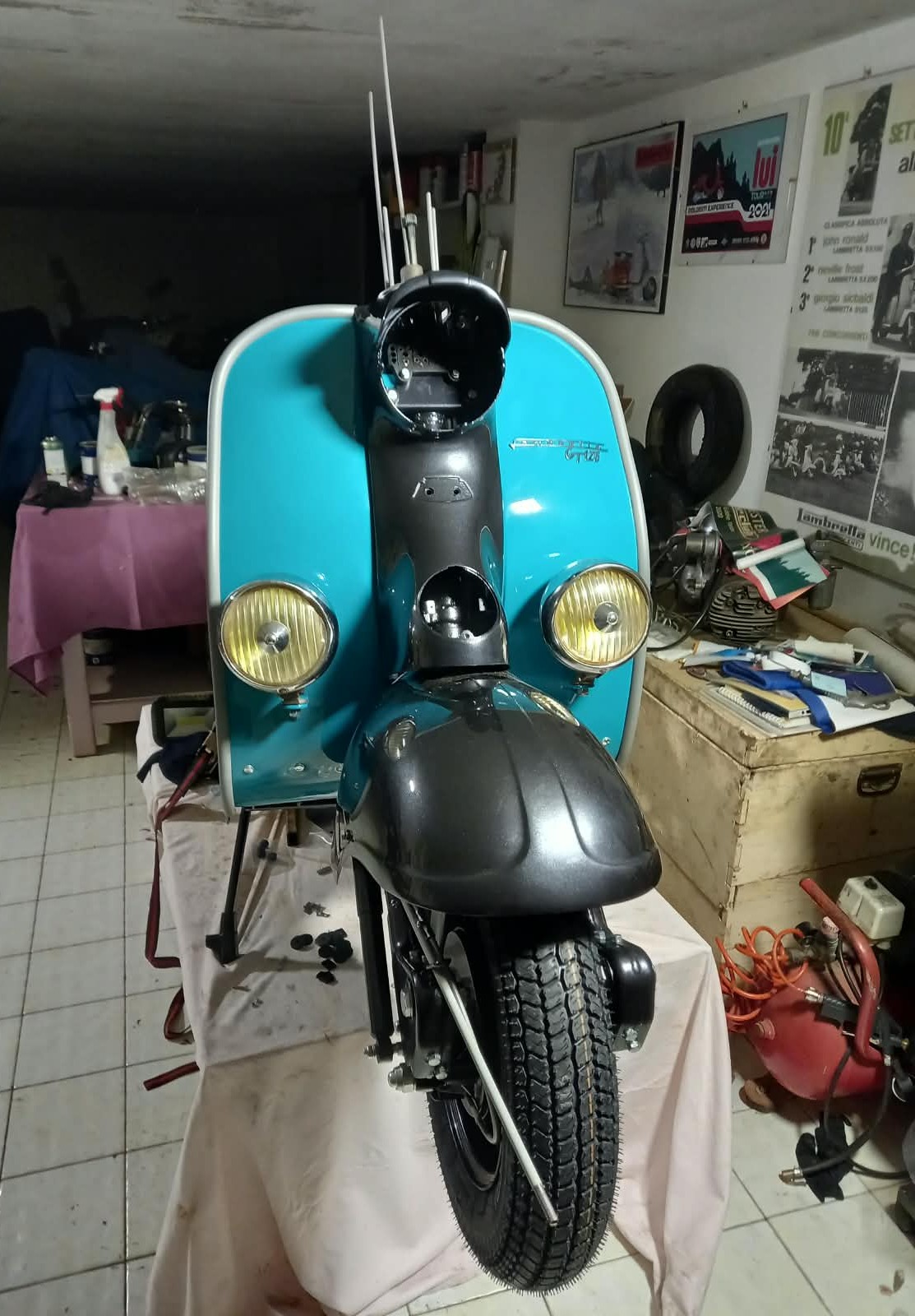
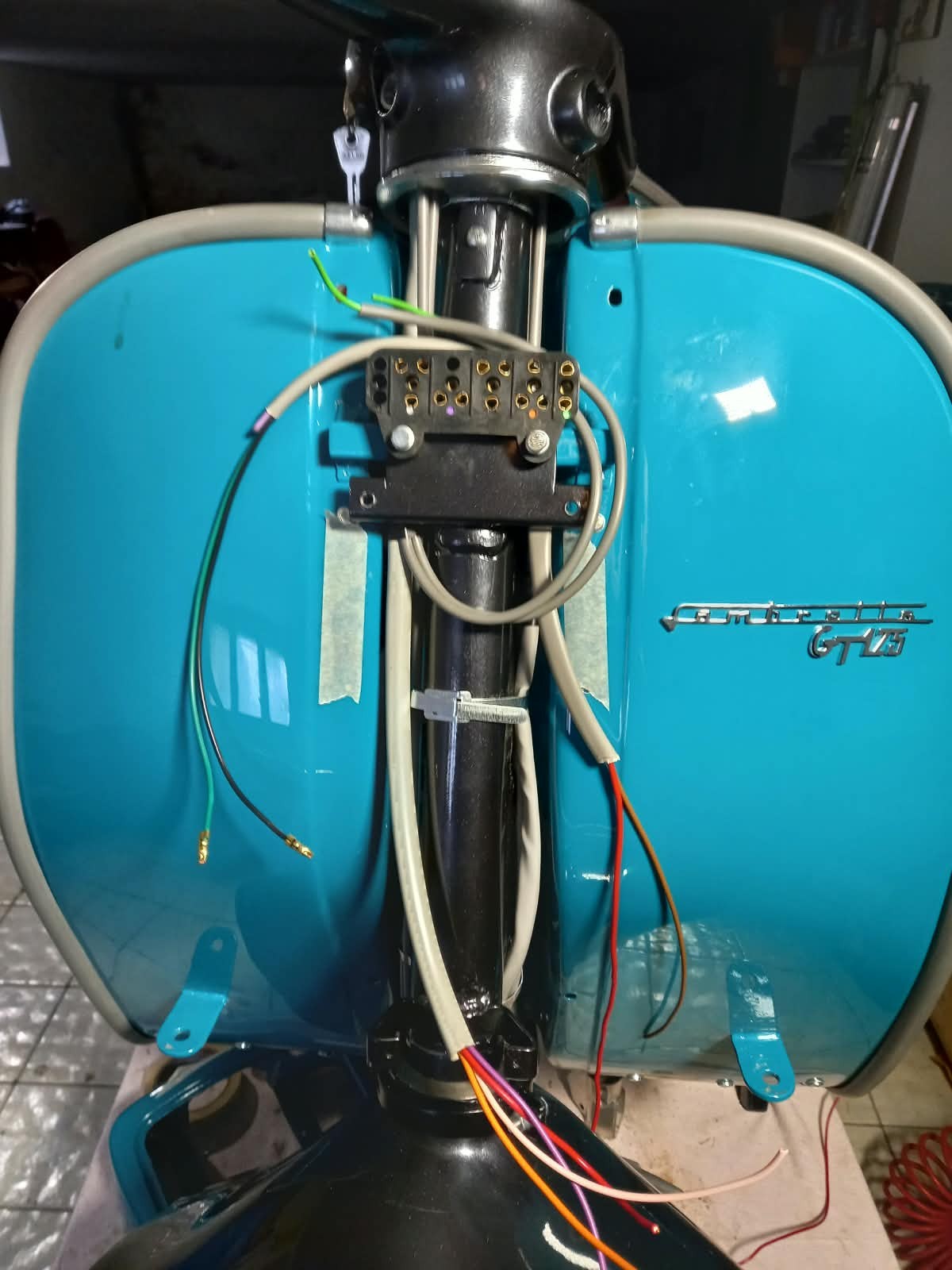
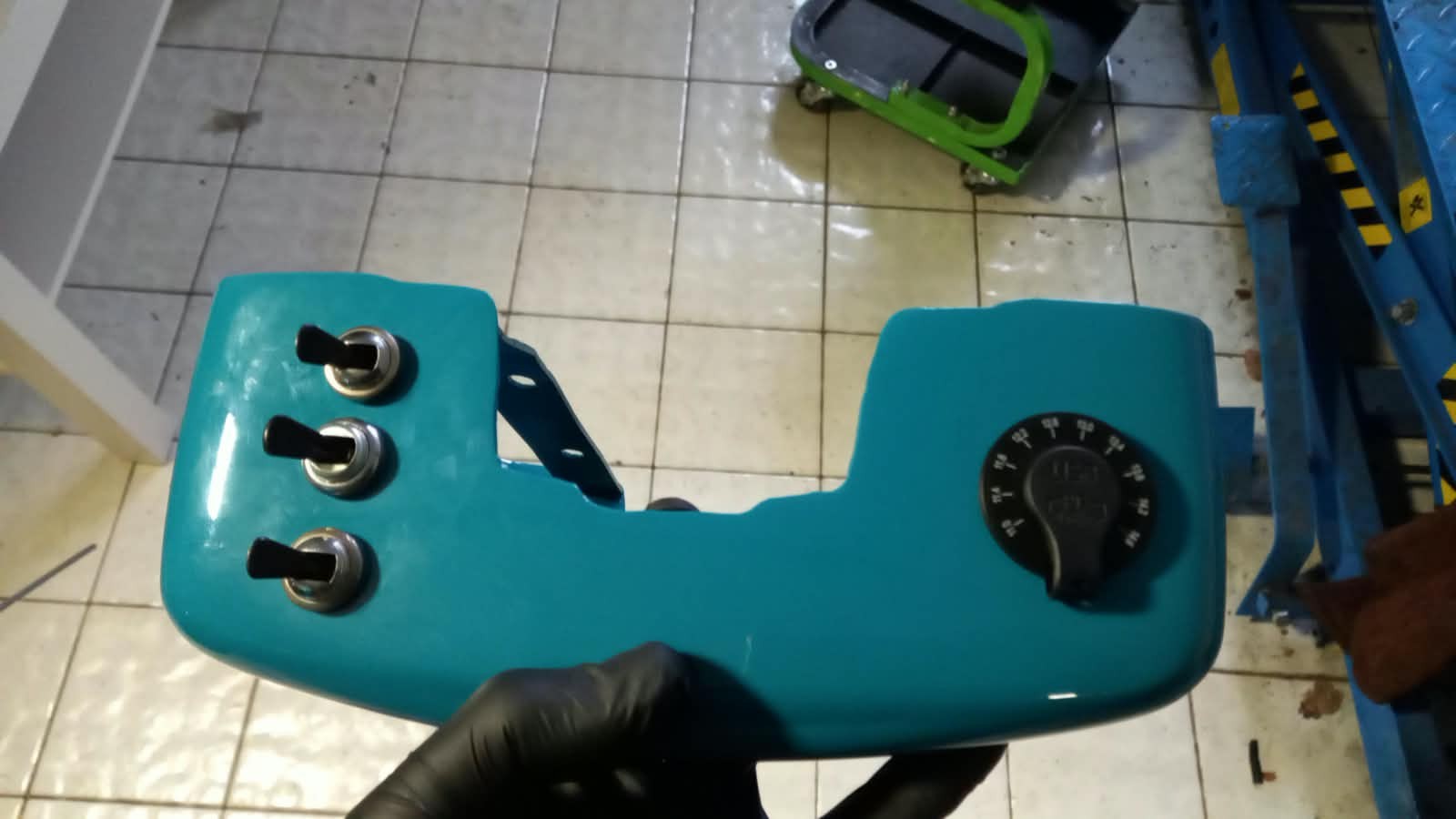
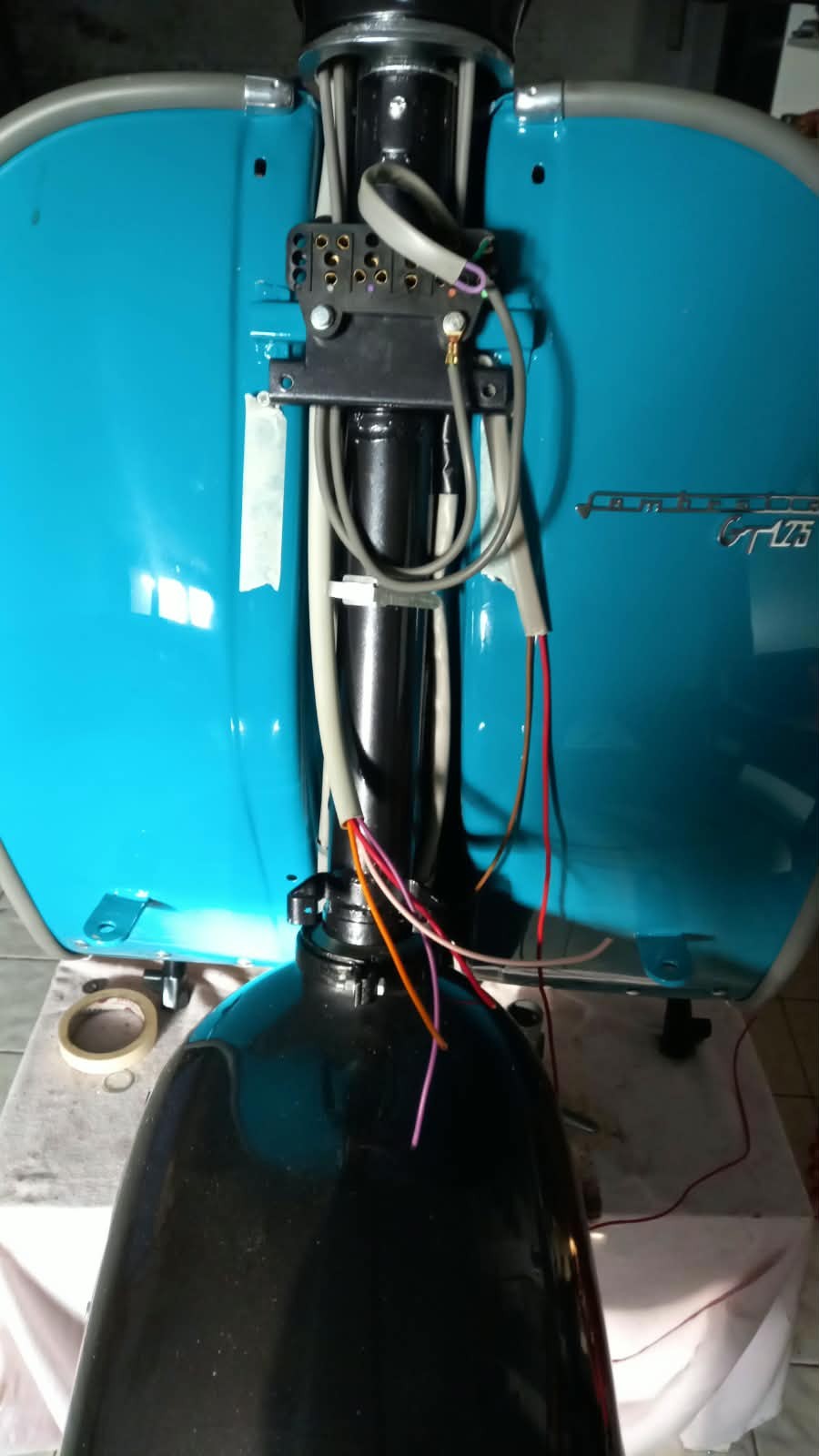
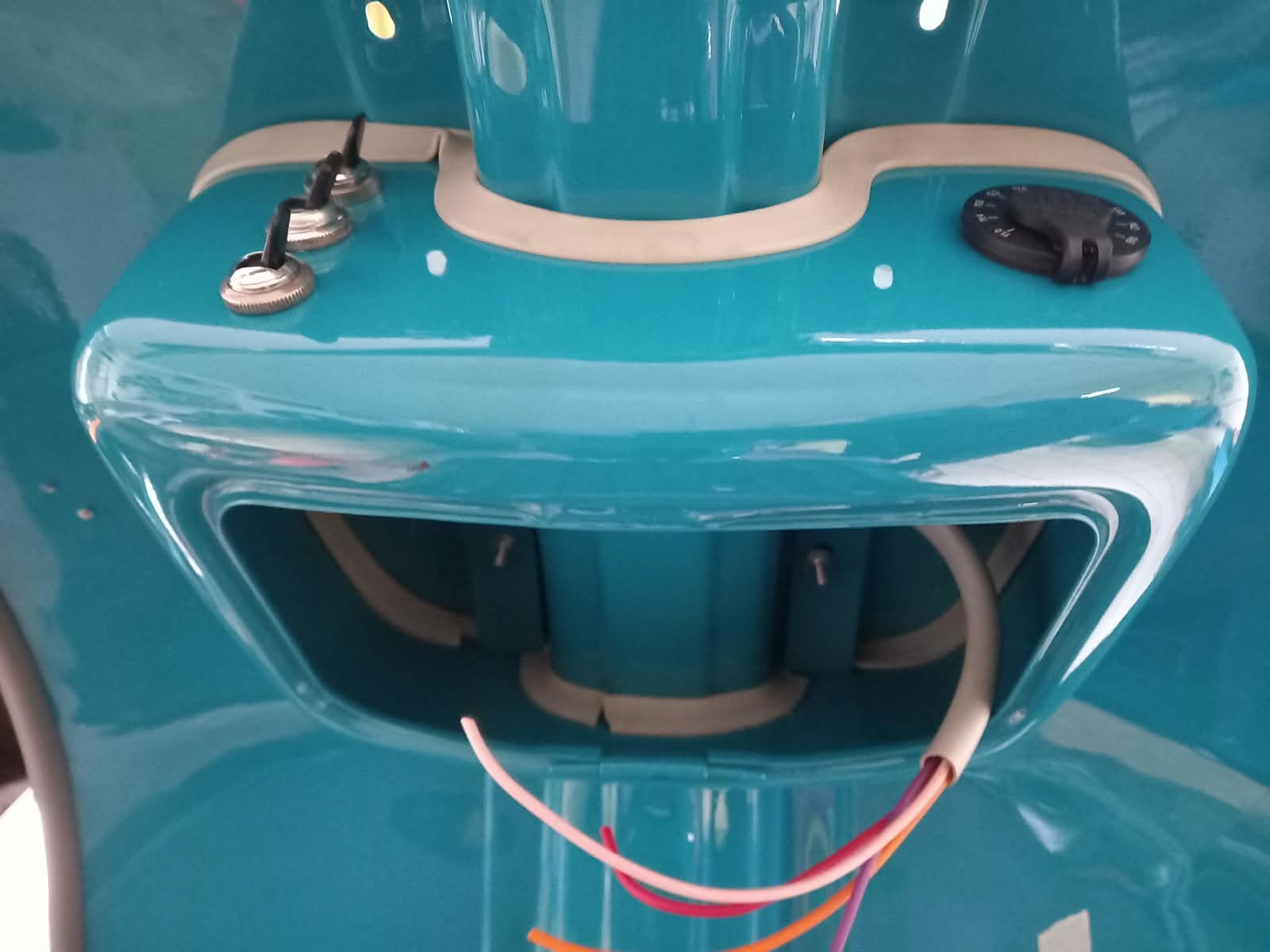
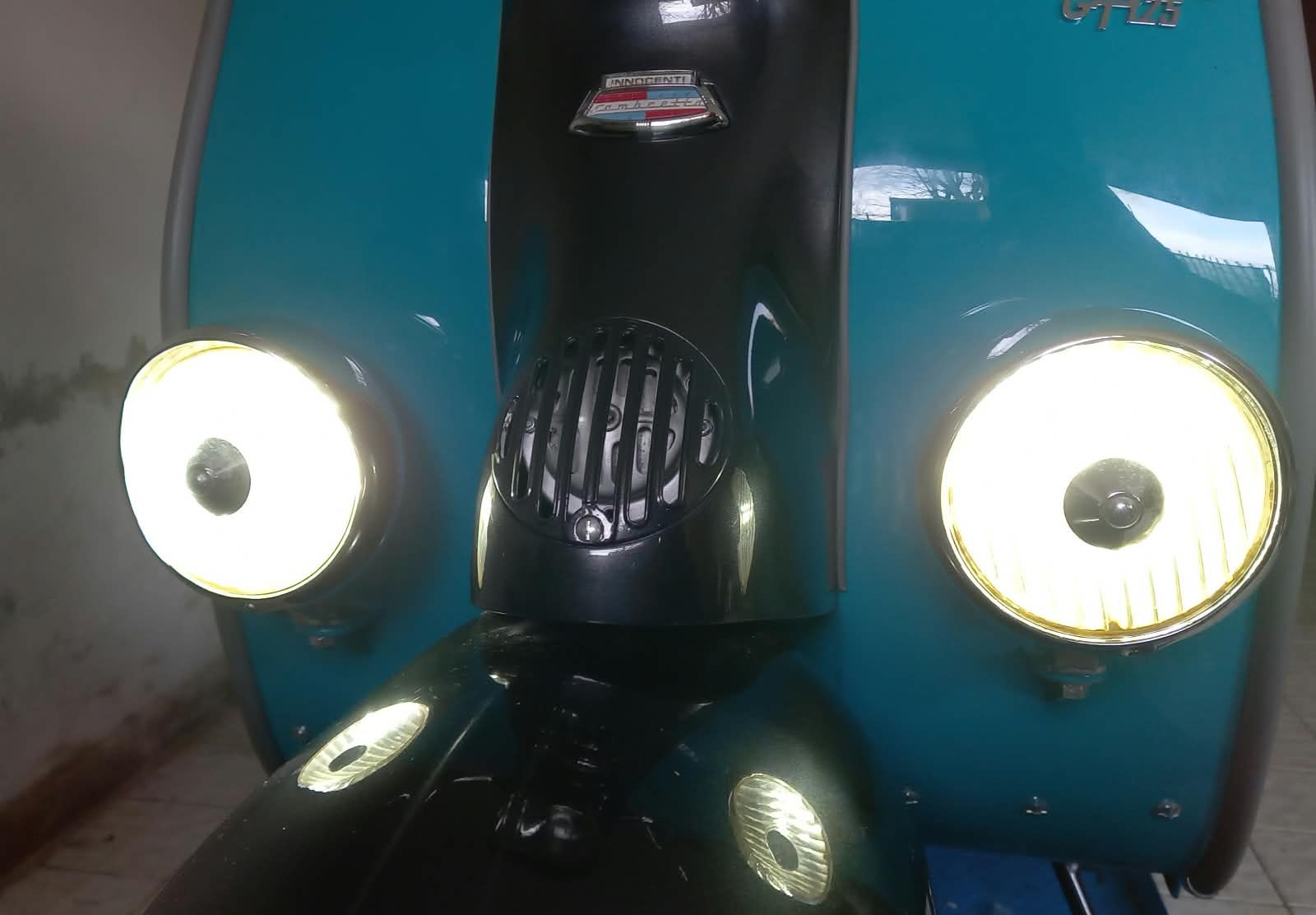
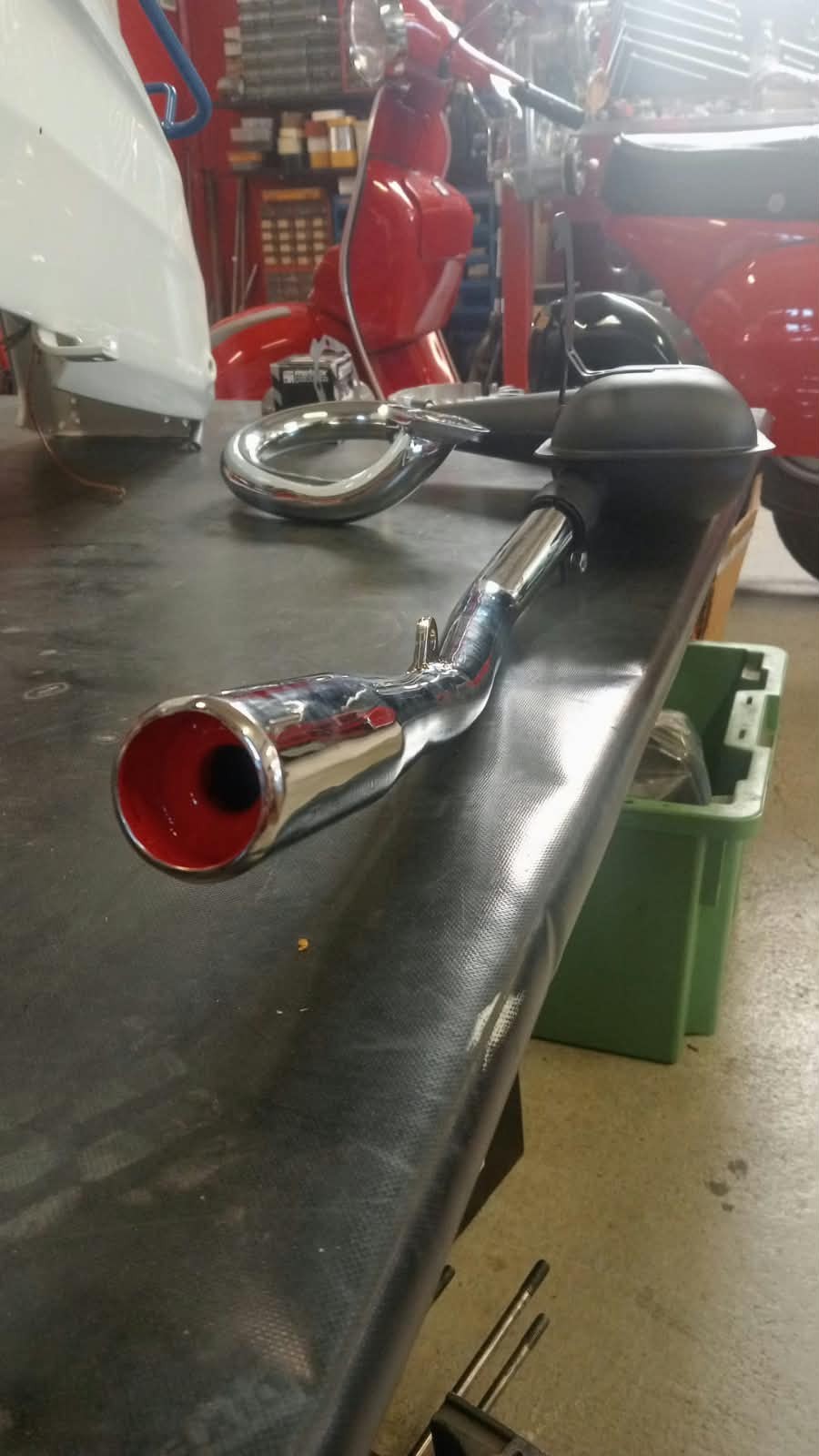
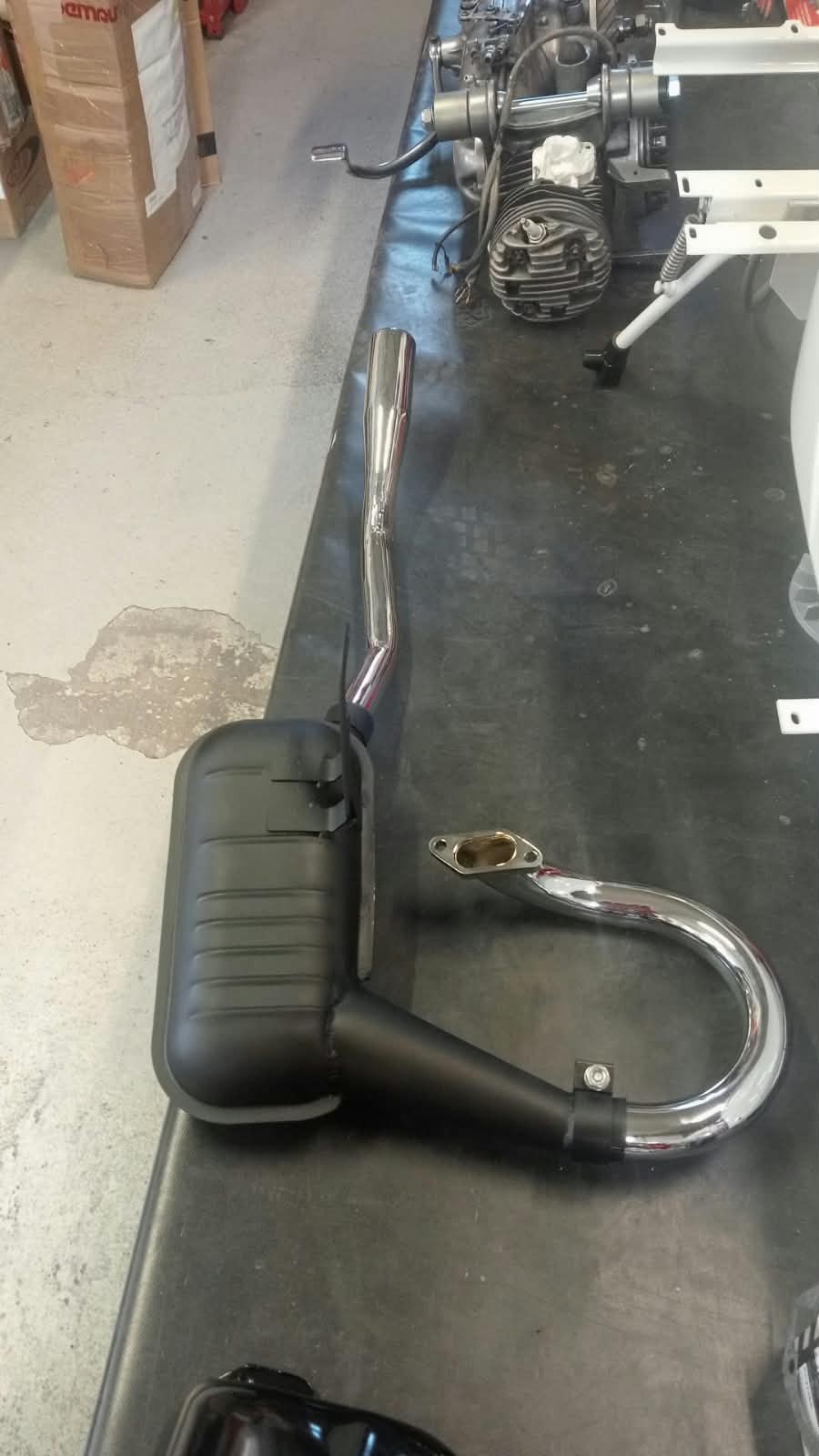
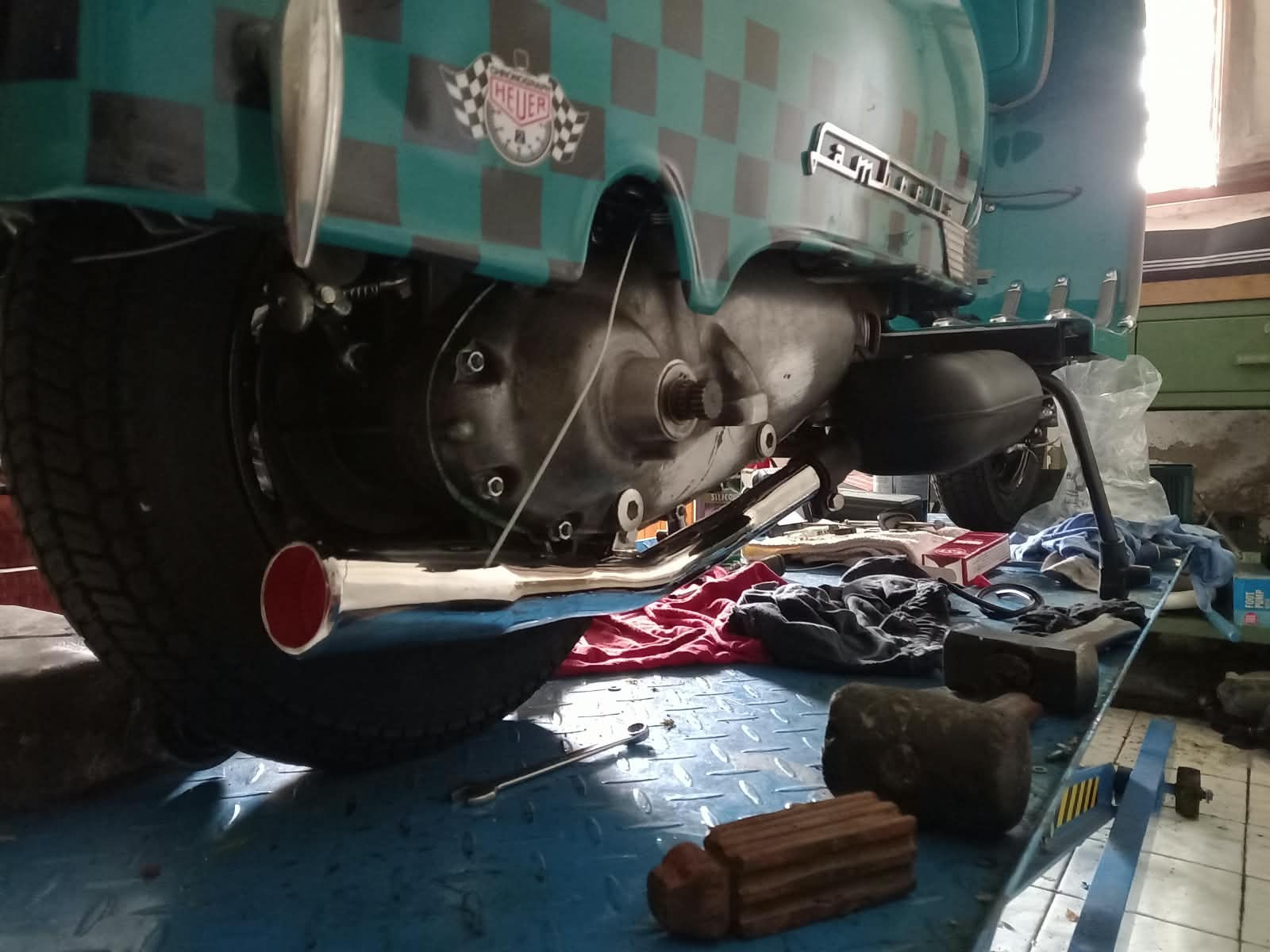
Con l’aiuto dell’amico Thomas abbiamo realizzato un impianto elettrico completamente custom, con le luci che si accendono per mezzo di interruttori posti sul bauletto LD all’interno dello scudo e la chiave che dopo il primo scatto permette di accendere i fanali supplementari montati sul davanti. Così, tanto per cambiare le carte in tavola. Sul bauletto è inoltre montato un moderno strumento per misurare la carica della batteria ed avere al contempo una presa USB in caso si voglia collegare un cellulare per usare il navigatore. La marmitta è stata realizzata da TV Scooter Garage usando un terminale di una marmitta after market degli anni 60 e realizzando una big bore sulla base di una marmitta standard. Funziona benissimo e non fa tanto rumore.
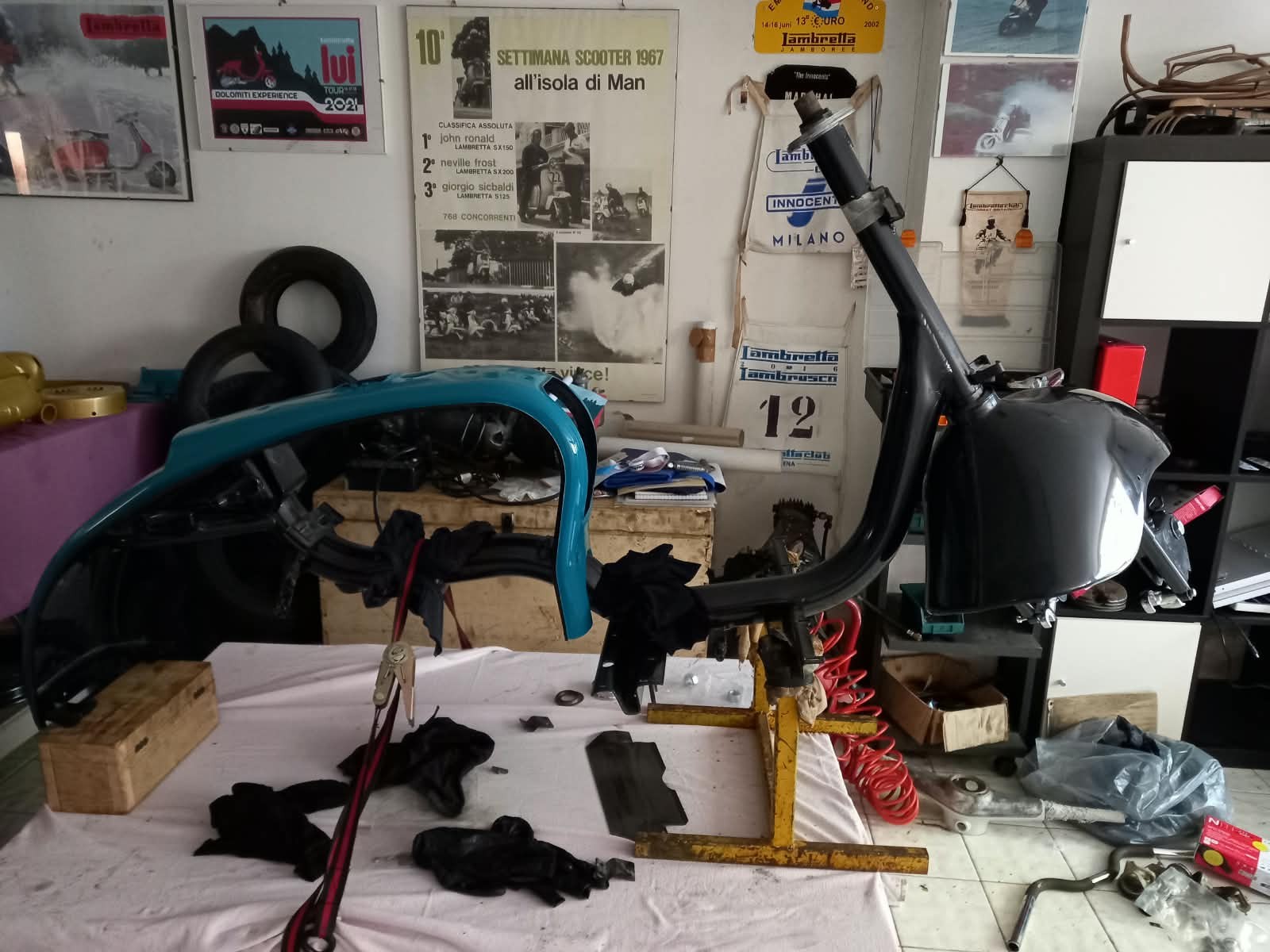
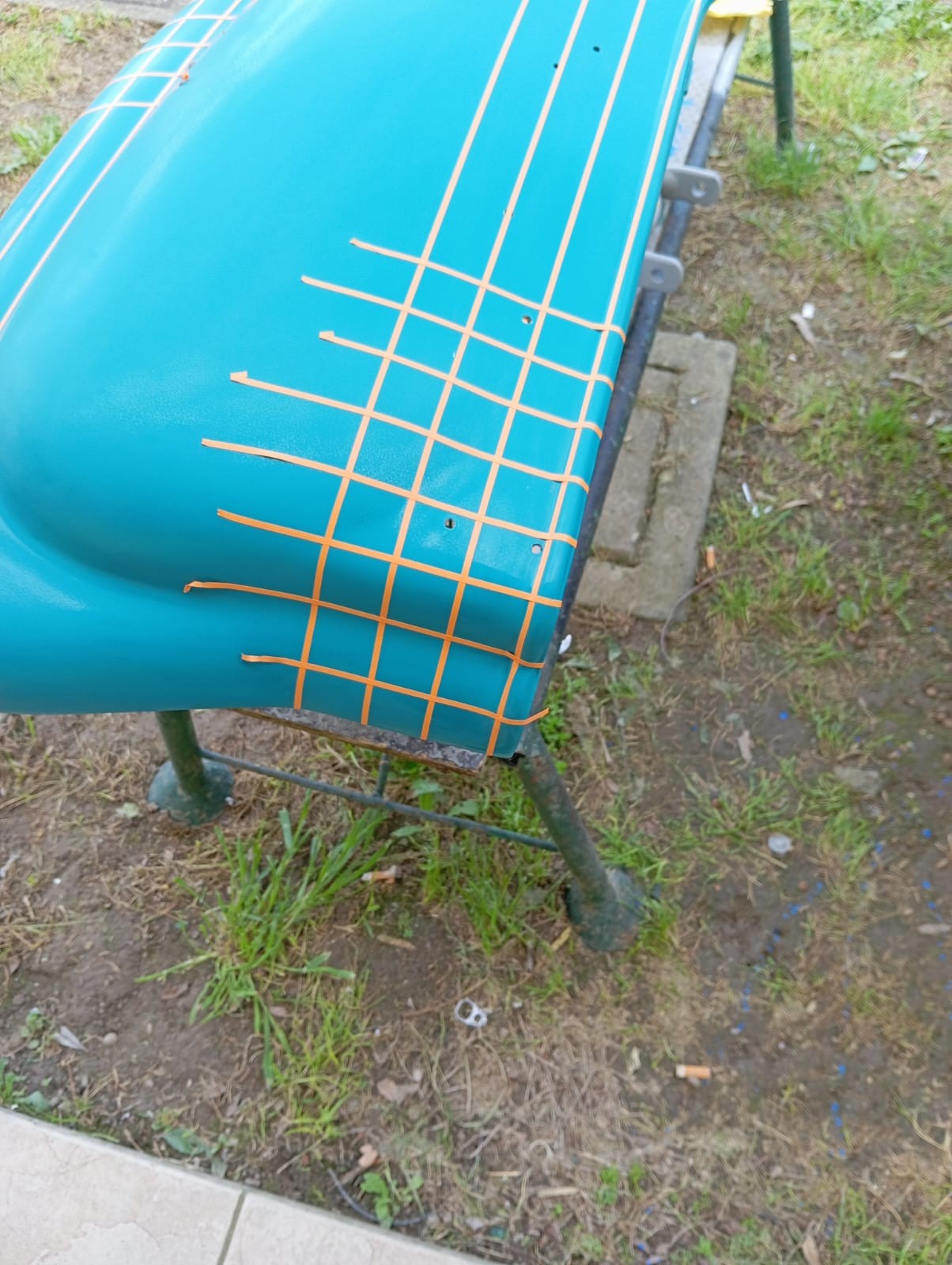
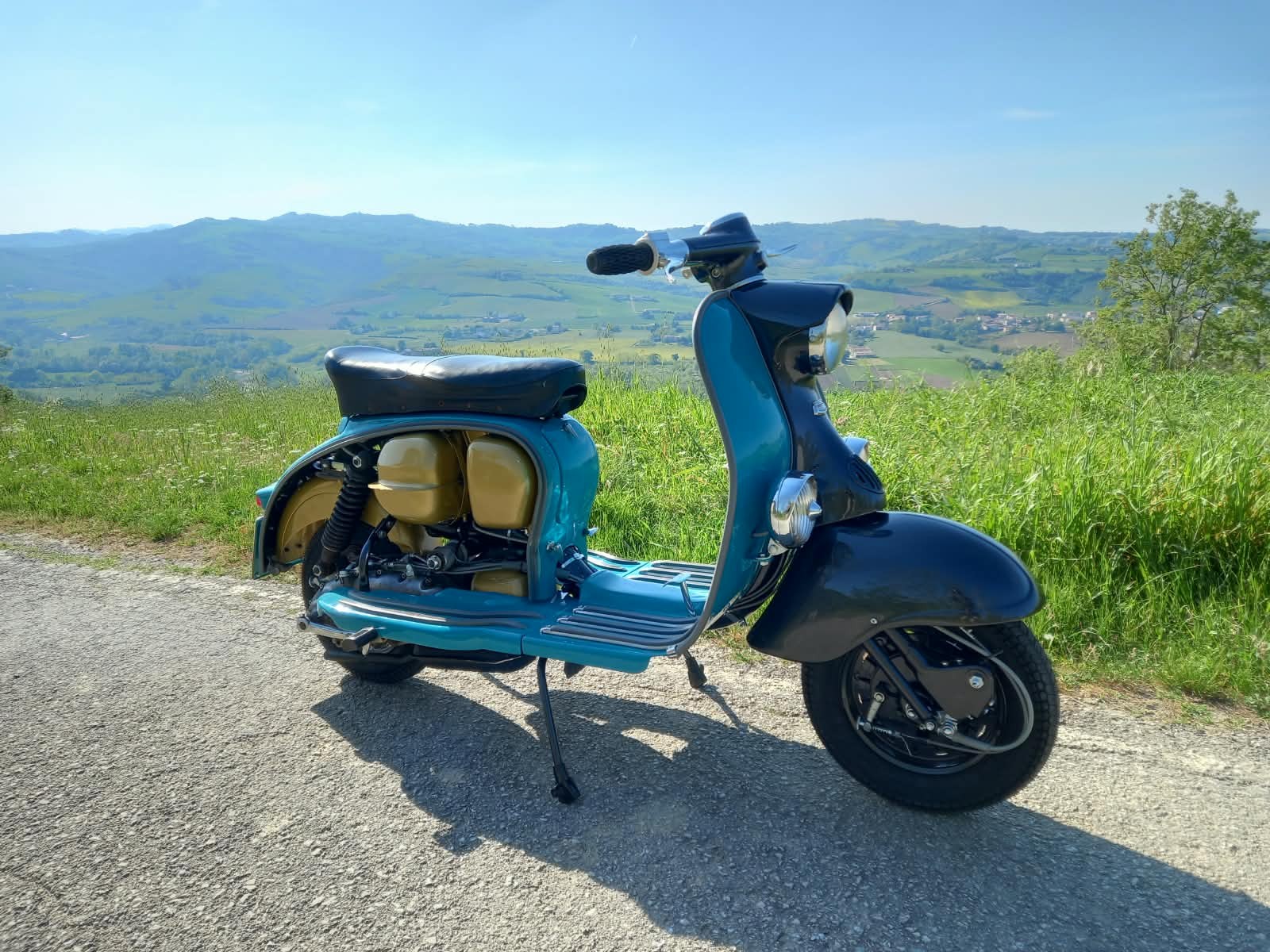
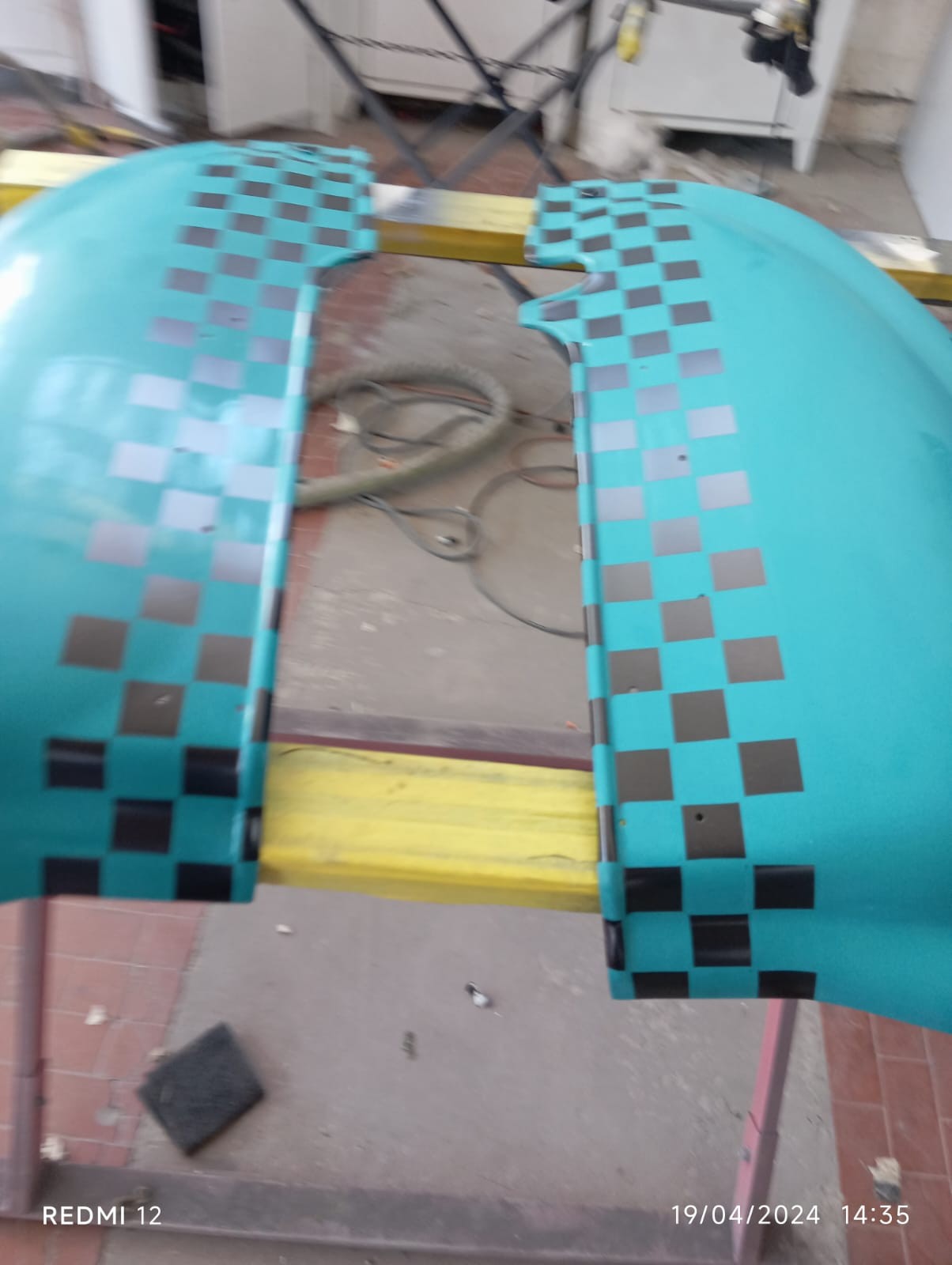
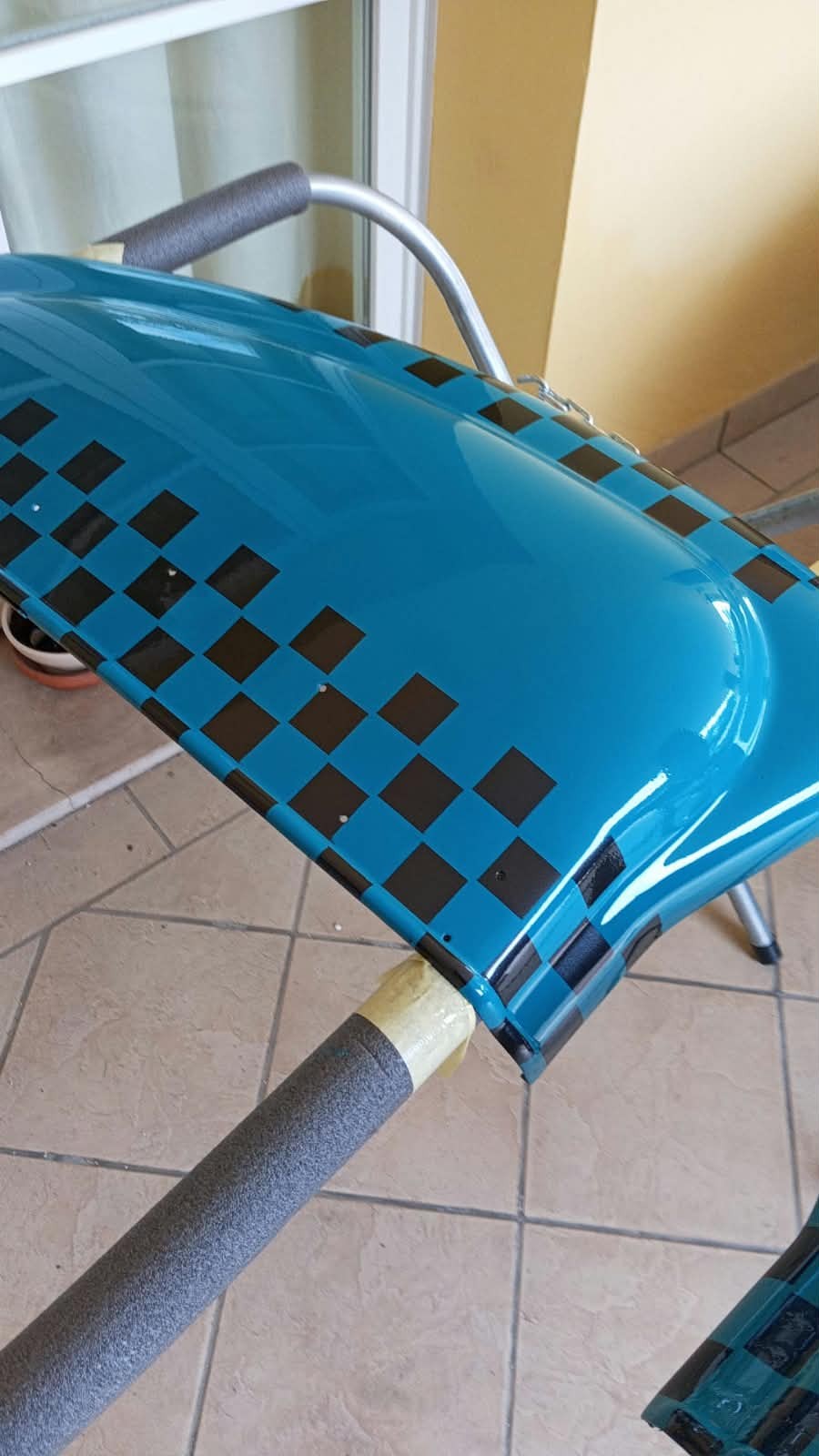
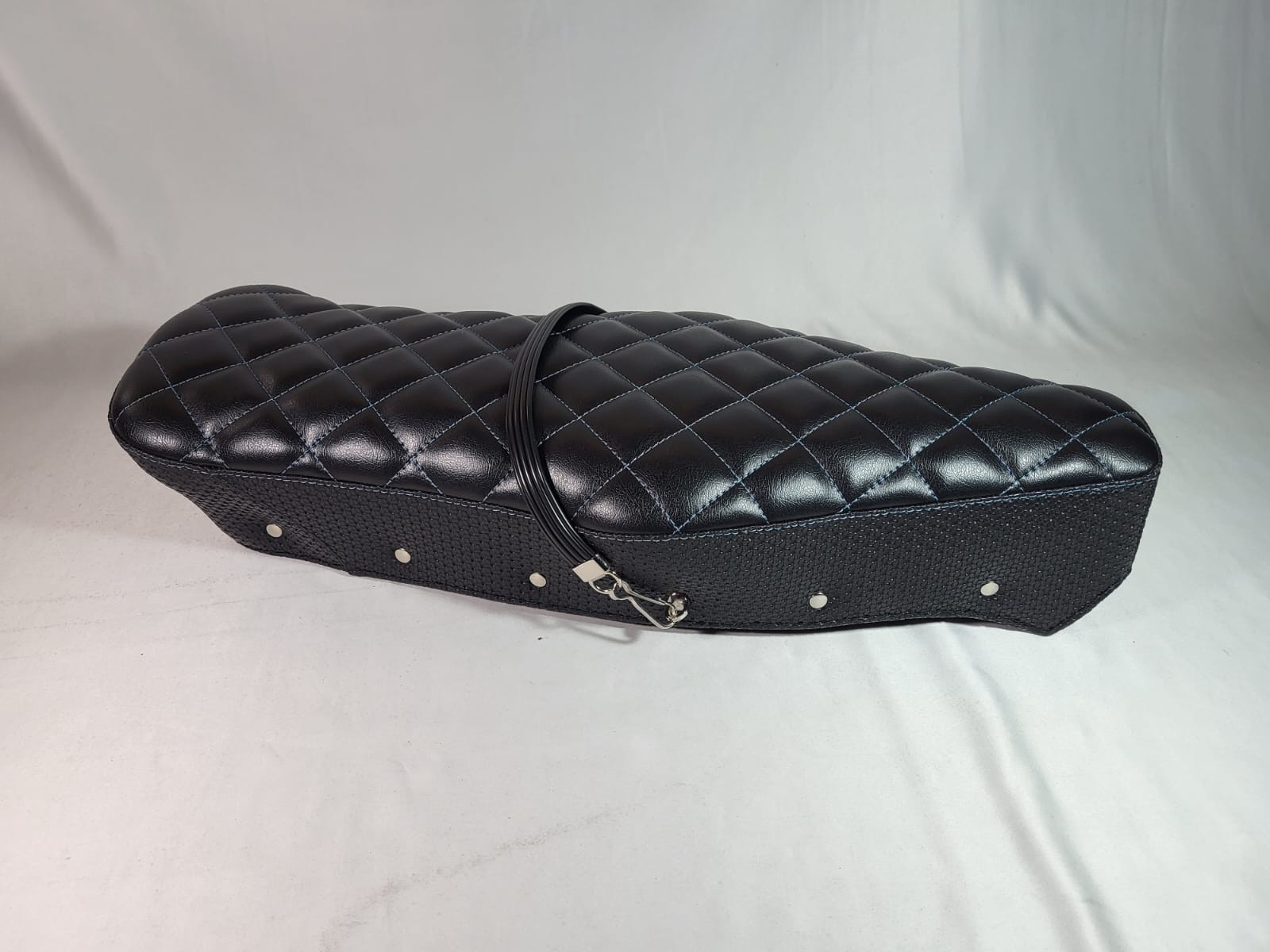
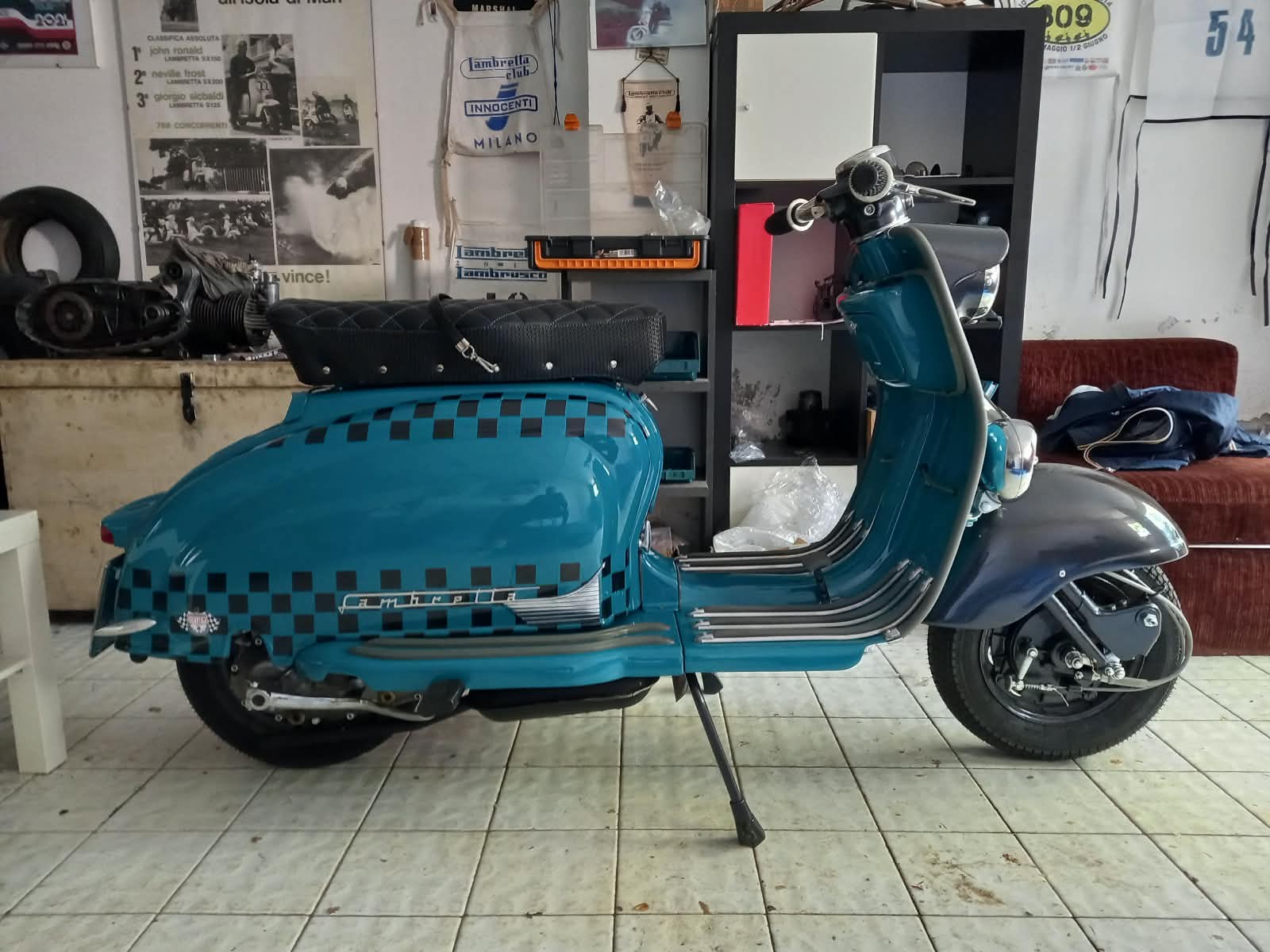
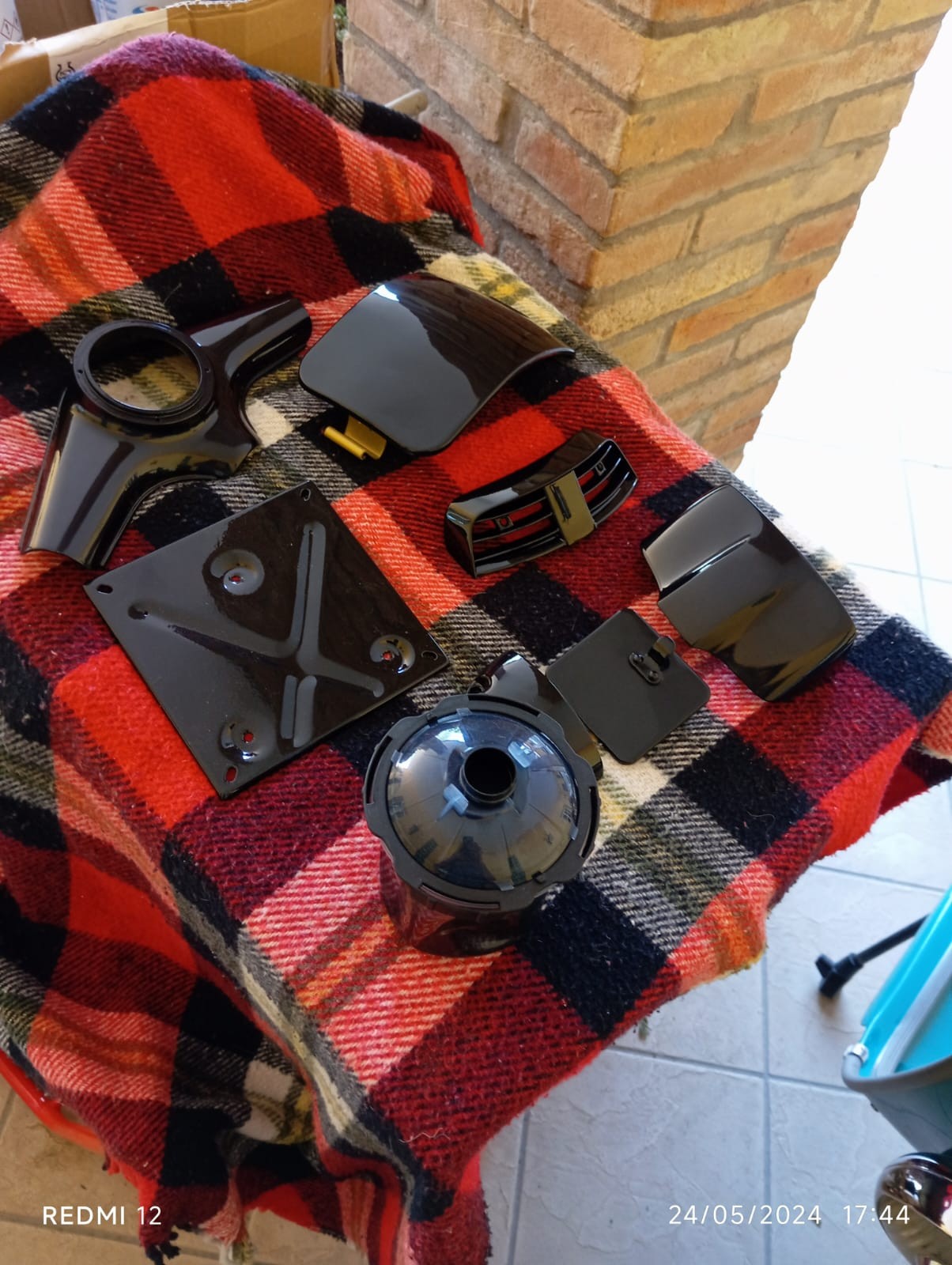
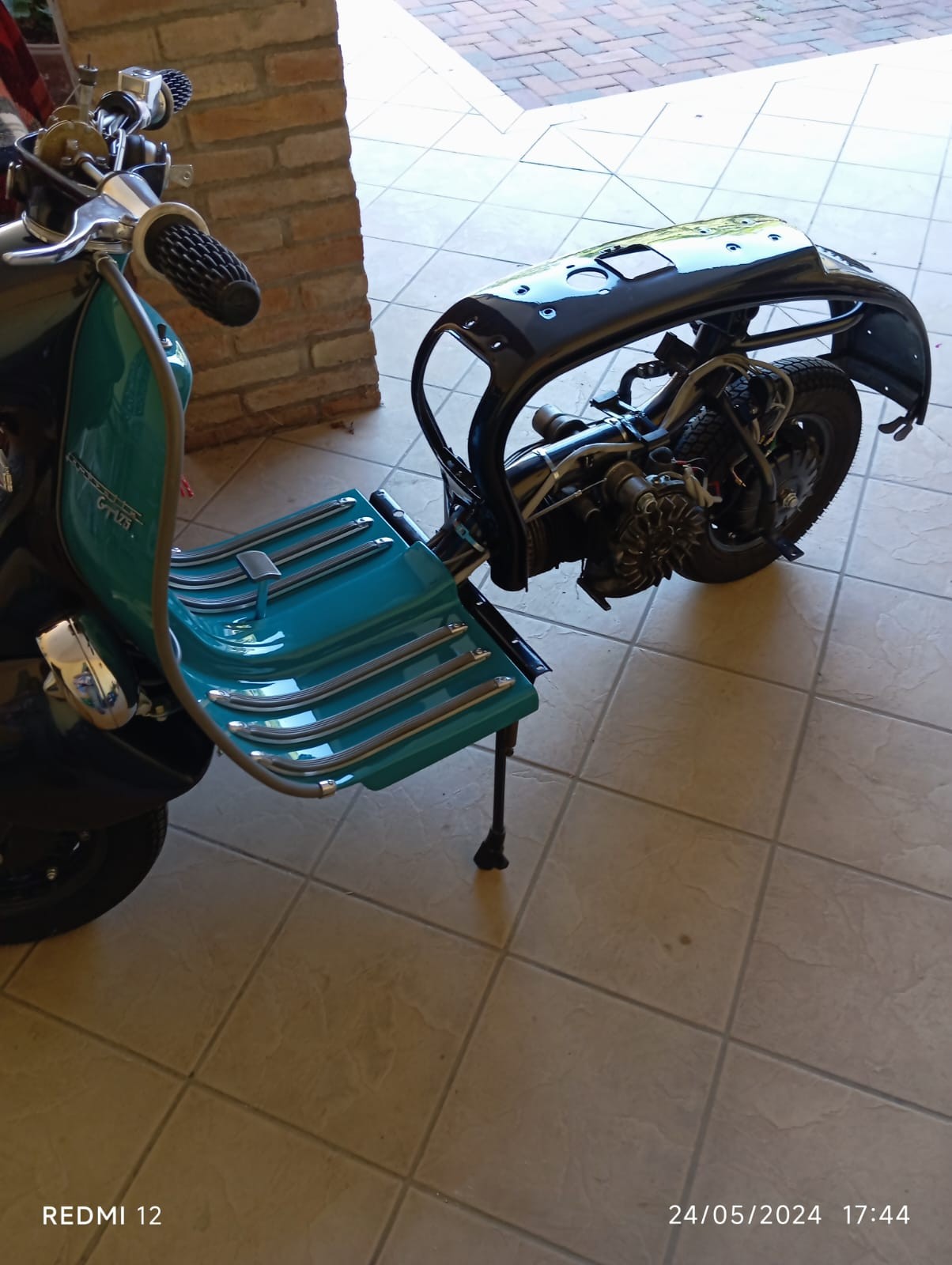
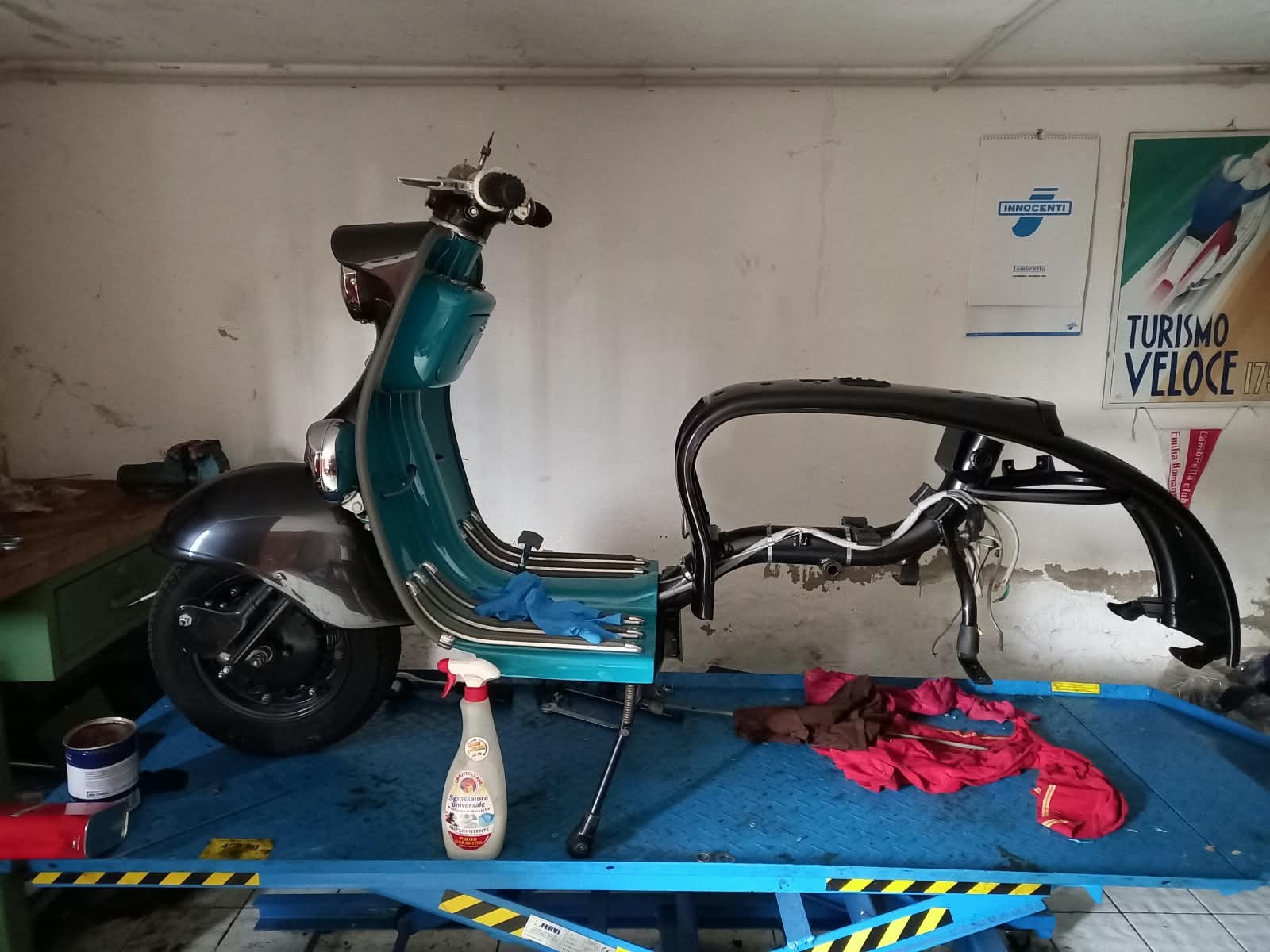
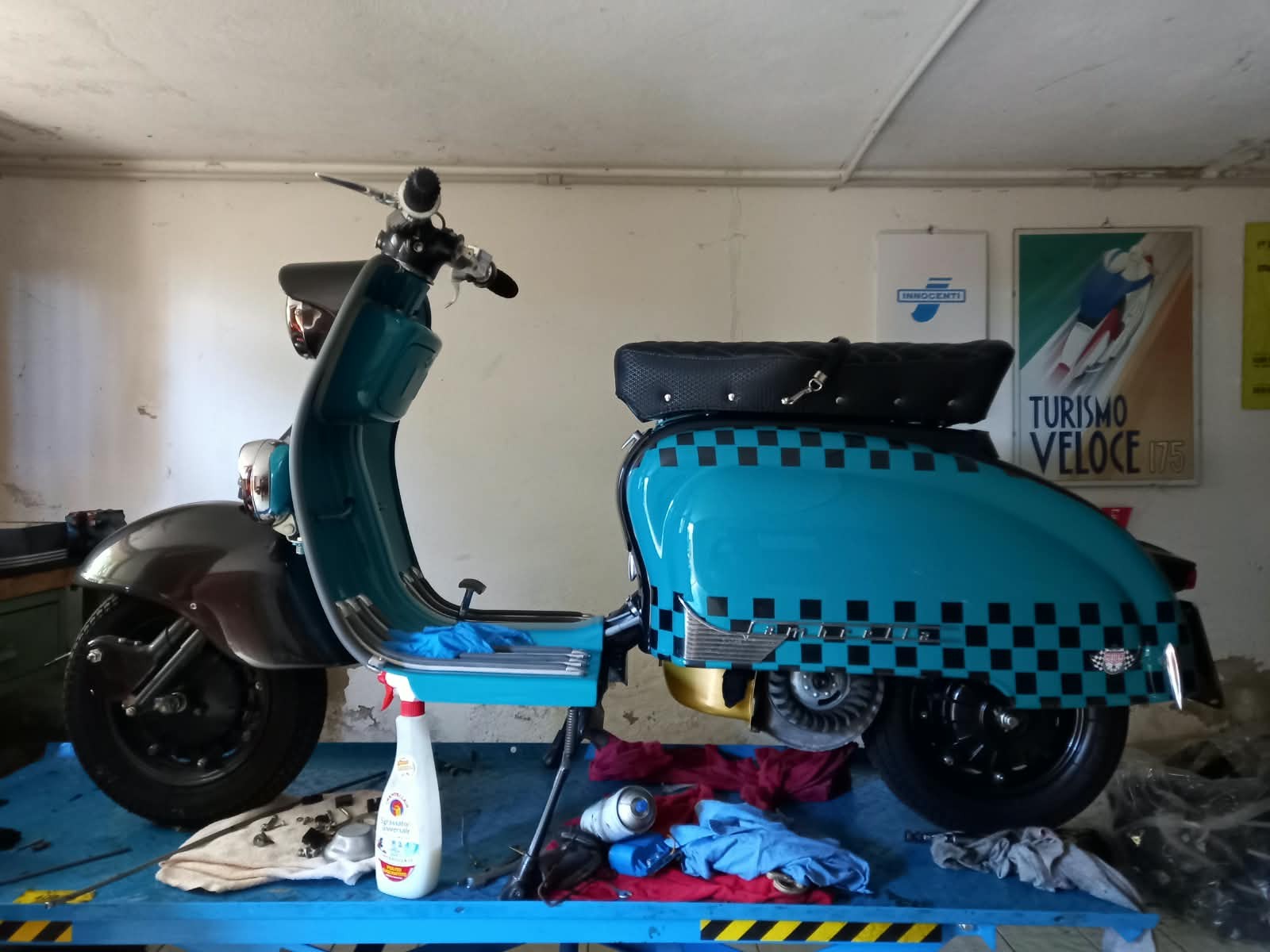
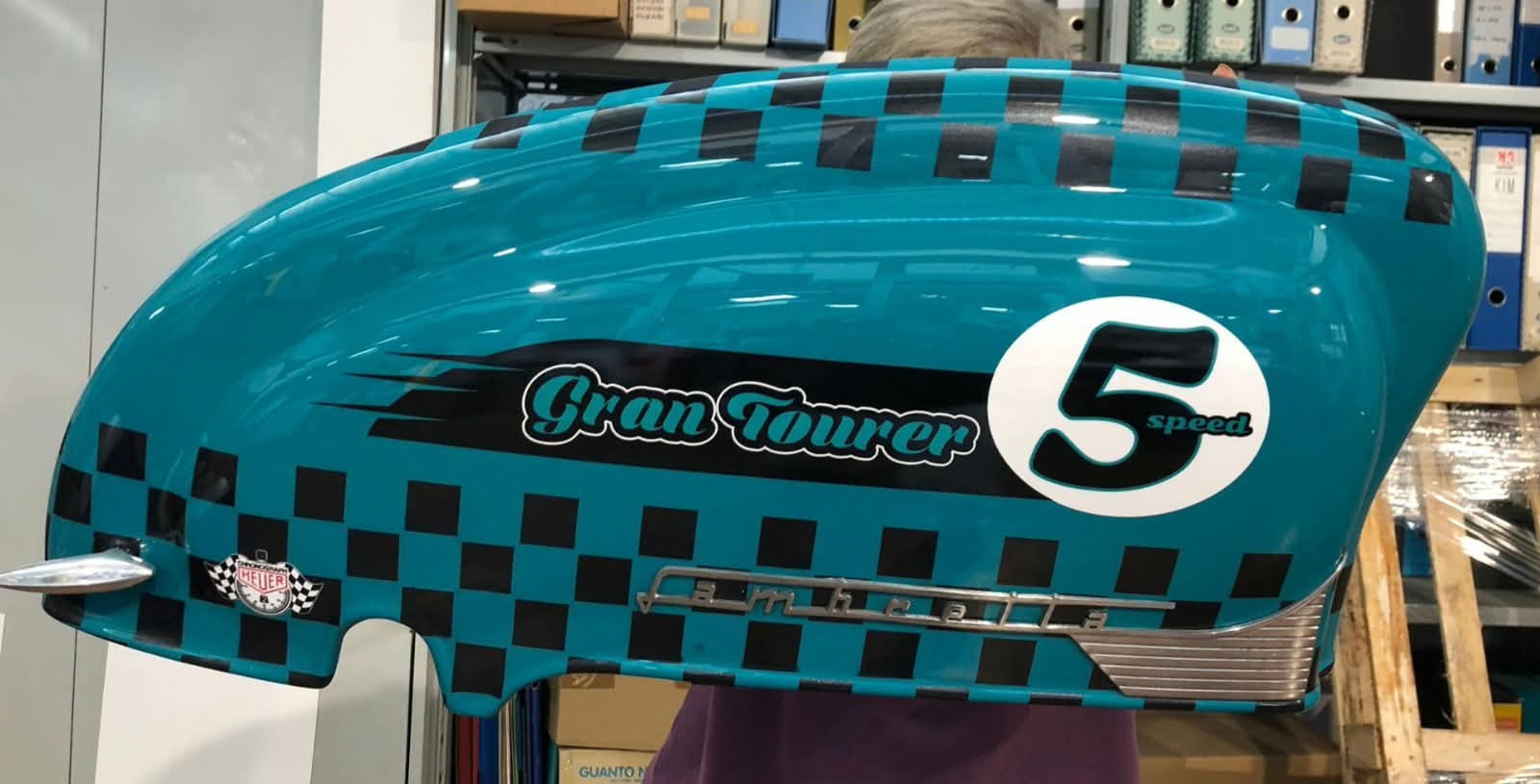
E’ stata finita la prima volta abbastanza in fretta per poter partecipare al raduno dell’Isola d’Elba 2024; una volta finita di montare ho realizzato che avevo fatto un errore grossolano di accostamento dei colori, in quanto il frontale aveva molto nero, mentre sul retro ce ne era pochissimo. Una volta tornato dal raduno, assieme ad altri lavori che andavano fatti per completare il restauro, ho fatto anche verniciare la costola centrale del telaio di colore nero, in modo da riprendere il frontale e gli scacchi cui cofani. Ora il layout mi sembra molto più bilanciato. La sella è un telaio originale di TV175 S1, ricoperto in maniera sportiva per riprendere lo spirito dell’intero progetto.
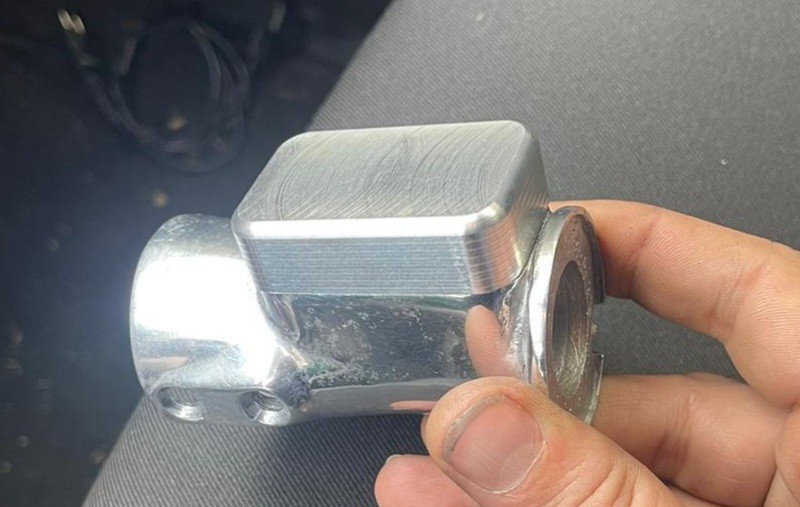
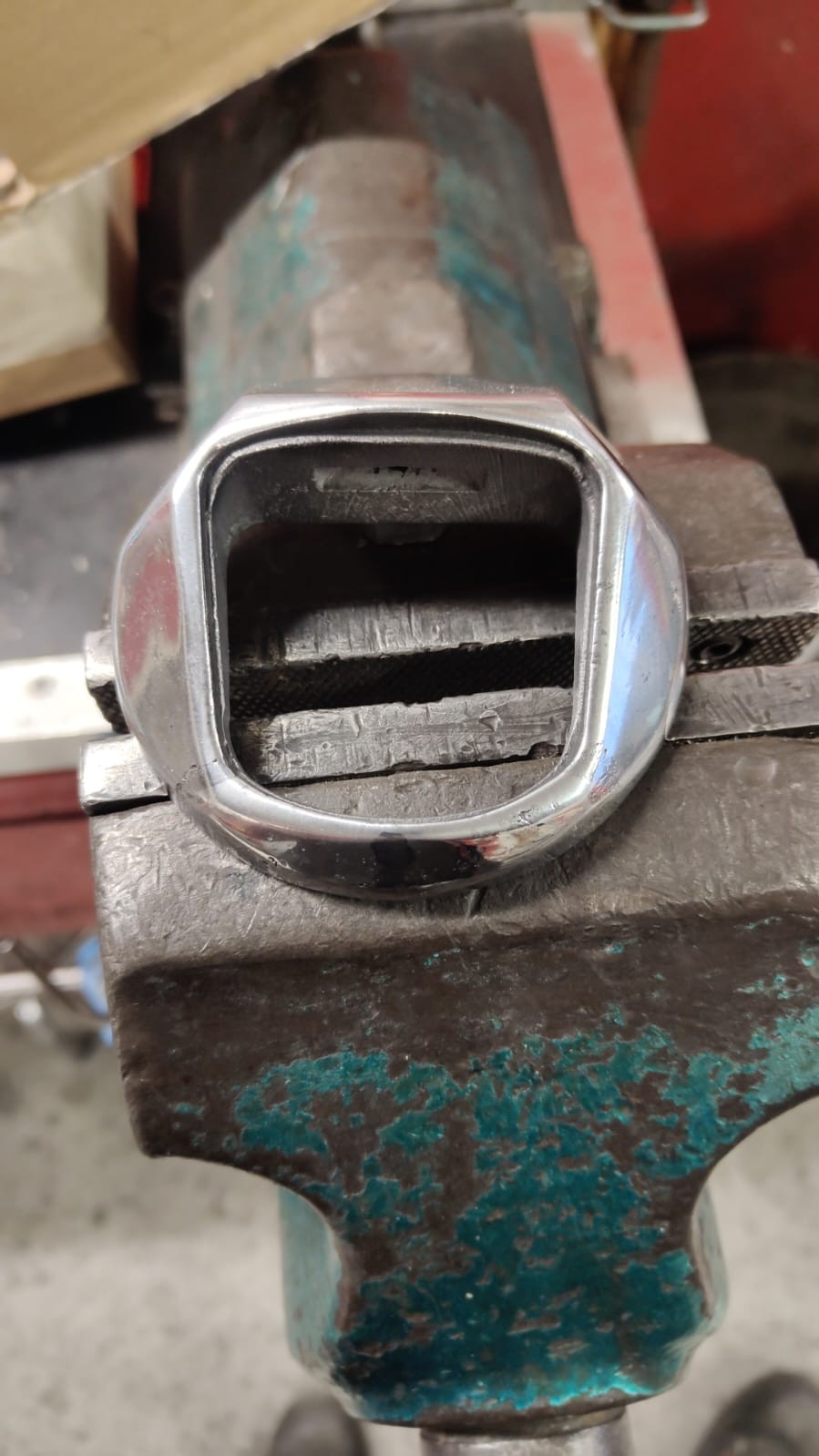
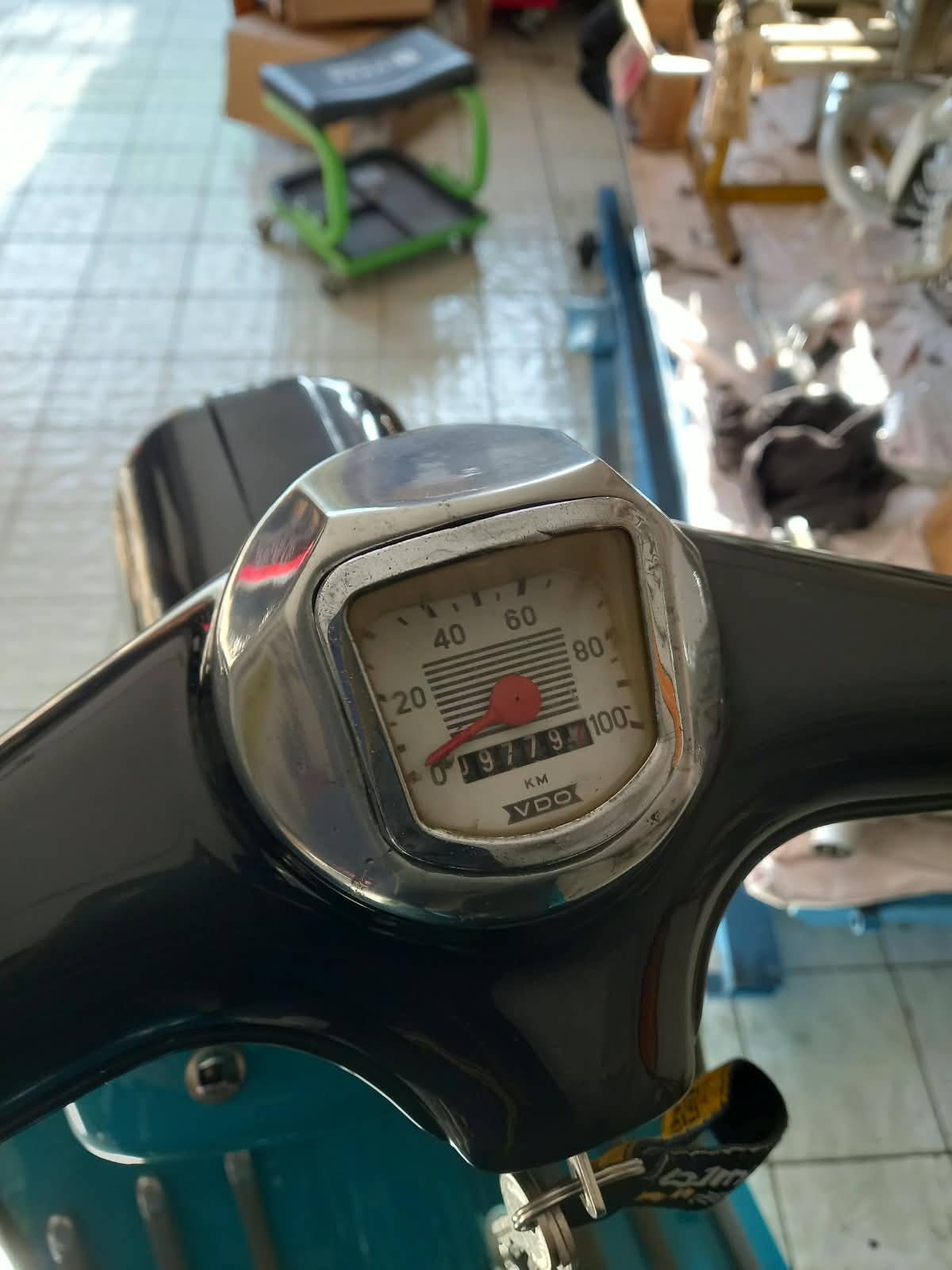
Nel corso del restauro mi si è presentata la possibilità di aggiungere una vera chicca al progetto: montare un contachilometri VDO per mezzo di una rarissima ghiera in alluminio, accessorio che avevo visto solo una volta nel corso della mia vita lambrettistica.
Ora mancano solo i chilometri, ne deve percorrere il più possibile.
English
My Lambretta Racer S1 was the final result of a project that kept me busy for several years, from the initial idea right through to its final realisation.
It all started with the desire to fit a twin-cylinder engine to a Lambretta. In the end, this never became reality, as there was no engine available on the market that matched what I had in mind: something very, very similar to the engines used in the Innocenti prototypes. With 20 mm carburettors on each side, connected to an air filter, and a non-expansion-chamber exhaust. I had even considered building the whole thing myself to adapt what was available, but the time and costs involved would have been excessive.
The actual project got underway when I managed to find a frame, forks and engine, all with the correct paperwork and originating from the same scooter. From there, I began searching for the missing bodywork parts. The front turning mudguard, fabricated in Spain by Eibar, was supplied by my friend Jaime. At the time, I thought it was a very original idea, although over the years it has turned out to be something that plenty of other people had thought of too.
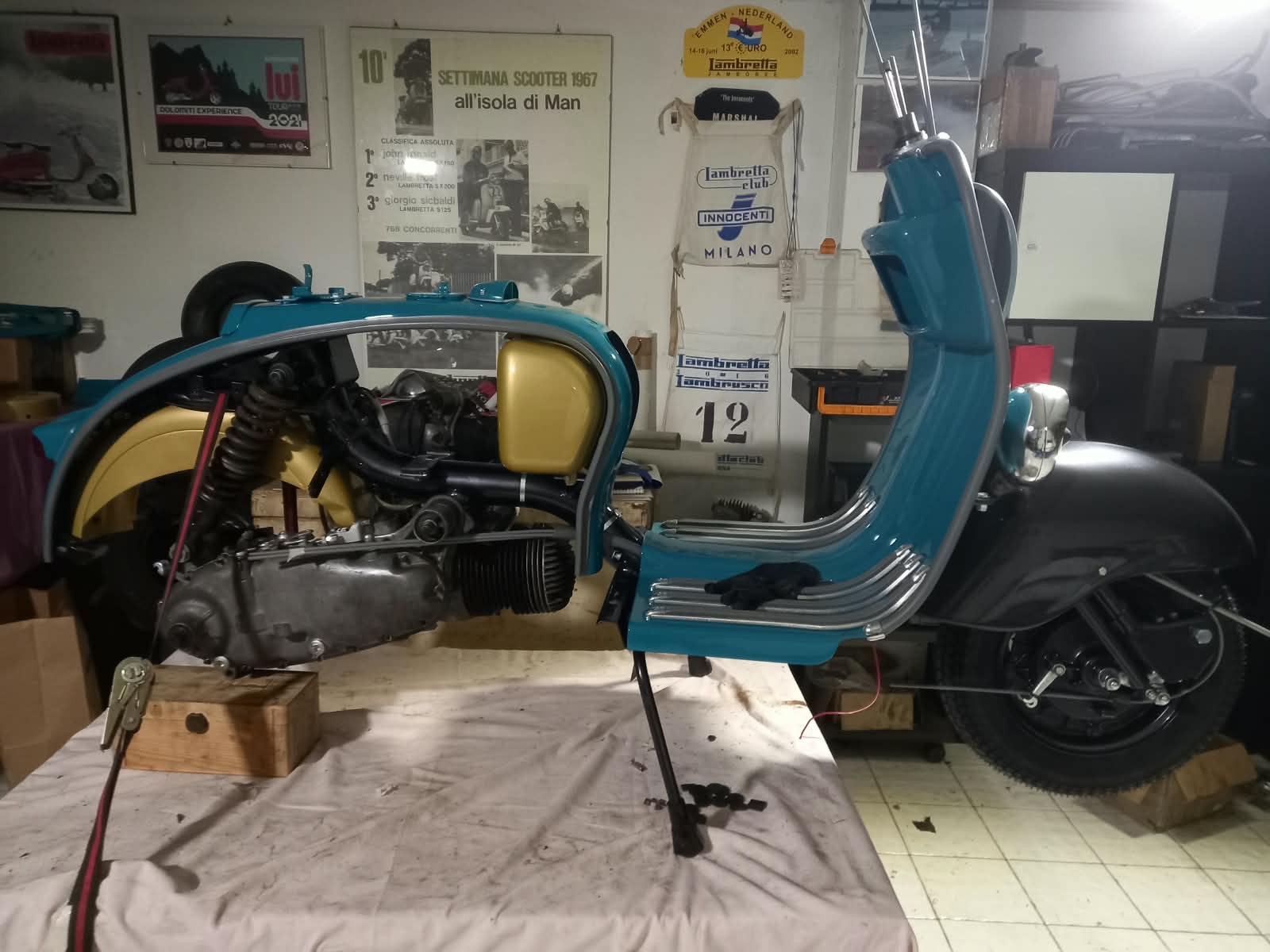
For the engine, I opted for one of the best-selling kits, an RT195, which had always received positive feedback, paired with a BGM crankshaft. The carburettor is a standard SH2/22, while the electronic ignition consists of an old AF stator manufactured by Ducati in the 1980s, paired with an original Ducati Electronic flywheel. In my opinion, this is about as reliable a combination as you could hope for when putting together a 12-volt electrical system. As for the gearbox, I fitted a five-speed Cyclone, mainly because ever since the 1980s I had thought the idea of having five gears on a Lambretta was seriously cool.
With the help of my friend Thomas, we built a completely bespoke electrical system. The lights are operated by switches mounted on the LD toolbox inside the legshield, while turning the key to its other positions after ignition allows the auxiliary front lights to be switched on. Just to mix things up a little. The toolbox also houses a modern battery charge monitor, which doubles as a USB socket in case I want to connect a mobile phone for navigation. The exhaust was made by TV Scooter Garage, using the tail end from a 1960s aftermarket exhaust and creating a big-bore system based on a standard exhaust. It works brilliantly and isn't particularly noisy.
The scooter was first completed fairly quickly so that I could take part in the 2024 Isle of Elba rally. Once I had finished assembling it, I realised I had made a rather glaring mistake with the colour scheme: the front end had a lot of black, while there was very little at the rear. After returning from the rally, alongside the other jobs that still needed doing to complete the restoration, I had the frame's central spine painted black as well, tying it in with the front end and the chequered side panels. The overall look now seems much more balanced to me. The seat is an original TV175 Series 1 frame, upholstered in a sporty style to reflect the spirit of the entire project.
During the restoration, I had the opportunity to add a real gem to the project: fitting a VDO speedometer using an extremely rare aluminium bezel, an accessory I had only ever seen once in all my years in the Lambretta World.
All that's left now is to put some miles on it — as many as possible.
Restoration Gallery
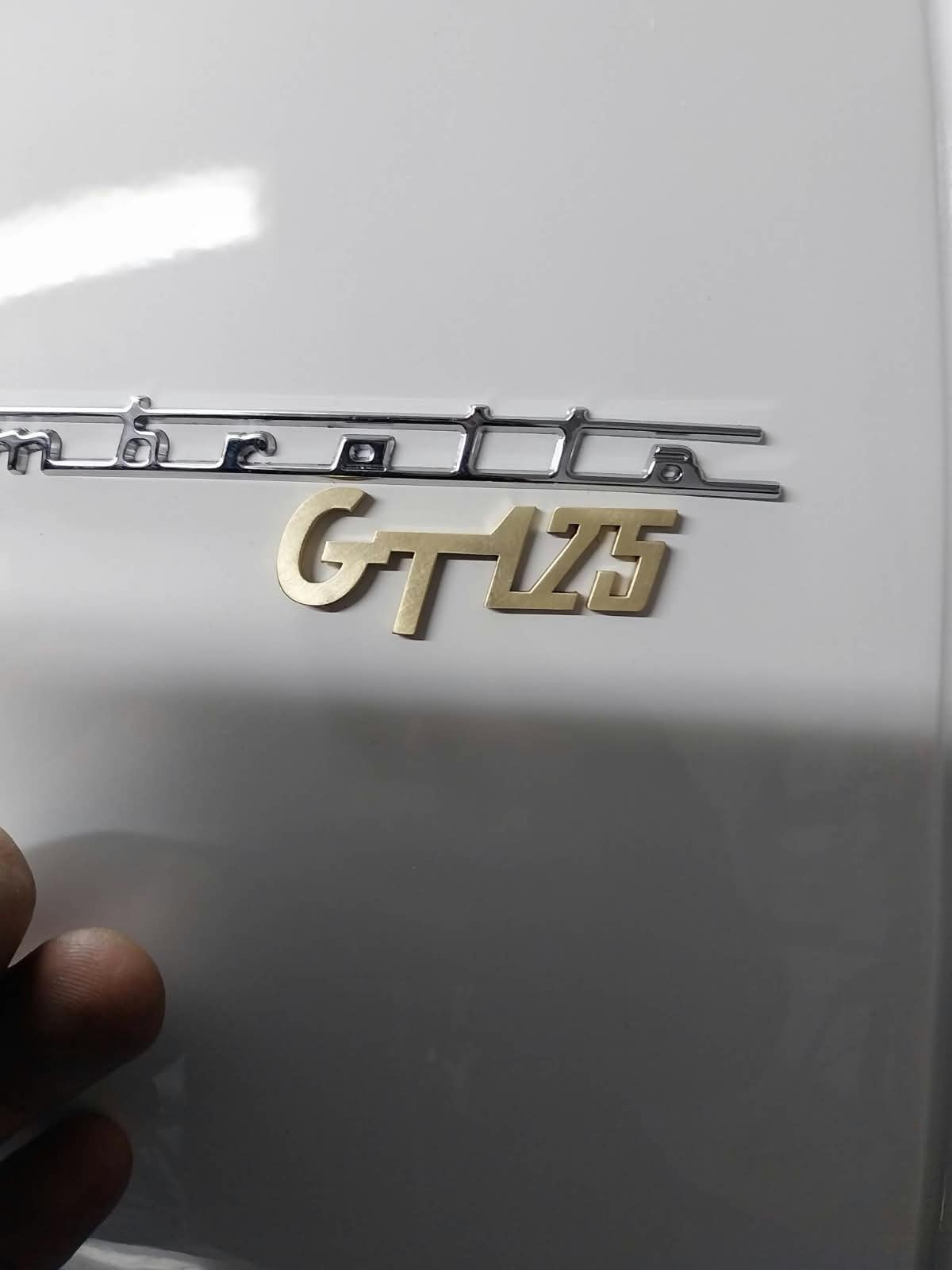
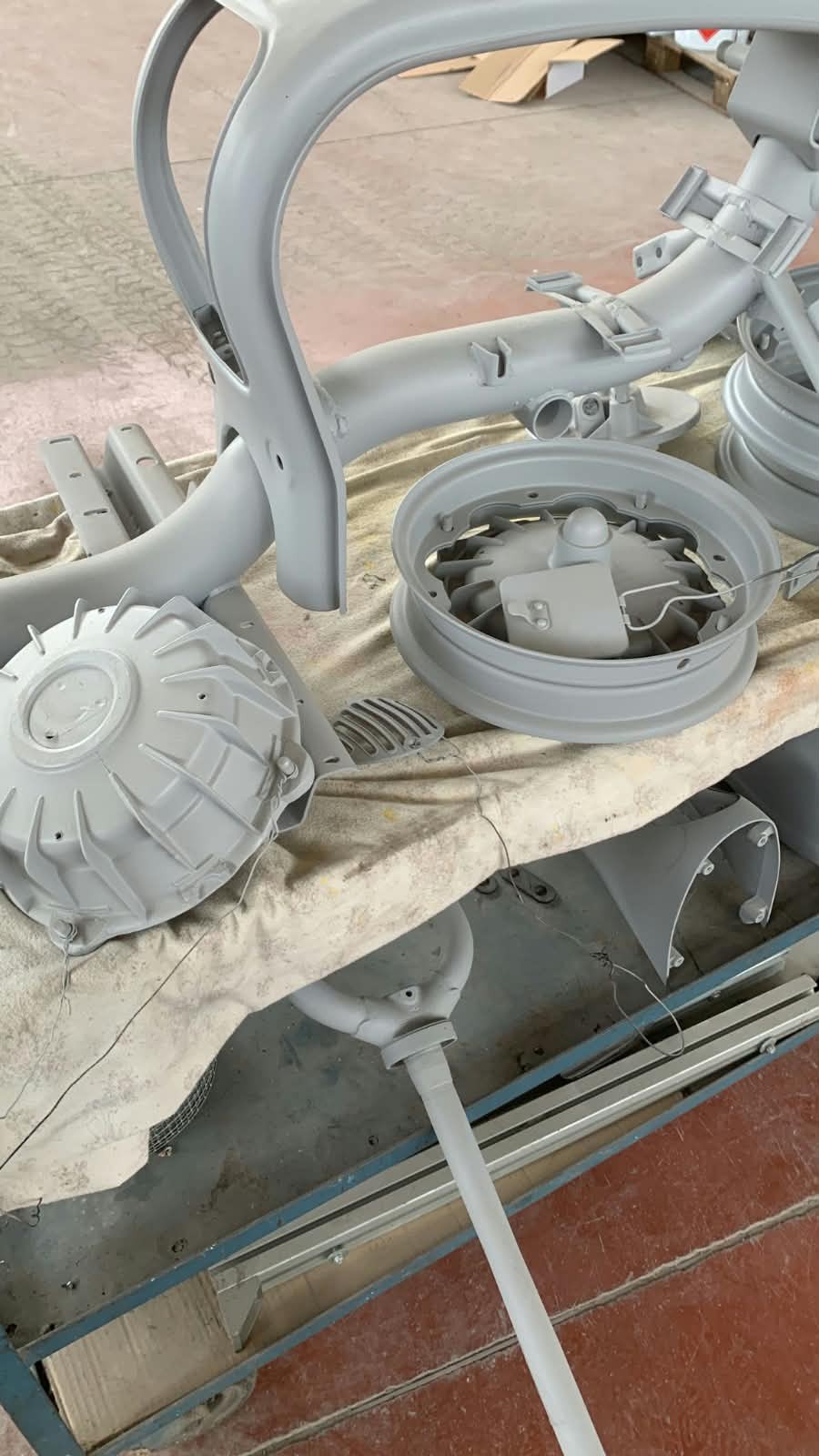
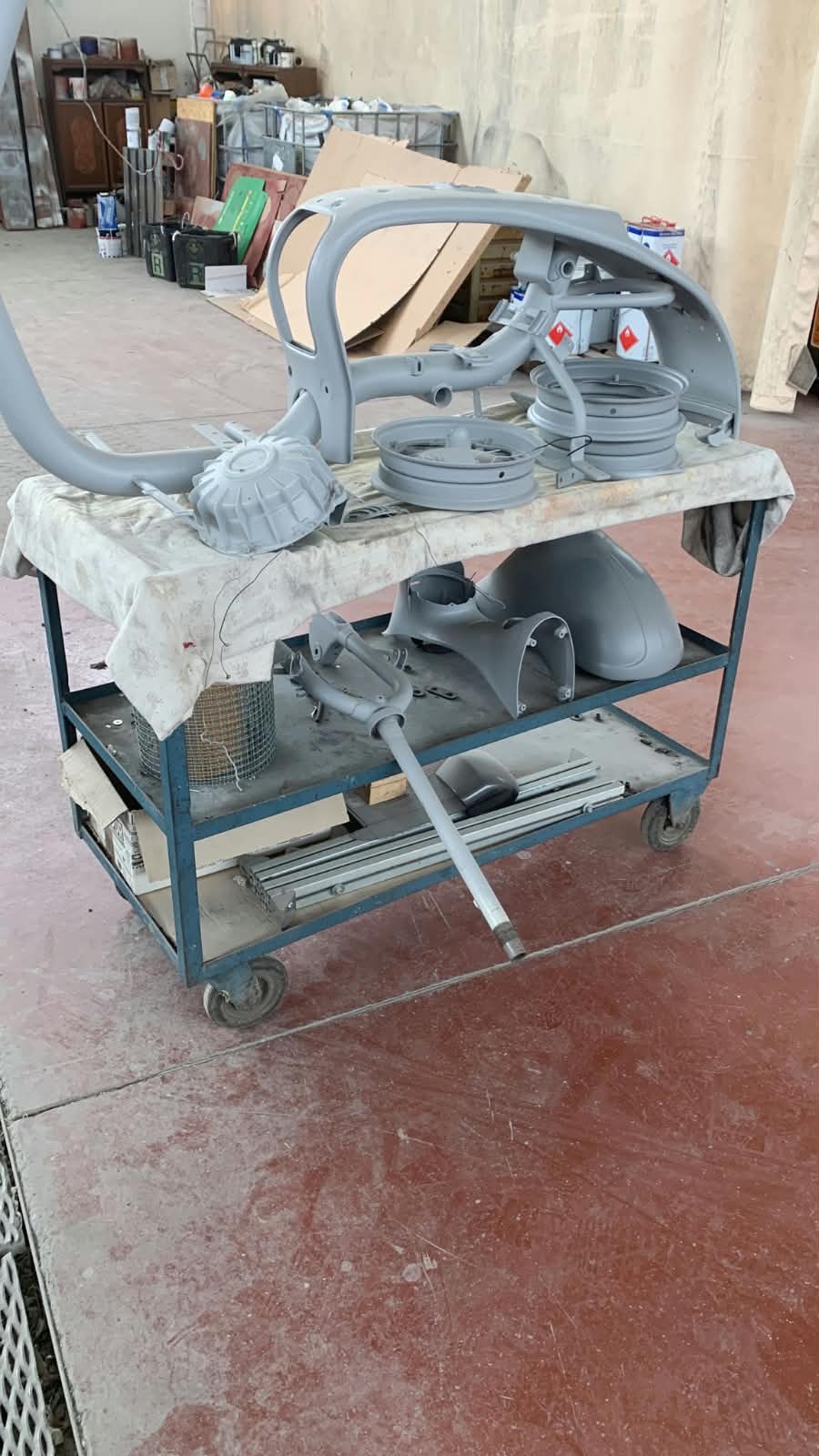
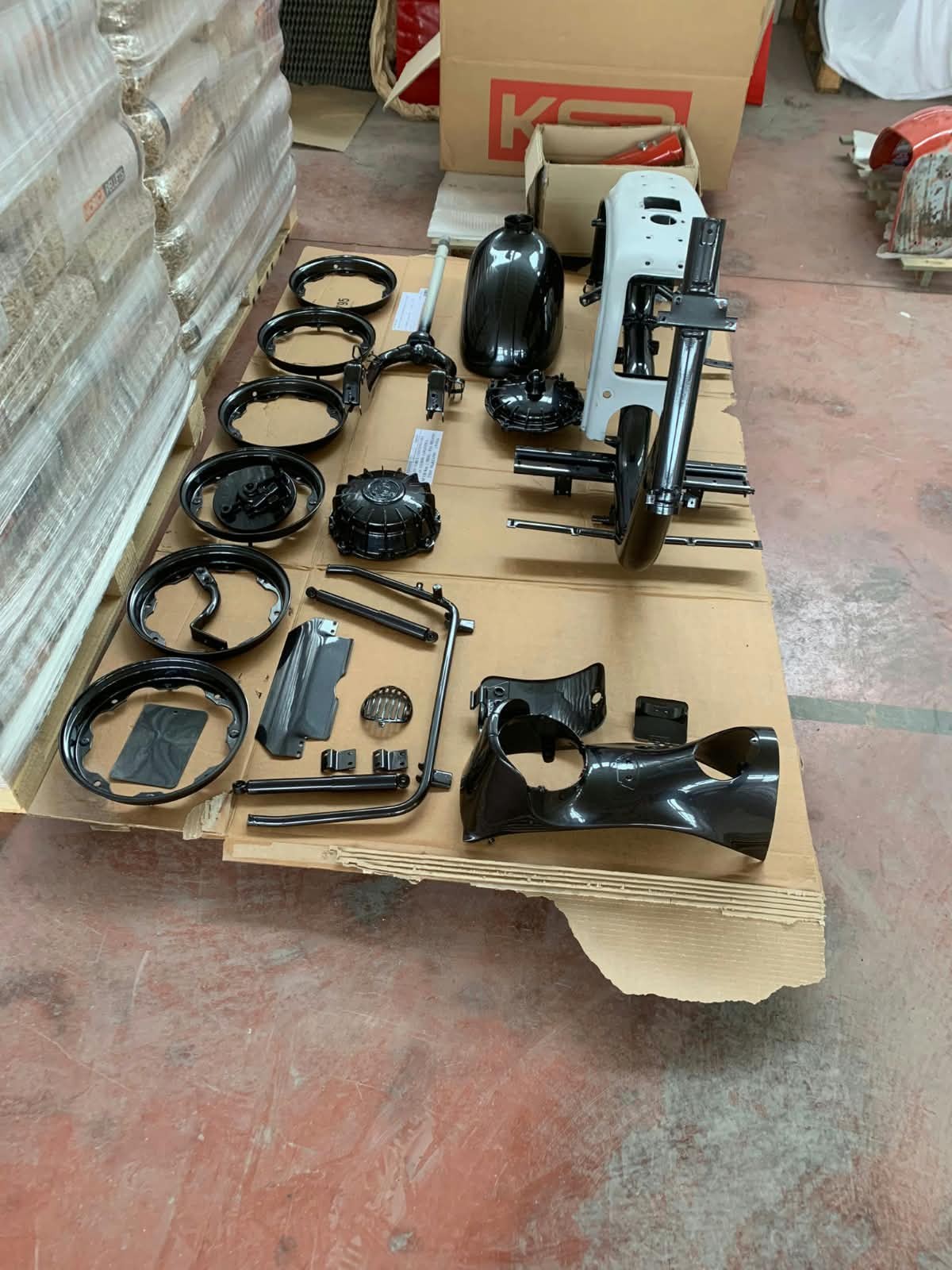
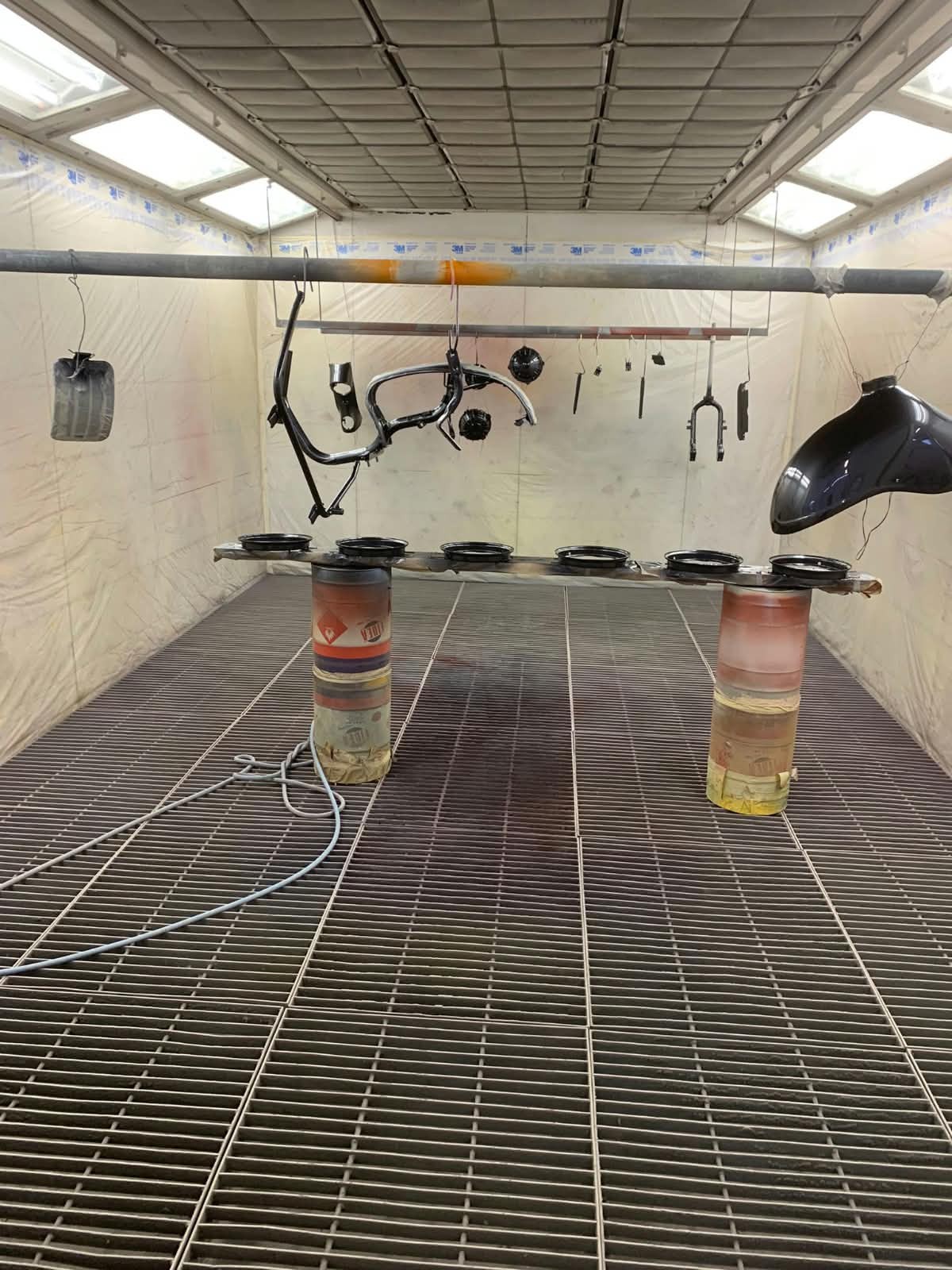
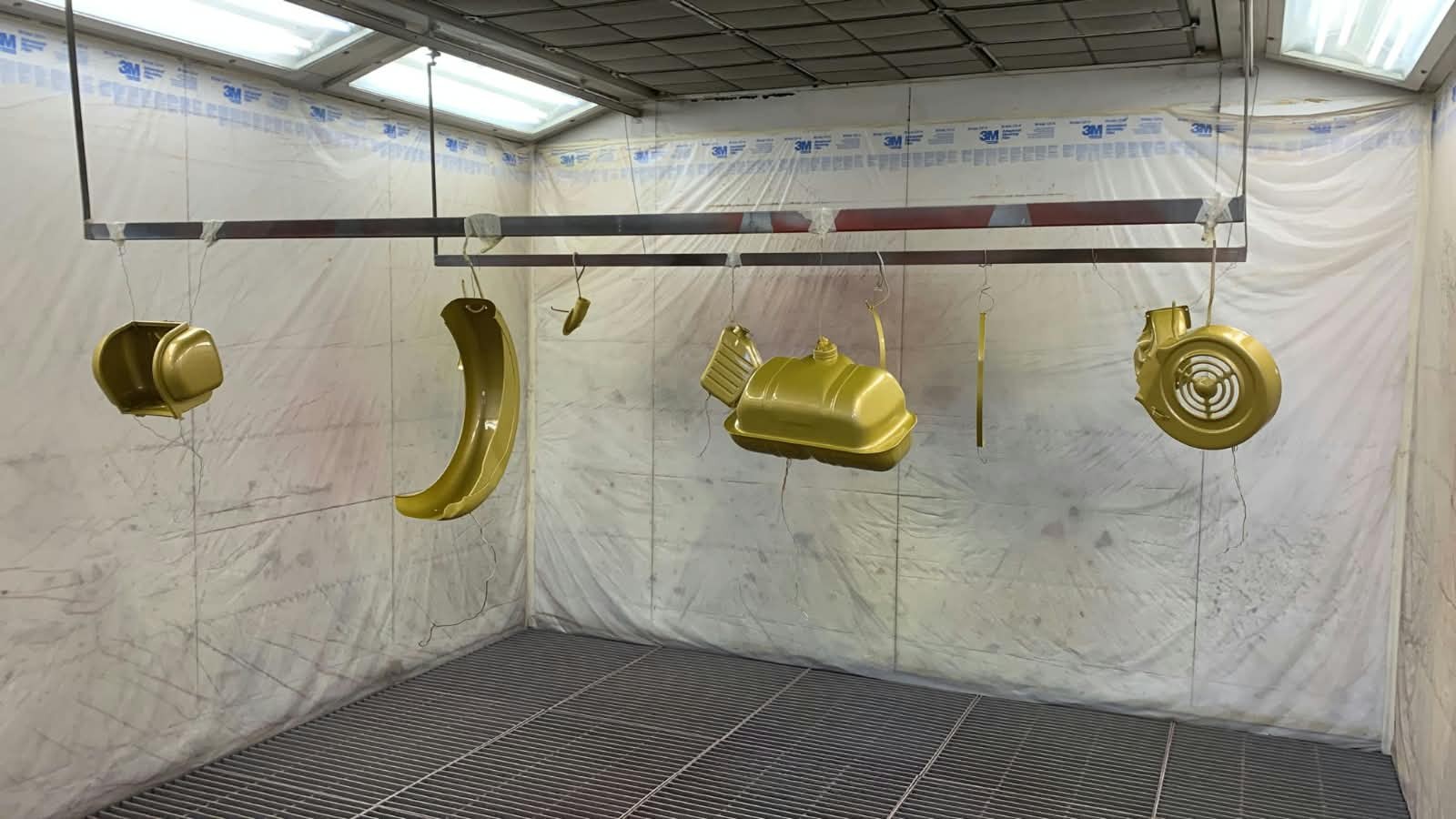
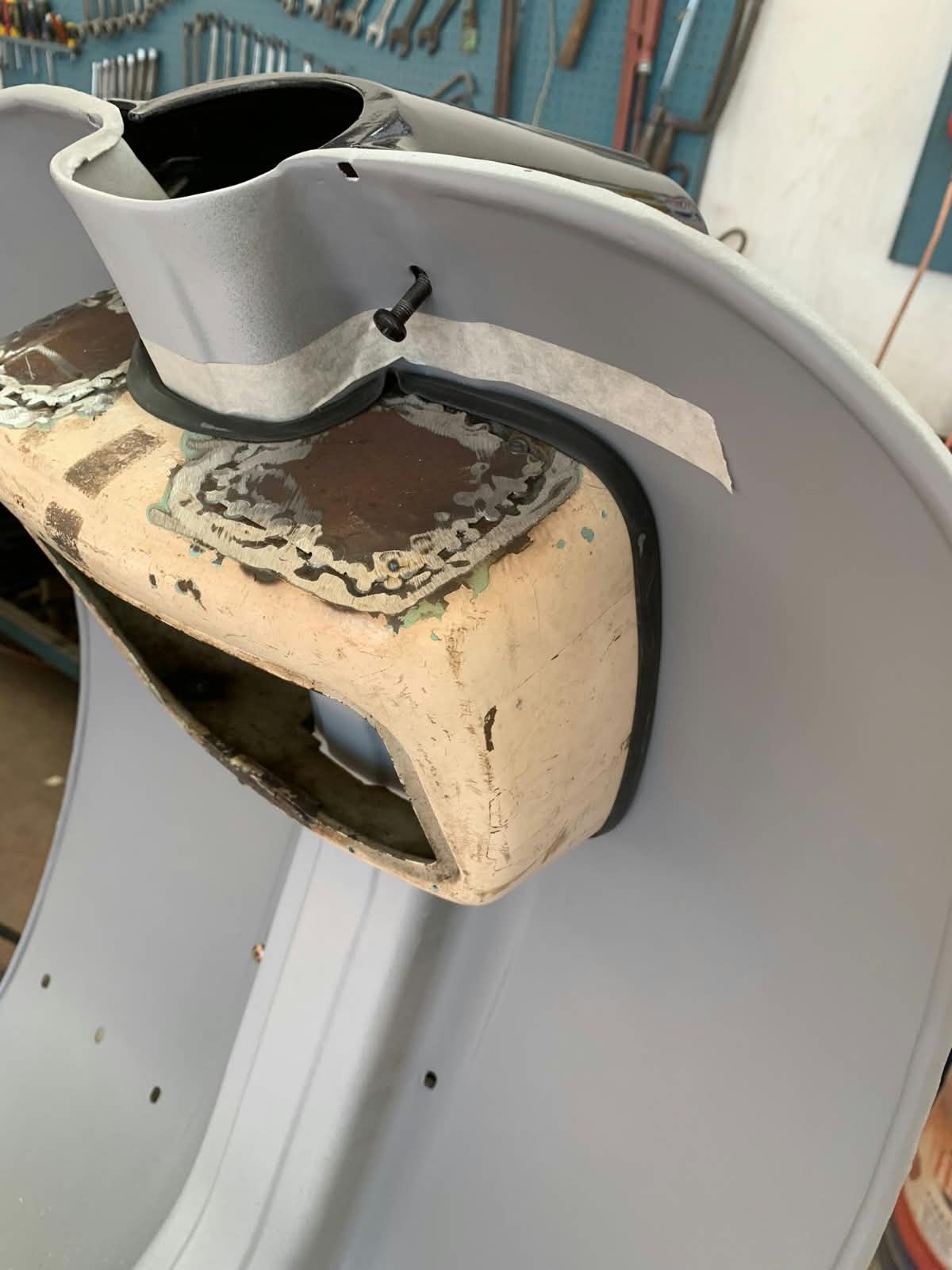
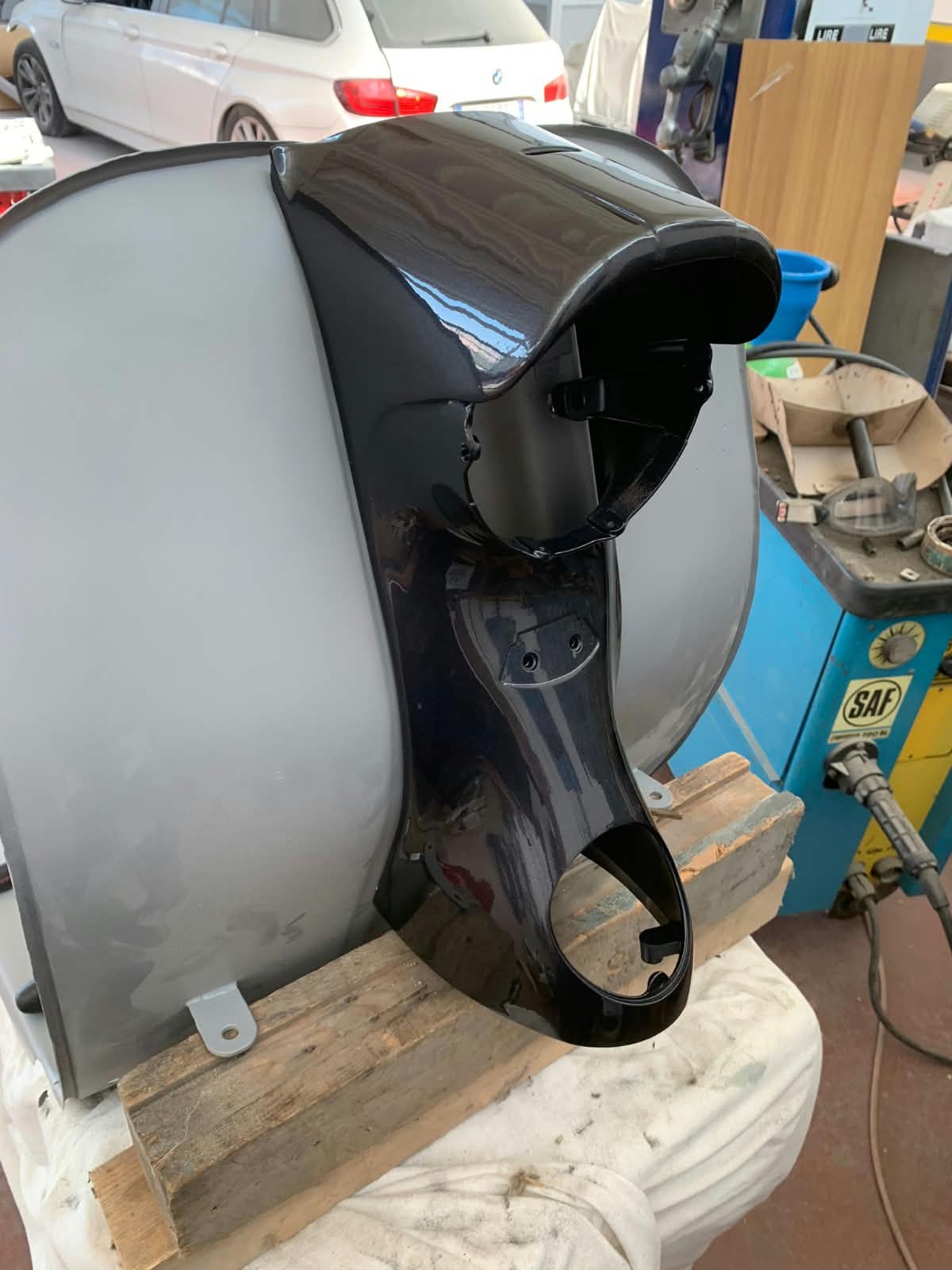
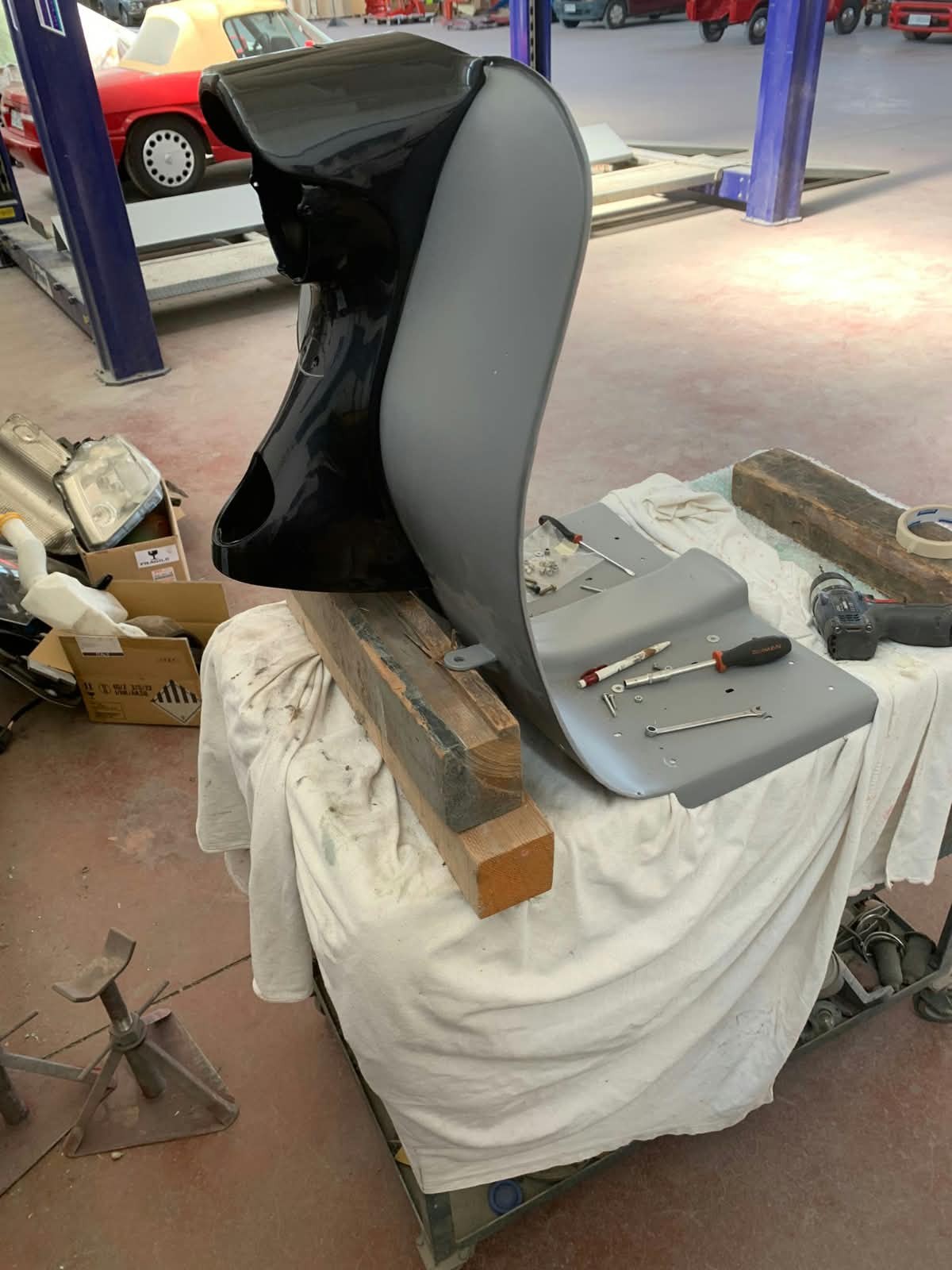
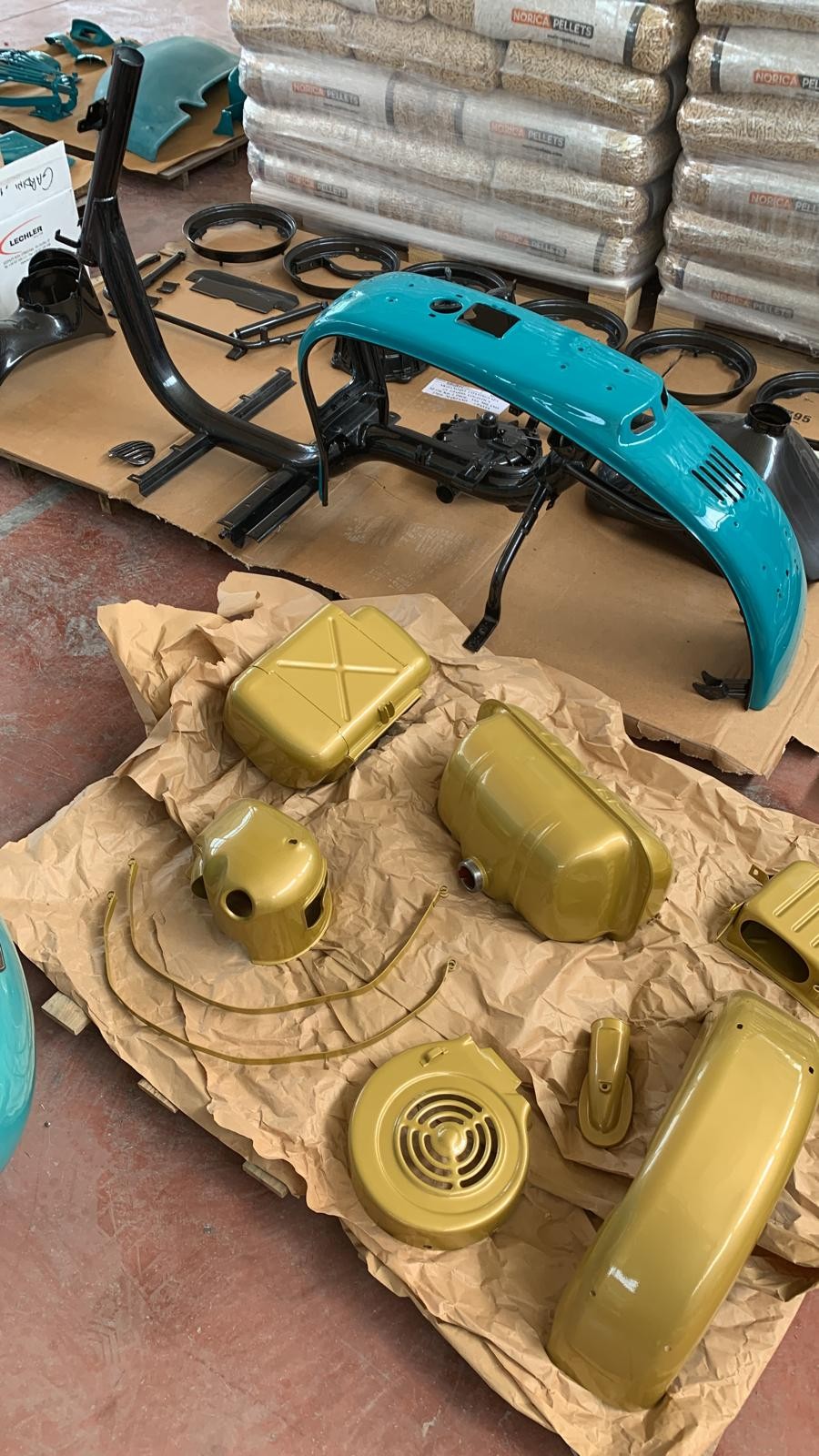
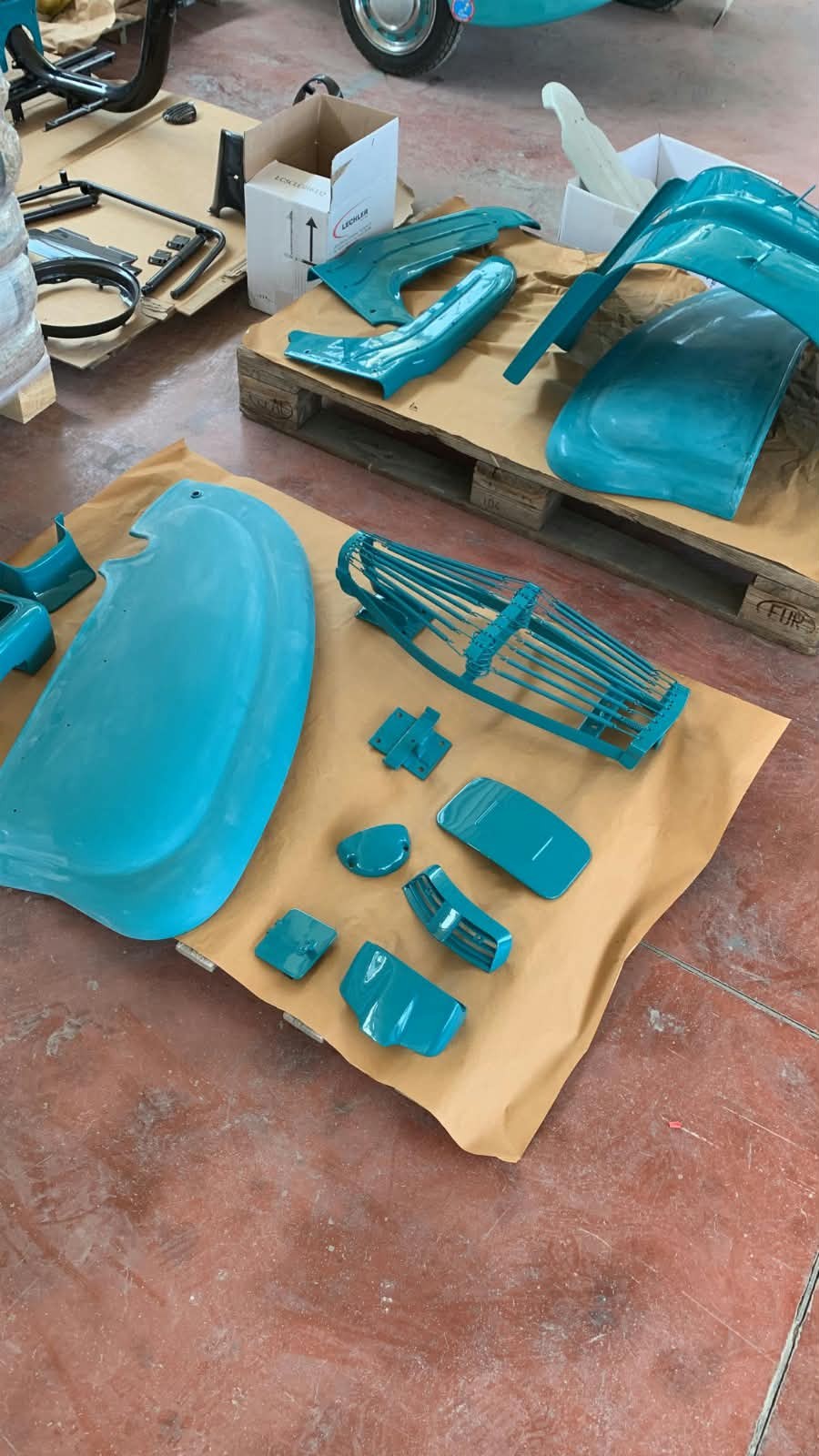
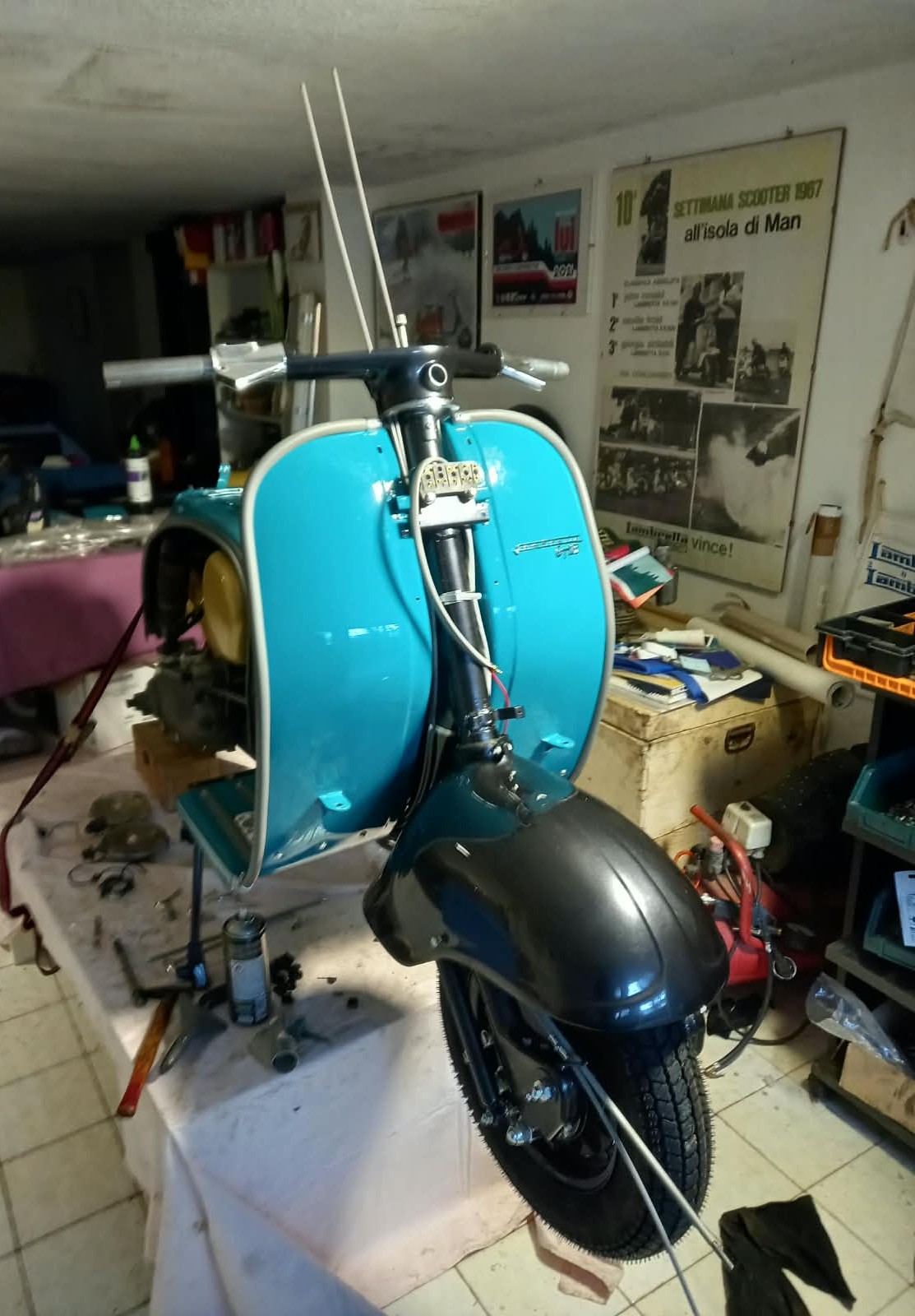
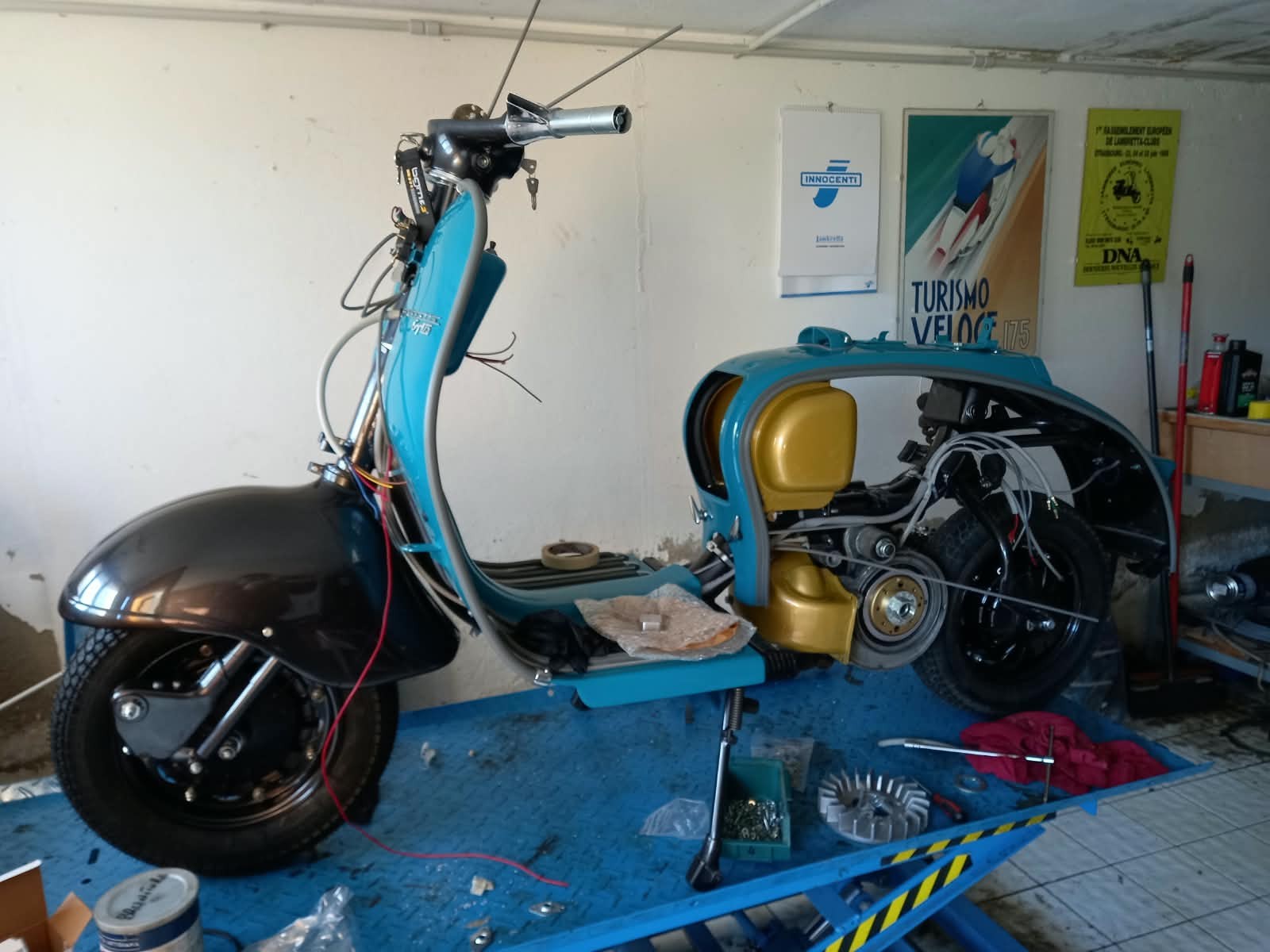
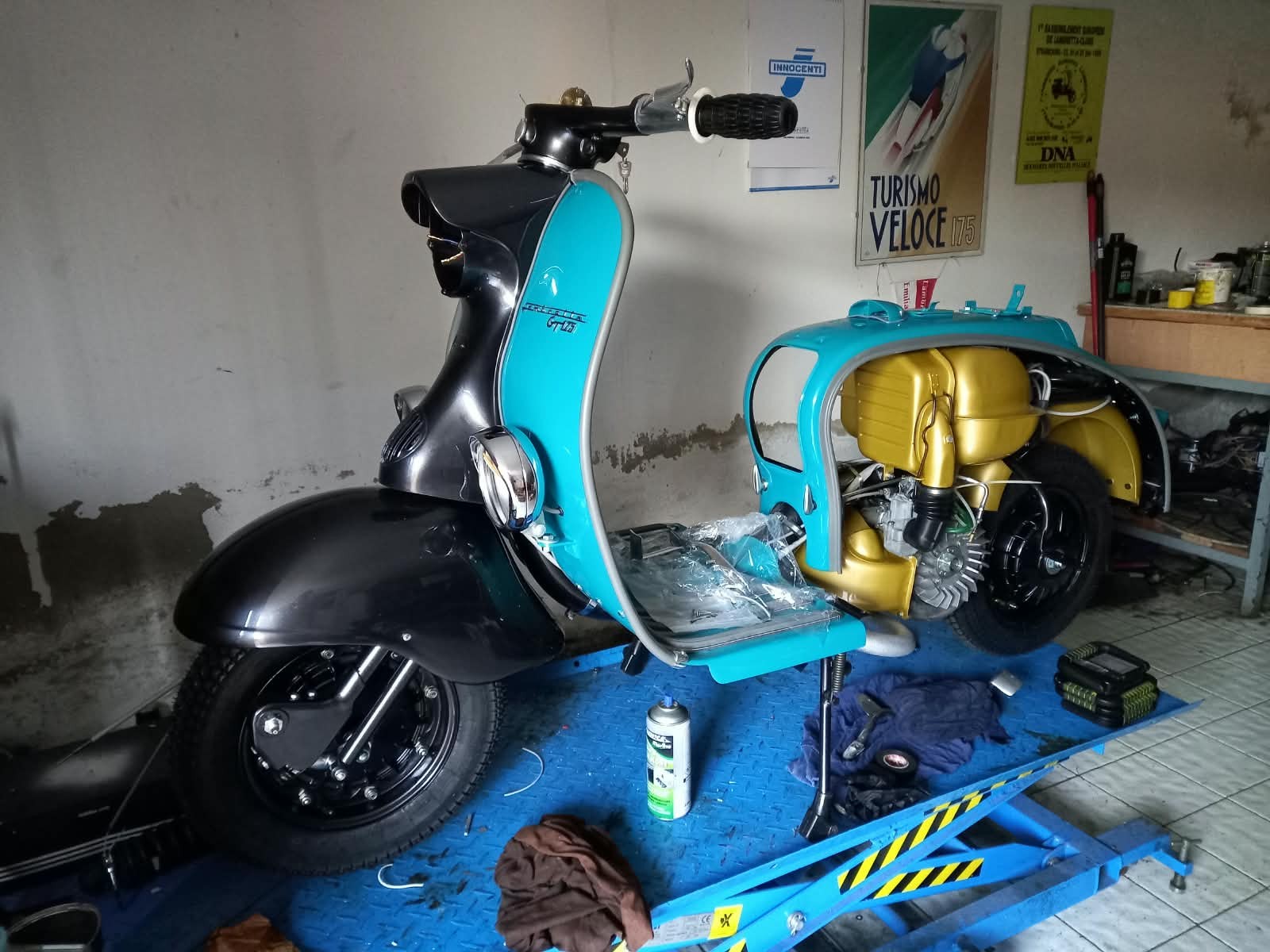
Photographs documenting the complete restoration of my LI racer Series 1.