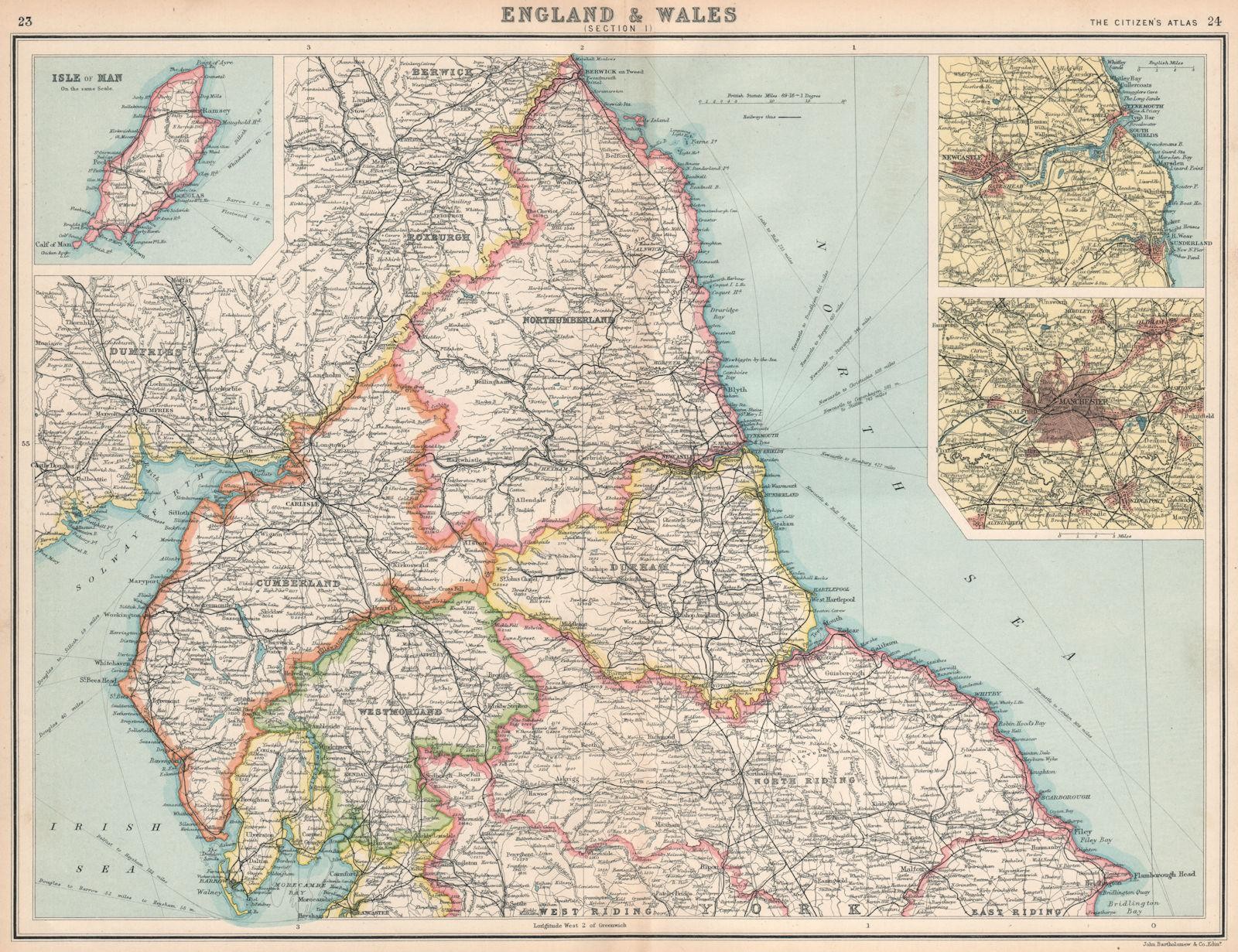
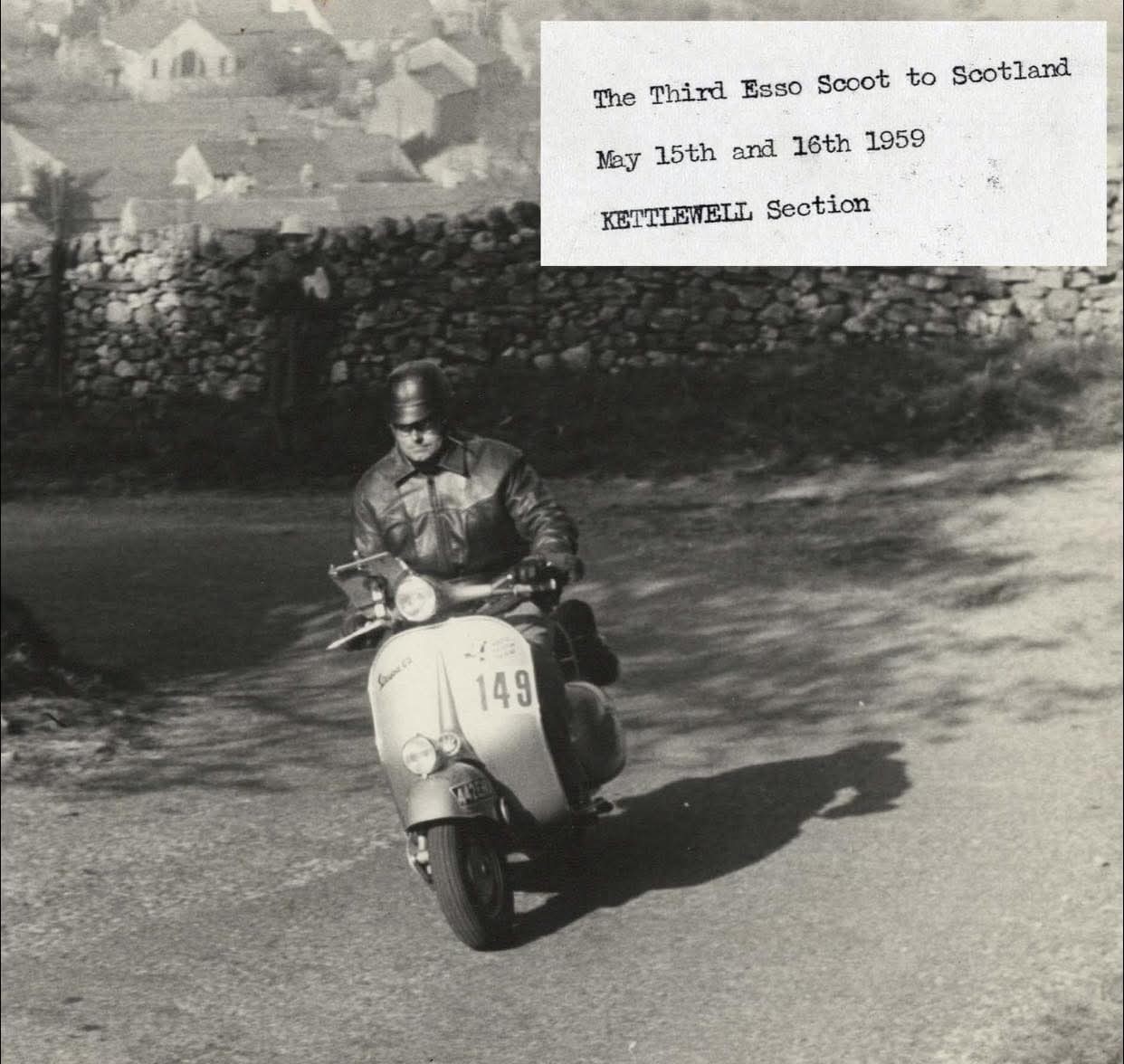
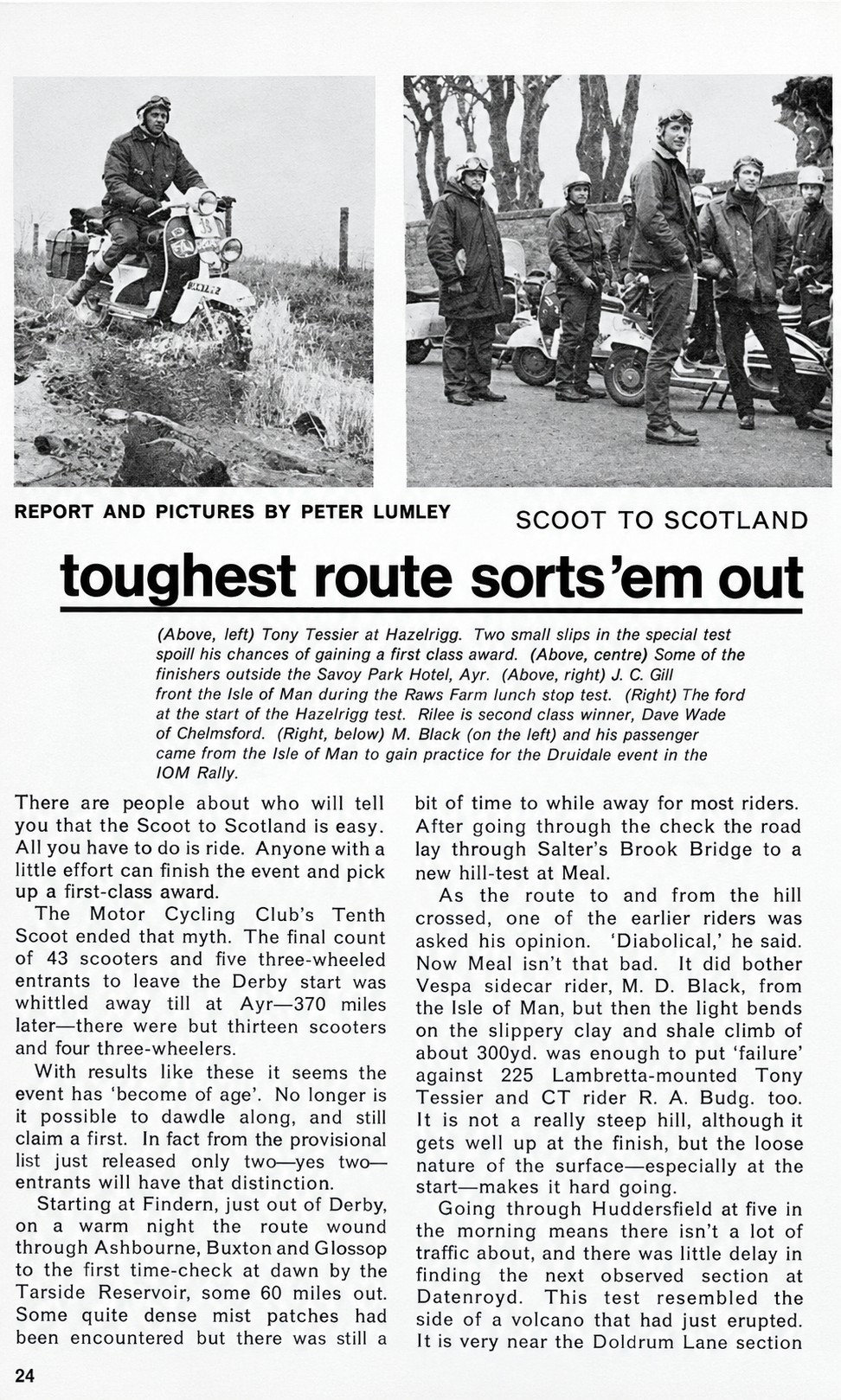
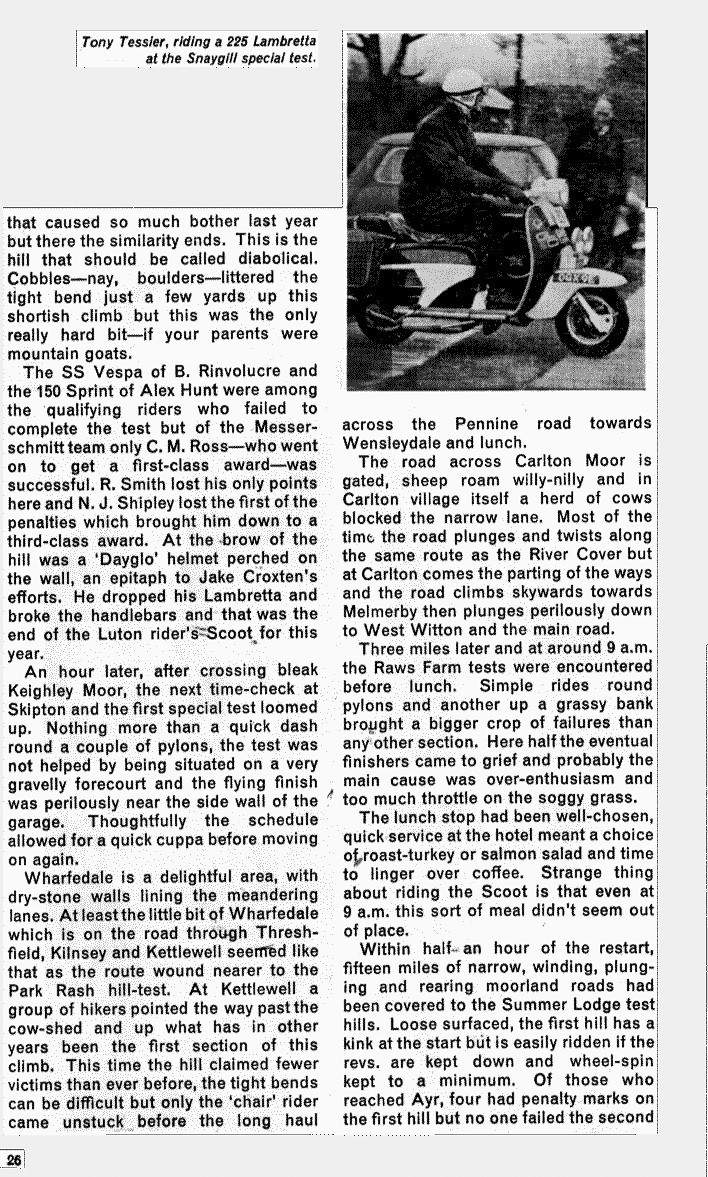
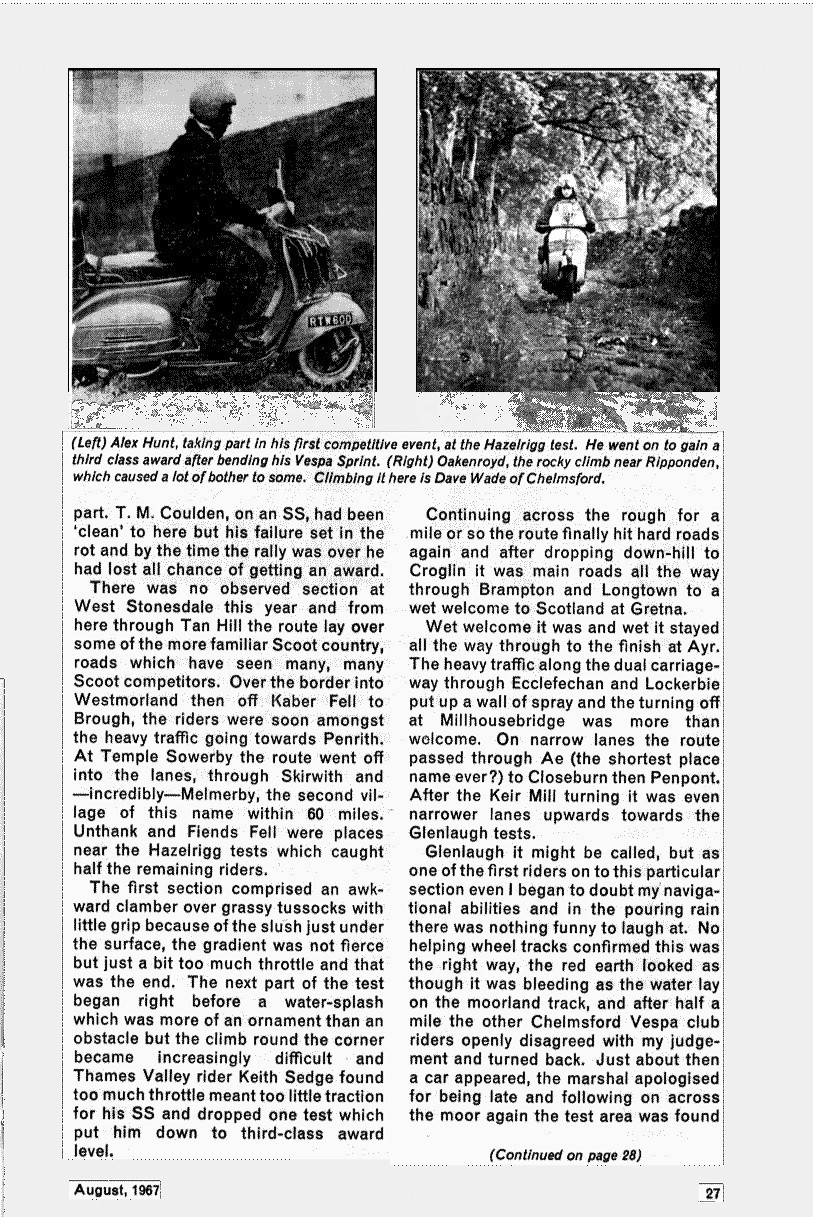
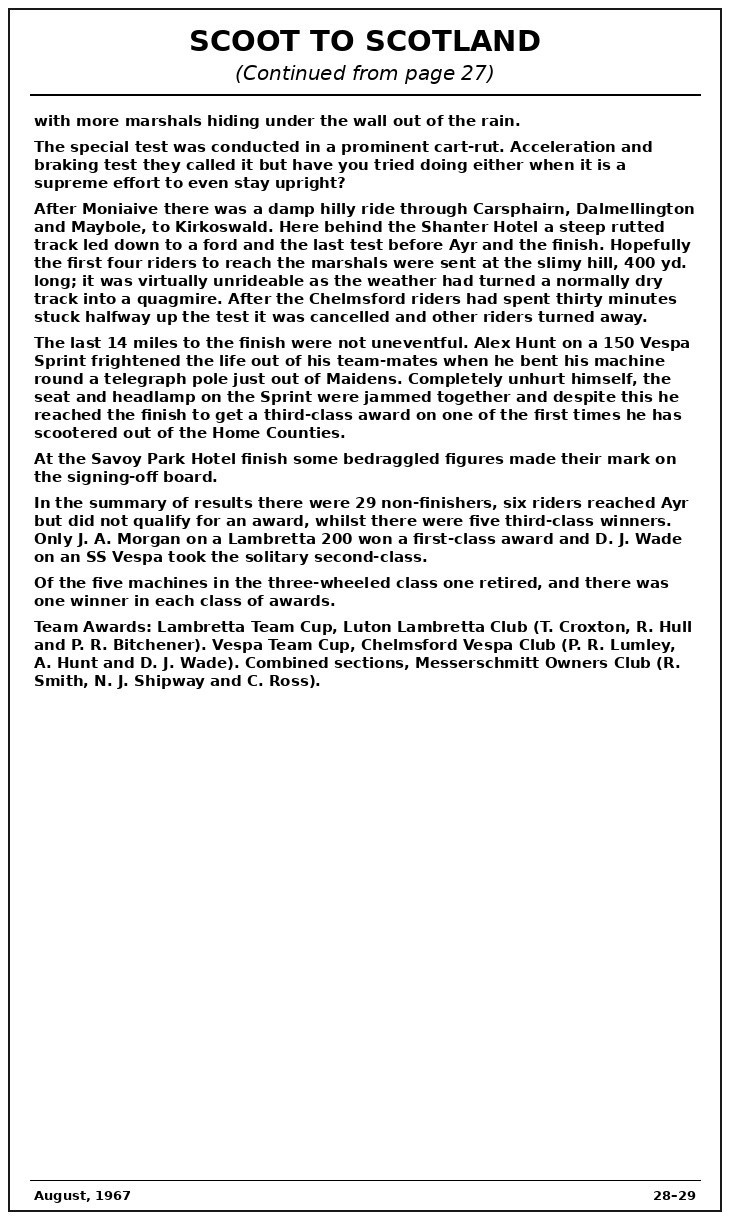
Italiano. Lo Scoot to Scotland, reintrodotto dal MCC nel 1957 con il patrocinio della Esso, ripropose l’Edinburgh Rally in un formato pensato per rispondere alla crescente popolarità degli scooter. I partecipanti partivano da diverse città della Gran Bretagna e affrontavano un percorso notturno che si concludeva a Edimburgo. L’evento riscosse subito un grande successo, arrivando ad attirare regolarmente oltre 300 iscritti nel 1962, la maggior parte dei quali viaggiava con un passeggero.
Tuttavia, tra la fine degli anni Cinquanta e l’inizio degli anni Sessanta, le crescenti preoccupazioni dell’opinione pubblica riguardo agli eventi motoristici sulle strade pubbliche spinsero il Governo a introdurre nuove norme. Il Motor Vehicles (Competitions and Trials) Regulations 1965 limitò il numero dei partecipanti a 180 veicoli per gli eventi diurni e a 120 per quelli notturni. Il MCC beneficiò di un’esenzione concessa a dieci manifestazioni storiche, tra cui l’Edinburgh, ufficialmente registrato con il nome di “Scoot to Scotland and Edinburgh Run”. Il successo dello Scoot e l’elevato numero di iscritti negli anni precedenti all’introduzione delle norme ebbero probabilmente un ruolo importante nell’ottenimento di questa esenzione.
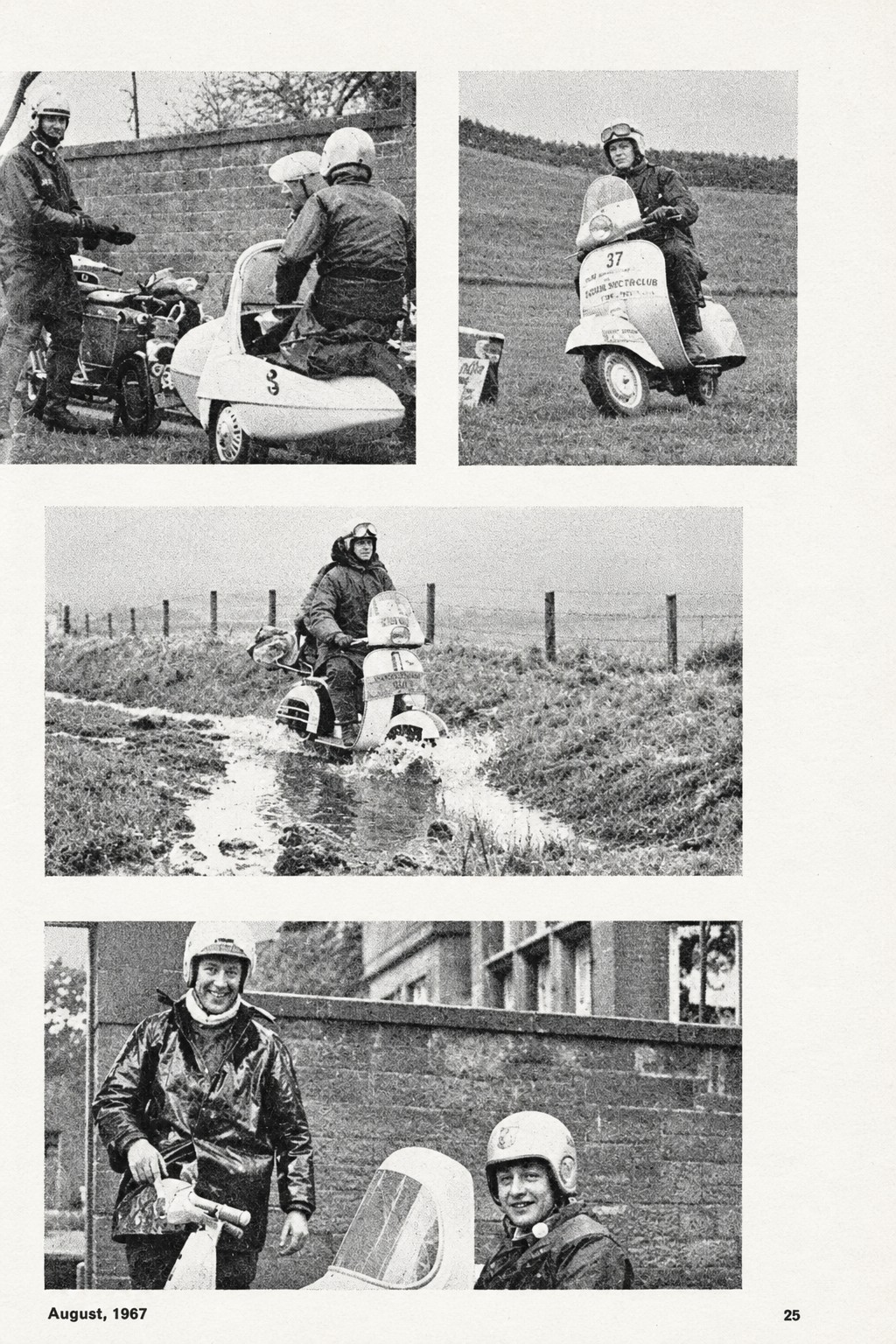
Le nuove disposizioni ebbero conseguenze anche sul Derbyshire Trial, che dovette ridurre il numero dei partecipanti e modificare il percorso. Nel 1967, l’interesse per lo Scoot to Scotland era diminuito notevolmente, con appena 85 iscritti, mentre il Derbyshire continuava a registrare numeri vicini al limite consentito di 180 concorrenti. Il MCC decise quindi di interrompere entrambe le manifestazioni dopo il 1967.
Nel 1968, il Derbyshire venne di fatto rinominato Edinburgh, consentendo alla manifestazione di proseguire come evento notturno senza limiti al numero degli iscritti. Sebbene la prima edizione con questo nuovo formato avesse attirato 152 partecipanti, il numero aumentò rapidamente, raggiungendo 193 iscritti nel 1969, 200 nel 1970, 227 nel 1971 e 243 nel 1972.
English. The Scoot to Scotland, reintroduced by the MCC in 1957 with sponsorship from Esso, revived the Edinburgh Rally in a format designed to appeal to the growing popularity of scooters. Competitors started from various towns across Britain and rode overnight, finishing in Edinburgh. The event was an immediate success, regularly attracting over 300 entries by 1962, with most scooters carrying a passenger.
However, during the late 1950s and early 1960s, growing public concern about motoring events on public roads led the Government to introduce new regulations. The Motor Vehicles (Competitions and Trials) Regulations 1965 limited entries to 180 vehicles for daytime events and 120 for night events. The MCC benefited from an exemption granted to ten established events, including the Edinburgh, officially listed as the “Scoot to Scotland and Edinburgh Run”. The Scoot’s success and high entry numbers in the years leading up to the regulations likely played an important role in securing this exemption.
The new regulations affected the Derbyshire Trial, which had to reduce its entry numbers and modify its route. By 1967, interest in the Scoot to Scotland had declined significantly, with only 85 entries, while the Derbyshire remained close to its permitted maximum of 180 competitors. The MCC therefore decided to discontinue both events after 1967.
In 1968, the Derbyshire was effectively renamed the Edinburgh, allowing it to continue as a night event without restrictions on entry numbers. Although the first event under this new format attracted 152 competitors, participation soon increased, reaching 193 in 1969, 200 in 1970, 227 in 1971 and 243 in 1972.