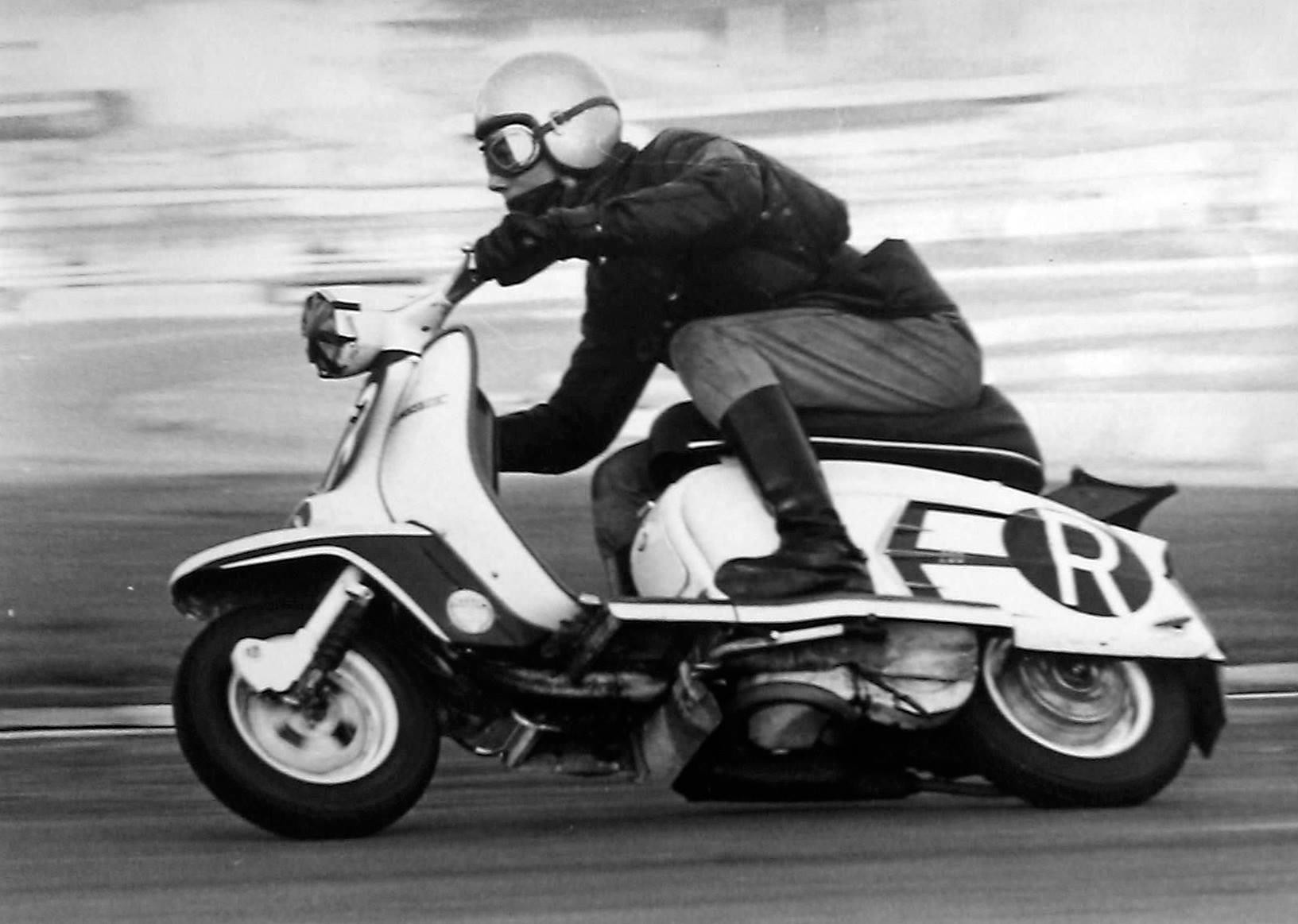
La storia dello scooterismo britannico negli anni Sessanta era molto più di Lambrette, Vespe, accessori cromati e musica del movimento Mod. Dietro gli scooter lucidati e gli stili personali accuratamente costruiti esisteva un mondo di competizioni tra club, sperimentazione meccanica, viaggi di resistenza ed eventi sportivi fuoristrada. Era una cultura in cui velocità, affidabilità, individualità e libertà della strada si incontravano.
In questo mondo, Belstaff e Barbour rappresentavano un importante legame tra l'abbigliamento motociclistico pratico e la nascente identità visiva della cultura britannica delle due ruote. Le loro giacche in cotone cerato erano state sviluppate per proteggere dalle intemperie, ma il legame con l'esperienza reale in moto conferì loro un carattere che andava ben oltre la funzione originaria.
Pubblicità dell'epoca
Dai club di scooter alle competizioni
All'inizio degli anni Sessanta, i club britannici di scooter erano comunità attive che organizzavano raduni, gite di gruppo, prove di regolarità ed eventi sportivi. Il Lambretta Club of Great Britain e il Vespa Club of Britain contribuirono a creare una cultura nella quale possedere uno scooter poteva significare molto più che avere un mezzo per gli spostamenti quotidiani. I soci viaggiavano insieme, rappresentavano i propri club, si confrontavano con altri appassionati e mettevano alla prova le proprie macchine.
Le prove di regolarità furono un passaggio importante verso lo scooter sport organizzato. Invece di concentrarsi soltanto sulla velocità assoluta, queste gare verificavano la capacità dello scooter di completare percorsi impegnativi mantenendo l'affidabilità meccanica. I partecipanti dovevano affrontare distanze, condizioni meteorologiche mutevoli, strade difficili e possibili guasti. La British Scooter Sport Organisation fa risalire le origini dello scooter sport organizzato a queste prime prove di club; le competizioni più formalizzate si svilupparono come disciplina seria nei primi anni Settanta.
Le attività sportive non si limitavano alla strada. Lo scooter scrambling portava Vespe e Lambrette su terreni accidentati, mentre prove a tempo e altre competizioni mettevano alla prova prestazioni e abilità del pilota. Il Bats Scooter Club, fondato nel 1955, fu associato a eventi di scooter scrambling a Elstead Common, nel Surrey. Negli anni Sessanta queste gare offrivano un accesso relativamente semplice al motorsport: gli appassionati potevano modificare i propri scooter di tutti i giorni e competere senza dover necessariamente possedere un mezzo da corsa dedicato.
Era una componente importante della cultura scooter. Una Lambretta o una Vespa poteva essere un'espressione personalizzata del gusto del proprietario in strada, ma diventare uno strumento sportivo quando necessario. Il rapporto del pilota con lo scooter era quindi sociale e meccanico insieme, modellato da estetica, prestazioni, affidabilità ed esperienza di guida.
Photo Gallery
Period action pictures.
L'uniforme del pilota: prima la funzione, poi la moda
Le gare e gli eventi sportivi richiedevano abiti adatti alle condizioni reali della guida. Il clima britannico era imprevedibile e chi viaggiava verso un raduno o trascorreva molte ore all'aperto doveva affrontare pioggia, vento, freddo e sporco. Chi partecipava a prove di regolarità o scrambling incontrava condizioni ben diverse dalle strade urbane pulite associate all'immagine Mod.
È qui che la tradizione di Belstaff e Barbour diventa particolarmente interessante. Fondata nel 1924, Belstaff si costruì una solida reputazione per l'abbigliamento protettivo legato al motociclismo e all'avventura all'aperto. La giacca Trialmaster, introdotta nel 1959, rispondeva alle esigenze di chi aveva bisogno di protezione affidabile in condizioni difficili. Cintura in vita, collo alto, tasche pratiche e cotone cerato davano vita a un capo funzionale ma riconoscibile.
La tradizione motociclistica di Barbour risale ancora più indietro. Fondata nel 1894 come fornitrice di abbigliamento impermeabile, l'azienda presentò la tuta da moto International nel 1936. Il legame con le competizioni motociclistiche contribuì a consolidare la reputazione dell'International come capo progettato per l'uso reale, non soltanto come simbolo d'avventura.
Per gli scooteristi, questi capi offrivano un'alternativa pratica al normale abbigliamento urbano. Una giacca cerata proteggeva durante il viaggio verso un raduno, mentre la costruzione robusta e le numerose tasche erano adatte a una vita fatta di attrezzi, regolazioni meccaniche e tempo trascorso all'aperto.
Photo Gallery
Period action pictures.
Belstaff: lo spirito indipendente del motociclista
Il fascino di Belstaff era legato all'immagine del motociclista avventuroso: una persona appassionata di meccanica, capace di prendersi cura del proprio mezzo e pronta a viaggiare con qualsiasi tempo.
Il design della Trialmaster comunicava questo atteggiamento attraverso le tasche ampie, il collo protettivo, la cintura e il tessuto resistente. Era una giacca pensata per essere usata, mantenuta e indossata a lungo. In ambito sportivo, la sua tradizione nelle prove motociclistiche le dava credibilità; nella vita quotidiana, lo stesso design suggeriva entusiasmo per la meccanica e indipendenza.
Questo legame si adattava bene al lato più ruvido della cultura scooter. Mentre alcuni Mod preferivano completi sartoriali e parka militari, altri erano attratti da un abbigliamento che riflettesse l'aspetto pratico e manuale dei loro interessi. Belstaff permetteva di esprimere questa identità senza rinunciare allo stile personale.
Una giacca cerata consumata racconta anche una storia visiva: pieghe, scoloriture, riparazioni e segni d'uso suggeriscono chilometri percorsi e anni trascorsi intorno ai motori. Il suo fascino nasce anche dal contrasto tra il cromo lucido dello scooter e il carattere vissuto dell'abbigliamento.
Belstaff collega quindi la scena scooter a una tradizione motociclistica britannica più ampia, nella quale l'autenticità si dimostrava attraverso l'uso e non soltanto con l'apparenza.
Barbour International: una tradizione sportiva
Barbour International offre un legame altrettanto significativo tra competizione e identità culturale. Presentata nel 1936, la tuta da moto International costruì la propria reputazione rispondendo alle esigenze delle gare motociclistiche. Dettagli pratici, tra cui la caratteristica tasca obliqua sul petto, riflettevano le necessità di chi aveva bisogno di spazio utile e di accesso rapido agli oggetti essenziali durante una competizione.
Un momento importante arrivò nel 1964, quando Steve McQueen e alcuni membri della squadra americana indossarono tute Barbour International alla International Six Day Trials nella Germania Est. La loro partecipazione rafforzò l'associazione del capo con il motociclismo agonistico e contribuì a far conoscere il suo design a un pubblico più ampio.
Si trattava di una competizione motociclistica, non di scooter racing, ma il collegamento culturale è significativo. Entrambi i mondi condividevano l'interesse per i mezzi a due ruote, la credibilità sportiva e gli abiti capaci di resistere alla guida. Il cotone cerato nero, la ferramenta funzionale e la costruzione pratica dell'International appartenevano a un linguaggio visivo più ampio del motociclismo britannico, che poteva parlare anche agli scooteristi.
Per uno scooterista, Barbour International rappresentava l'incontro tra funzione e atteggiamento. Era un autentico capo tecnico, ma il suo aspetto distintivo lo rendeva adatto anche all'uso quotidiano. La sua storia gli conferiva un'autenticità difficile da riprodurre con un capo concepito soltanto per la moda.
Photo Gallery
Period action pictures.
Gare, raduni e identità Mod
Il rapporto tra competizione e moda emerge più chiaramente se la cultura scooter viene vista come un insieme di comunità che si sovrapponevano, anziché come un'unica uniforme.
L'immagine Mod più nota era fatta di completi sartoriali, cravatte sottili, scarpe lucide e parka militari. Ma la stessa generazione comprendeva anche persone che trascorrevano i fine settimana viaggiando verso i raduni, partecipando agli eventi dei club o preparando scooter da competizione. Alcuni erano attratti soprattutto dalla socialità; altri dall'ingegneria, dalla velocità e dai risultati sportivi. Molti univano questi interessi.
Lo scooter era il punto d'incontro. Offriva trasporto accessibile, uno spazio per l'espressione personale e un ingresso relativamente semplice al motorsport. I club davano struttura a questi interessi, collegando appassionati locali a eventi e concorrenti in tutto il paese.
In questo contesto, una giacca Belstaff o Barbour poteva comunicare un altro lato della stessa cultura. Più che l'eleganza del completo Mod, suggeriva prontezza per la strada, conoscenza pratica e apprezzamento per l'attrezzatura specialistica. Poteva essere indossata durante il viaggio verso un evento, mentre si lavorava sul mezzo o nella vita quotidiana.
È importante non confondere i due piani: nessuno dei due marchi definiva il movimento Mod e non è corretto presentarli come uniforme standard dei piloti di scooter degli anni Sessanta. La loro rilevanza sta nel mondo più ampio della cultura britannica delle due ruote, dove funzione sportiva, identità personale e stile spesso si sovrapponevano.
Un'eredità duratura
L'importanza di Belstaff e Barbour sta nel modo in cui i loro capi collegano l'esperienza concreta della guida al significato culturale degli anni Sessanta.
Lo scooter sport richiedeva più di un mezzo attraente: preparazione meccanica, affidabilità, abilità e disponibilità a guidare anche in condizioni poco favorevoli. Le giacche legate al motociclismo britannico nacquero da esigenze simili. La loro funzione originaria ha dato loro una credibilità che è sopravvissuta al passaggio verso la moda quotidiana e l'abbigliamento heritage.
Oggi, una giacca cerata vintage accanto a una Lambretta o a una Vespa classica può evocare questa storia condivisa. Ricorda un periodo in cui trasporto, competizione, identità giovanile e abbigliamento erano strettamente intrecciati e in cui i capi pratici potevano diventare simboli personali senza perdere la loro funzione originaria.
Belstaff rappresenta il motociclista indipendente e avventuroso; Barbour International riflette il rapporto duraturo tra design funzionale e competizione motociclistica. Insieme raccontano una storia più ampia della cultura britannica delle due ruote, costruita su artigianalità, individualità, passione sportiva e libertà della strada.
In definitiva, il legame non consiste soltanto nel fatto che queste giacche stiano bene accanto a uno scooter classico. È che sono nate dallo stesso mondo di guida pratica, curiosità meccanica e indipendenza che rese così particolare la cultura scooter degli anni Sessanta.
Racing Lambrettas — conservare le storie, i mezzi e la cultura dello scooter sport.
The story of British scootering in the 1960s was about much more than Lambrettas, Vespas, chrome accessories and the music of the Mod movement. Behind the polished scooters and carefully constructed personal styles was a world of club competition, mechanical experimentation, endurance riding and off-road sporting events. It was a culture in which speed, reliability, individuality and the freedom of the open road came together.
Within this world, Belstaff and Barbour represented an important connection between practical motorcycle clothing and the emerging visual identity of British two-wheel culture. Their waxed-cotton jackets had been developed for protection against the elements, but their association with genuine motorcycling experience gave them a character that extended well beyond their original function.
Period adverts
From scooter clubs to competition
By the beginning of the 1960s, British scooter clubs had developed into active communities that organised rallies, group rides, reliability trials and sporting events. The Lambretta Club of Great Britain and Vespa Club of Britain helped establish a culture in which owning a scooter could lead to far more than everyday transport. Riders could travel together, represent their clubs, compete against other enthusiasts and test the capabilities of their machines.
Reliability trials were an important stepping stone towards organised scooter racing. Rather than concentrating exclusively on outright speed, these events tested a scooter's ability to complete demanding routes and remain mechanically dependable. Riders had to contend with distance, changing weather, road conditions and the possibility of mechanical failure. The British Scooter Sport Organisation traces the origins of organised scooter sport to these early club trials, with more formal racing developing into a serious discipline in the early 1970s.
Competition also extended beyond ordinary road riding. Scooter scrambling brought Vespas and Lambrettas onto rougher terrain, while time trials and other sporting events tested performance and rider skill. The Bats Scooter Club, founded in 1955, became associated with scooter-scrambling events at Elstead Common in Surrey. During the 1960s, these competitions offered an accessible route into motorsport: enthusiasts could modify their everyday scooters and compete without necessarily owning a dedicated racing machine.
This was an important part of scooter culture. A Lambretta or Vespa could be a carefully customised expression of personal taste on the street, yet the same machine could become a sporting instrument when the occasion demanded it. The rider's relationship with the scooter was therefore both social and mechanical, shaped by appearance, performance, reliability and the experience of riding.
Photo Gallery
Period action pictures.
The rider's uniform: function before fashion
Scooter racing and sporting events created a practical need for clothing that could cope with the realities of riding. British weather was unpredictable, and riders travelling to events or spending long periods outdoors faced rain, wind, cold and dirt. Those taking part in trials or scrambling also encountered conditions very different from the clean urban streets associated with the Mod image.
This is where the heritage of Belstaff and Barbour becomes particularly relevant. Founded in 1924, Belstaff developed a strong reputation for protective clothing associated with motorcycling and outdoor adventure. Its Trialmaster jacket, introduced in 1959, reflected the requirements of riders who needed dependable protection in challenging conditions. The belted waist, high collar, practical pockets and waxed-cotton construction created a garment that was functional without sacrificing a distinctive silhouette.
Barbour's motorcycle heritage went back even further. Established in 1894 as a supplier of weatherproof clothing, the company introduced its International motorcycle suit in 1936. Its association with competitive motorcycle trials helped establish the International as a garment designed for genuine riding conditions rather than simply an image of adventure.
For scooterists, these garments represented a practical alternative to ordinary fashion outerwear. A waxed jacket offered protection during the journey to a rally, while its robust construction and multiple pockets suited a life involving tools, mechanical adjustments and time spent outdoors.
Photo Gallery
Period action pictures.
Belstaff: the independent spirit of the rider
Belstaff's appeal lay in its association with the adventurous motorcyclist: someone interested in machinery, capable of looking after their own equipment and prepared to ride regardless of the weather.
The Trialmaster's design communicated this attitude through its substantial pockets, protective collar, belted shape and durable fabric. It was a jacket made to be used, maintained and worn over time. In a sporting environment, its heritage in trials riding gave it credibility; in everyday life, the same design suggested mechanical enthusiasm and independence.
This connection worked particularly well within the more rugged side of scooter culture. While some Mods preferred sharply tailored suits and military parkas, other riders were attracted to clothing that reflected the practical, hands-on side of their interests. Belstaff offered a way to express that identity without abandoning personal style.
A well-worn wax jacket also carried a visual history of its own. Creases, fading, repairs and the marks of repeated use suggested miles travelled and years spent around machinery. Its appeal came partly from the contrast between a scooter's polished chrome and carefully chosen accessories and the lived-in character of the rider's clothing.
Belstaff therefore connects the scooter scene to a broader British motorcycling tradition in which authenticity was established through use, not simply appearance.
Barbour International: the sporting heritage
Barbour International provides an equally compelling connection between competitive riding and cultural identity. Introduced in 1936, the International motorcycle suit developed its reputation through the demands of organised motorcycling. Its practical details, including the distinctive angled breast pocket, reflected the needs of riders who required useful storage and easy access to essential items while competing.
A major moment in its history came in 1964, when Steve McQueen and members of the American team wore Barbour International suits at the International Six Day Trials in East Germany. Their participation reinforced the garment's association with serious motorcycling and helped bring its distinctive design to a wider audience.
Although this was motorcycle competition rather than scooter racing, the cultural connection is significant. Both worlds shared an interest in two-wheel machinery, sporting credibility and clothing that could withstand the demands of riding. The International's black waxed cotton, utilitarian hardware and practical construction belonged to a broader visual language of British motorcycling that also resonated with scooter enthusiasts.
For the scooterist, Barbour International represented the intersection of function and attitude. It could be appreciated as a genuine piece of motorcycle equipment, but its distinctive appearance also made it suitable for everyday wear. Its history gave it a sense of authenticity that a purely fashion-driven garment could not easily reproduce.
Photo Gallery
Period action pictures.
Racing, rallies and the Mod identity
The relationship between racing and fashion becomes clearer when scooter culture is viewed as a collection of overlapping communities rather than a single uniform.
The familiar Mod image centred on tailored suits, narrow ties, polished shoes and military parkas. Yet the same generation also included riders who spent weekends travelling to rallies, participating in club events or preparing scooters for competition. Some were attracted to the social side of the scene; others were more interested in engineering, speed and sporting achievement. Many combined these interests.
The scooter was the common link. It offered affordable transport, a platform for personal expression and an accessible introduction to motorsport. Clubs provided the structure through which these interests developed, connecting local enthusiasts with events and competitors across the country.
In this setting, a Belstaff or Barbour jacket could communicate a different side of the same culture. Instead of the polished elegance of the Mod suit, it suggested readiness for the road, practical knowledge and an appreciation of specialist equipment. The jacket could be worn for the journey to an event, for time spent working on a machine or as everyday clothing by someone whose interests extended beyond fashion.
The distinction is important: neither brand defined the Mod movement, and neither should be presented as the standard uniform of 1960s scooter racers. Their relevance lies in the wider world of British two-wheel culture, where sporting function, personal identity and style frequently overlapped.
The lasting legacy
The importance of Belstaff and Barbour lies in the way their garments connect the physical experience of riding with the cultural meaning of the 1960s.
Scooter sport demanded more than an attractive machine. It involved mechanical preparation, reliability, skill and a willingness to ride in less-than-ideal conditions. The jackets associated with British motorcycling were developed around similar realities. Their original purpose gave them a credibility that survived as they moved into everyday fashion and heritage clothing.
Today, a vintage waxed jacket worn alongside a classic Lambretta or Vespa can evoke this shared history. It recalls a period when transport, competition, youth identity and clothing were closely intertwined, and when practical garments could become personal symbols without losing their original purpose.
Belstaff represents the independent, adventure-minded rider; Barbour International reflects the enduring relationship between functional design and competitive motorcycling. Together, they help tell a broader story of British two-wheel culture: one built on craftsmanship, individuality, sporting enthusiasm and the freedom of the road.
Ultimately, the connection is not simply that these jackets look right beside a classic scooter. It is that they emerged from the same world of practical riding, mechanical curiosity and independence that made 1960s scooter culture so distinctive.
Racing Lambrettas — preserving the stories, machines and culture of scooter sport.